
15 Japandi Bathroom Ideas for a Stylish and Minimalist Space
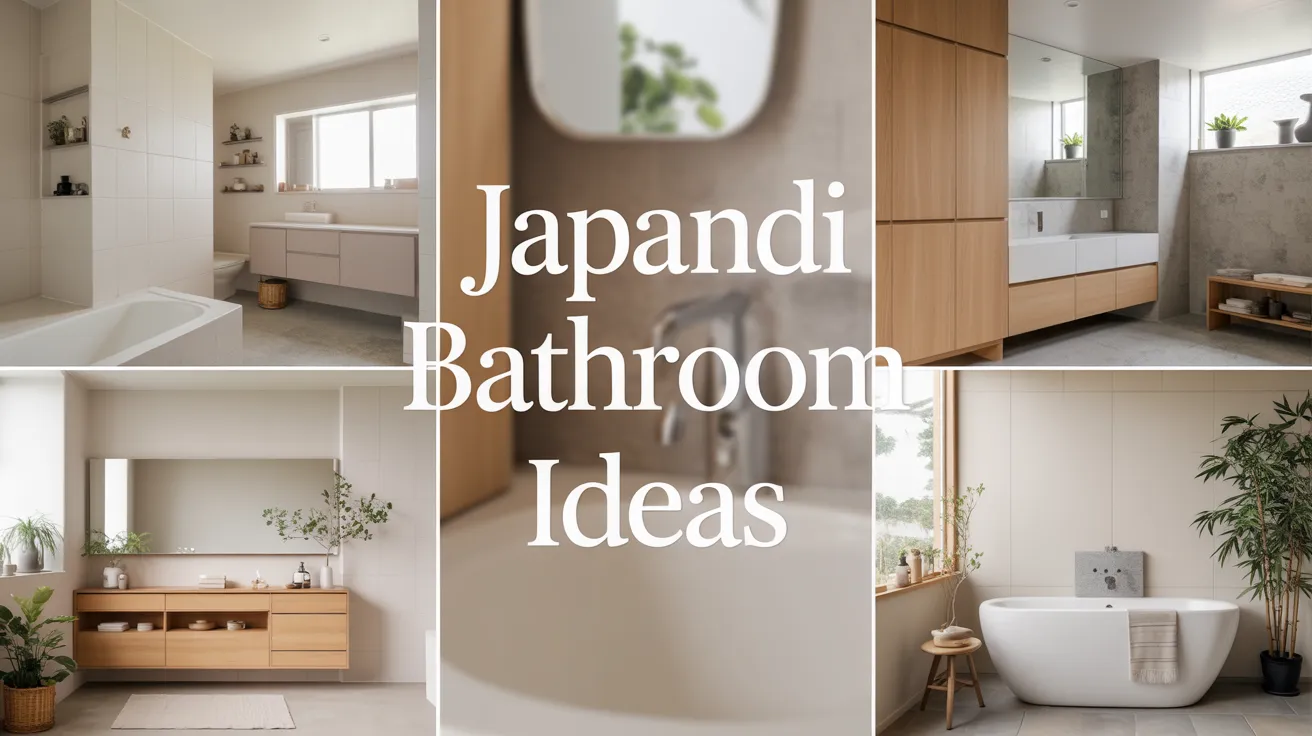
Japandi design blends Japanese simplicity with Scandinavian warmth, creating a balanced and peaceful bathroom space. This style focuses on clean lines, natural materials, and soft colors to build a calm environment.
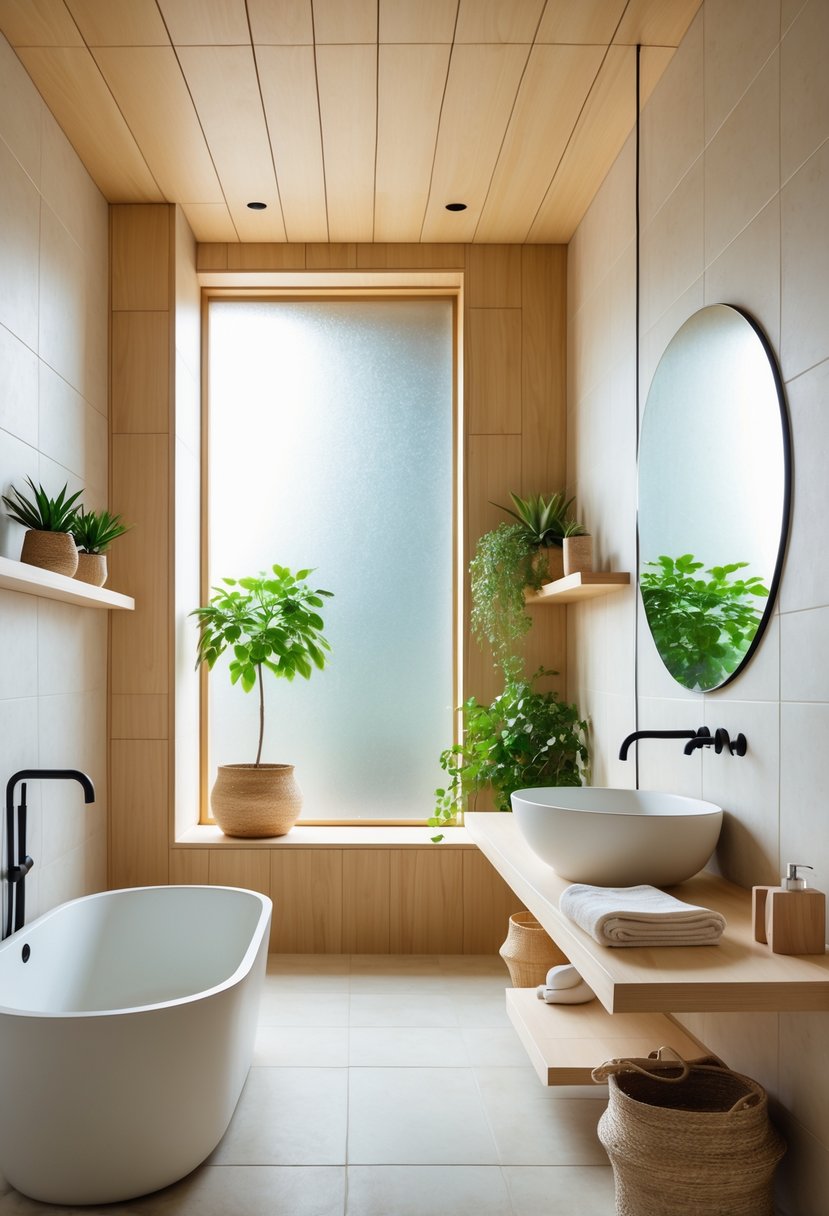
The article offers 15 practical ideas to help readers bring this serene and minimalist aesthetic into their bathrooms. These ideas work for different bathroom sizes and budgets, making it easier to achieve a stylish and functional space.
Floating wooden vanity with clean lines
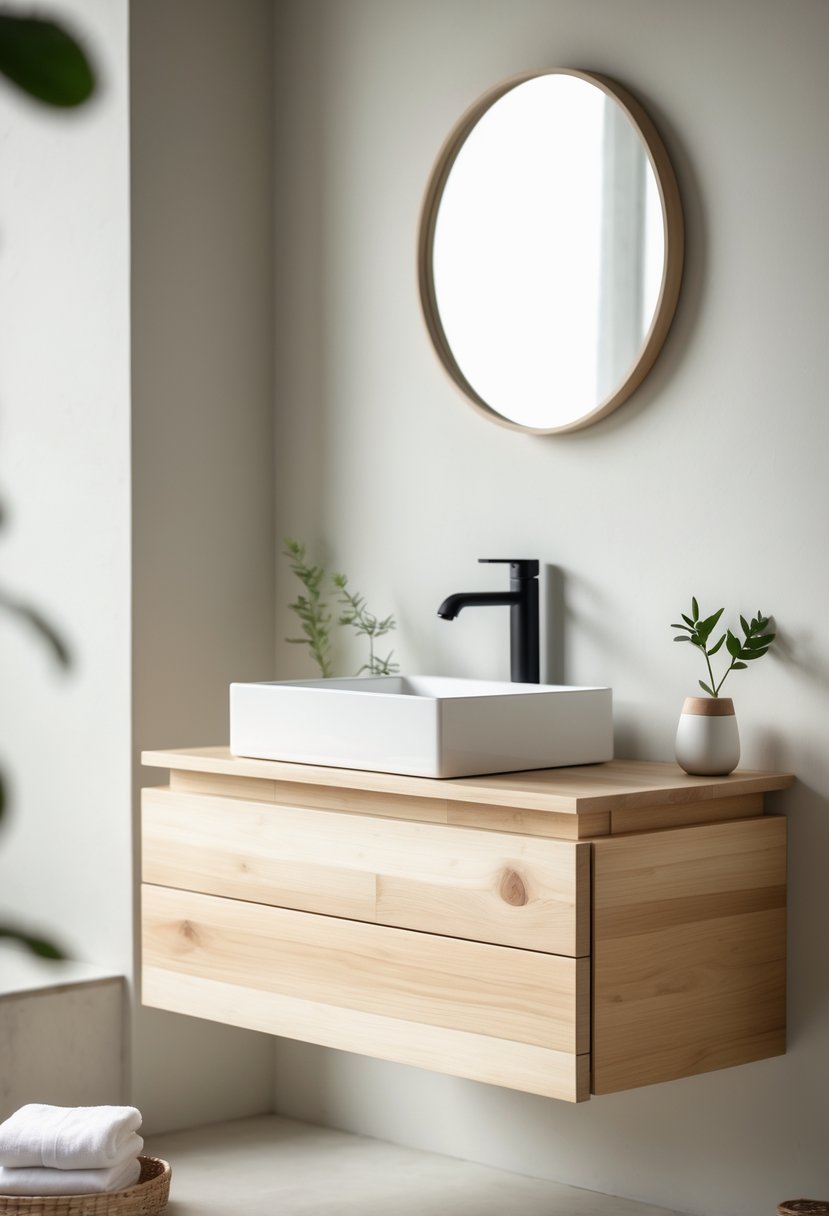
A floating wooden vanity is key to Japandi bathroom design. It lifts off the floor, creating a sense of openness and making the room feel larger.
The clean lines of the vanity keep the look simple and calm. Natural wood tones add warmth without overwhelming the space.
This style often avoids handles, using sleek drawers for a smooth, uncluttered appearance. The design balances function with minimalism, fitting well in small or large bathrooms.
Natural stone countertops
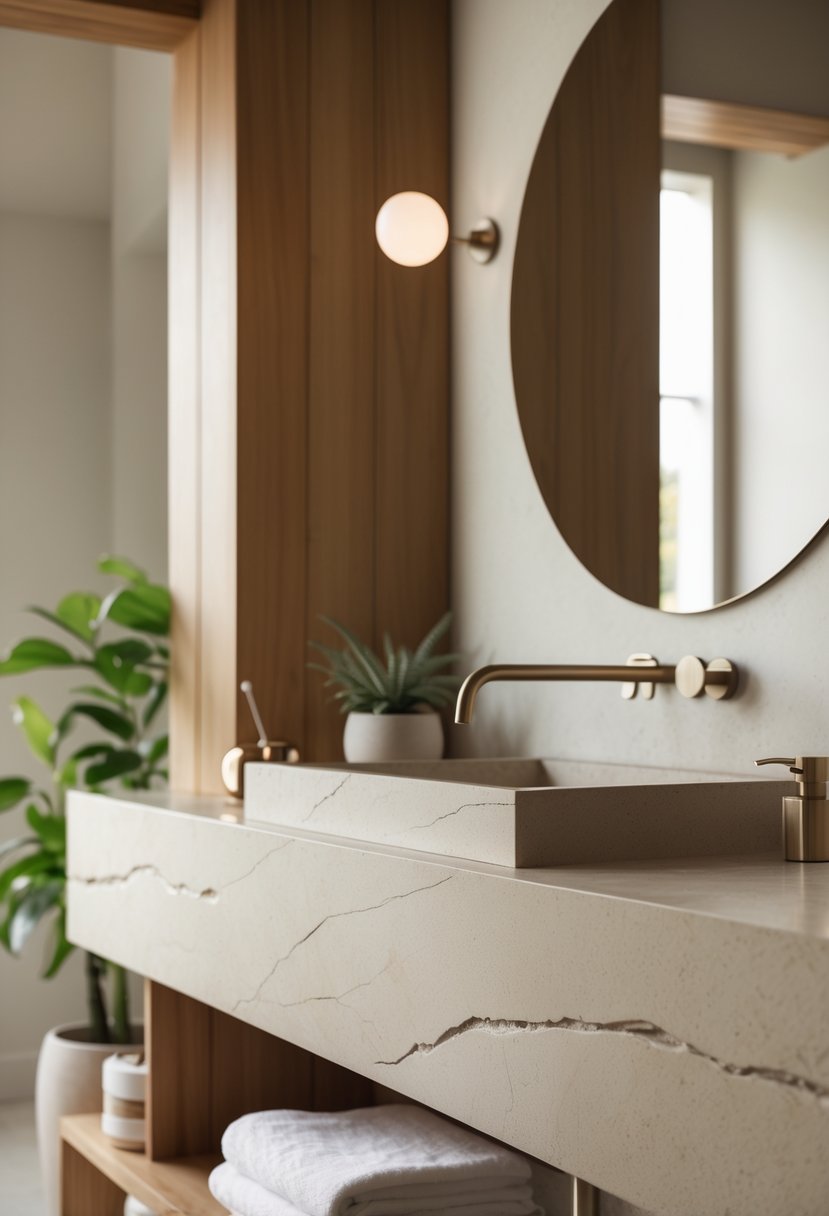
Natural stone countertops are a key feature in Japandi bathroom design. They offer durability and a timeless look that fits the style well.
Materials like marble, granite, and soapstone bring different textures and tones. These stones add a natural, grounded feel without overpowering the space.
Stone countertops also align with the Japandi focus on quality and sustainability. They provide a clean, simple surface that blends with wood and other natural elements.
Neutral color palette with soft beige and gray tones
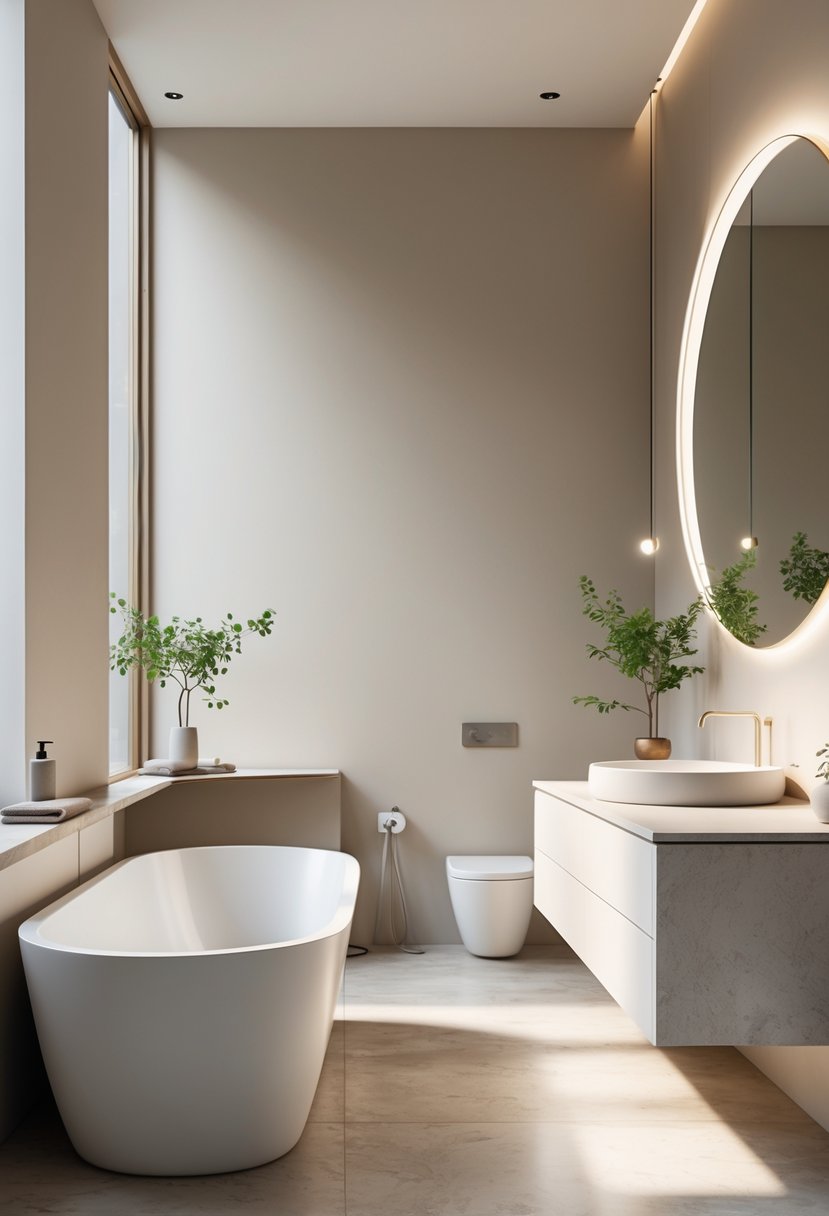
A Japandi bathroom often uses a neutral color palette to create a calm and inviting space. Soft beige and gray tones work well together to provide a balanced, natural look.
These colors help keep the room feeling light and airy. They also allow natural materials like wood and stone to stand out without clashing.
Using warm beige instead of cool gray adds a comforting touch. The combination supports Japandi’s focus on simplicity and tranquility in design.
Open shelving with bamboo baskets
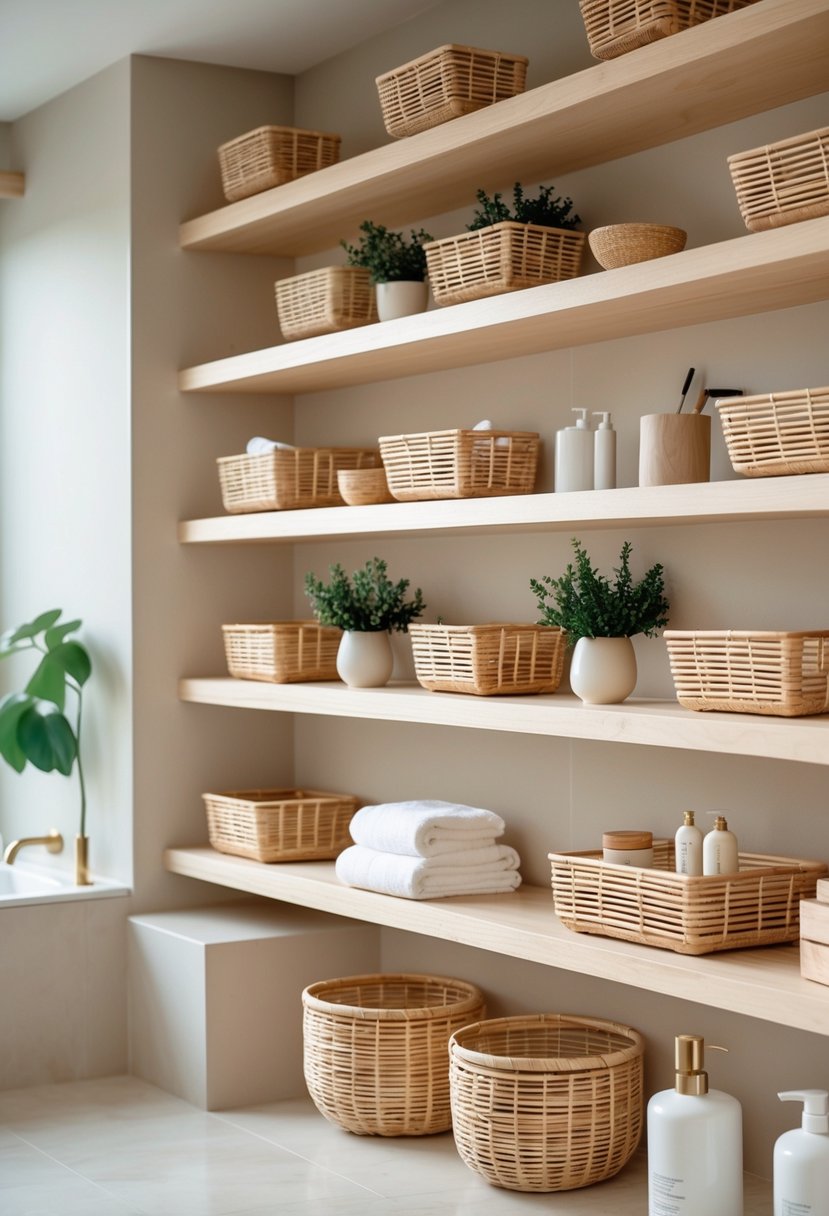
Open shelving is a key feature in Japandi bathrooms. It offers easy access to essentials and keeps the space feeling open and light.
Bamboo baskets add warmth and texture to the shelves. They provide practical storage for small items while fitting the natural, simple style of Japandi design.
Using bamboo baskets with open shelves helps balance function and beauty. This pairing supports the minimal, organized look without clutter, making the bathroom calm and inviting.
Matte black fixtures
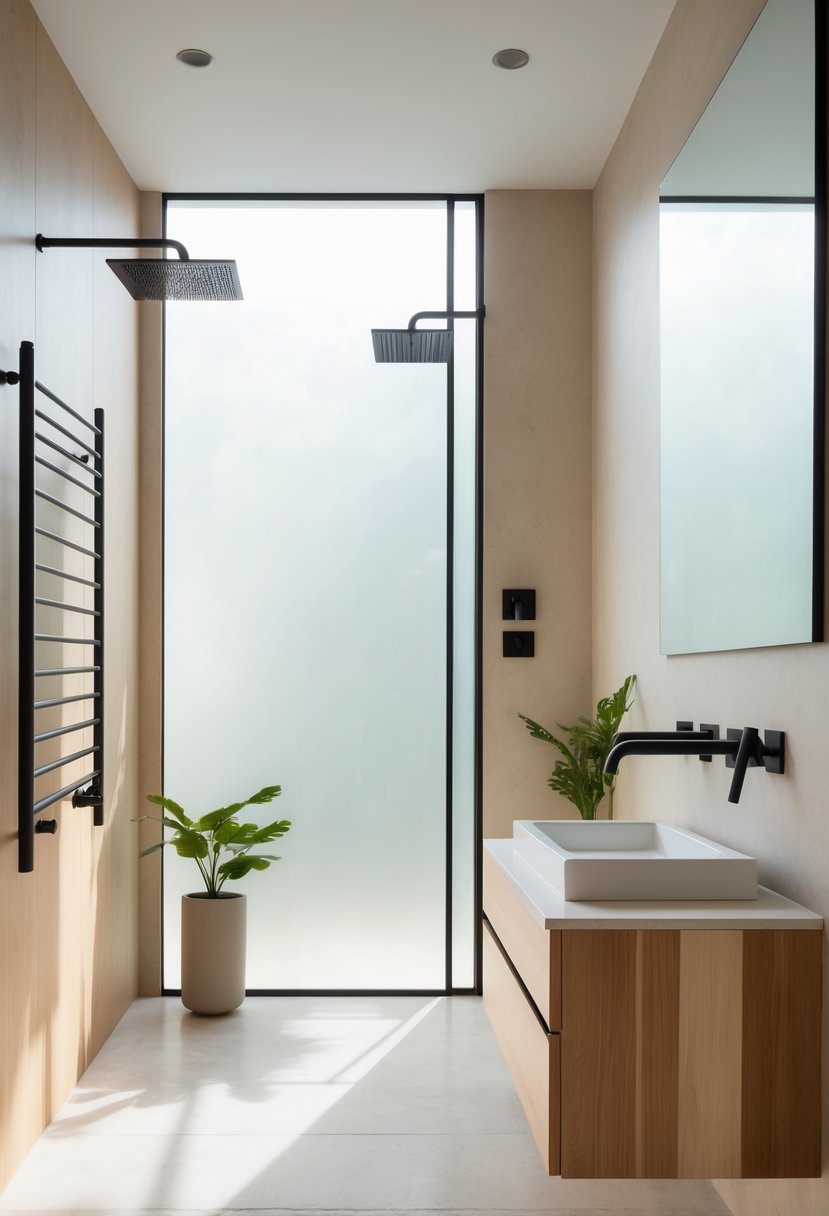
Matte black fixtures are a key feature in Japandi bathroom design. They offer a modern and sleek look without being too flashy. These fixtures include faucets, showerheads, handles, and towel bars.
The color creates a strong contrast against natural wood and neutral tones. This balance helps maintain the calm and minimalist style Japandi is known for. Matte black also adds visual interest while keeping the space functional and simple.
Using matte black hardware helps blend traditional and modern elements. It fits well with clean lines and minimal decor. This makes the bathroom feel stylish and grounded at the same time.
Japanese-style wooden bathtub
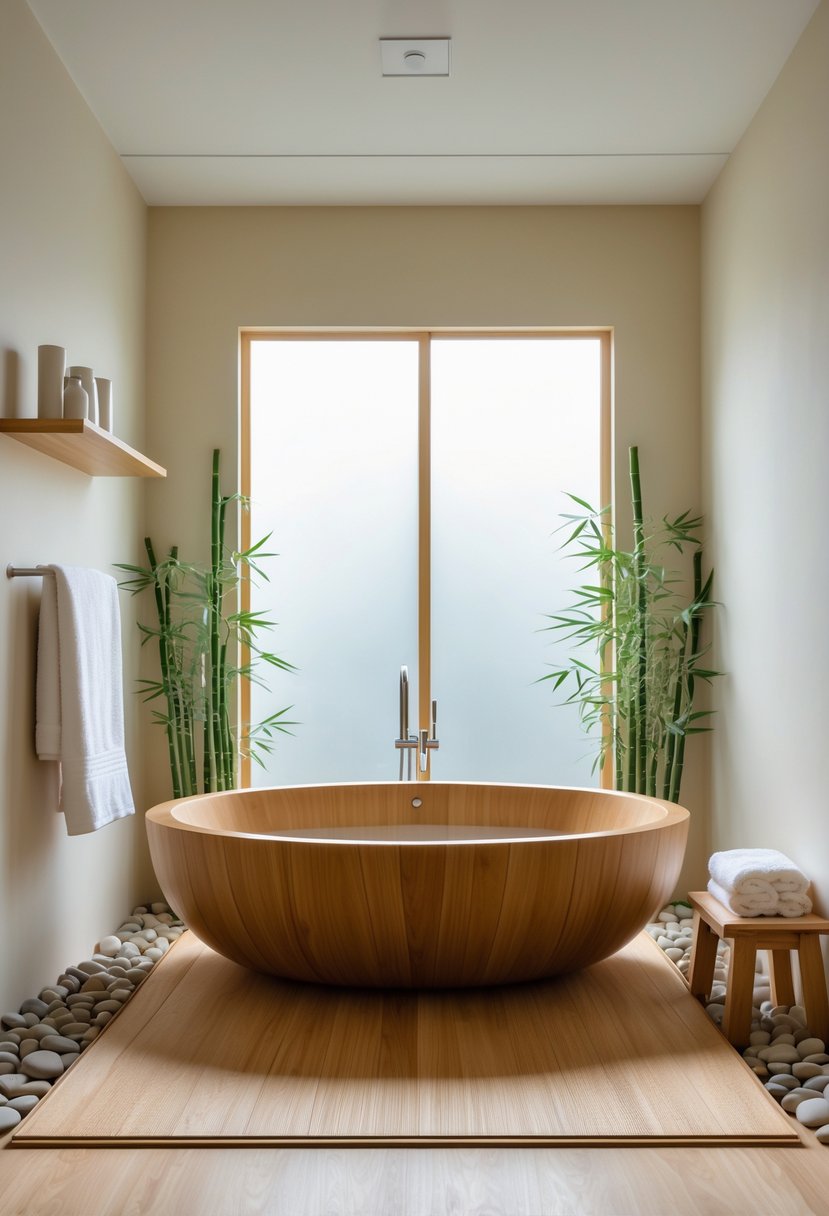
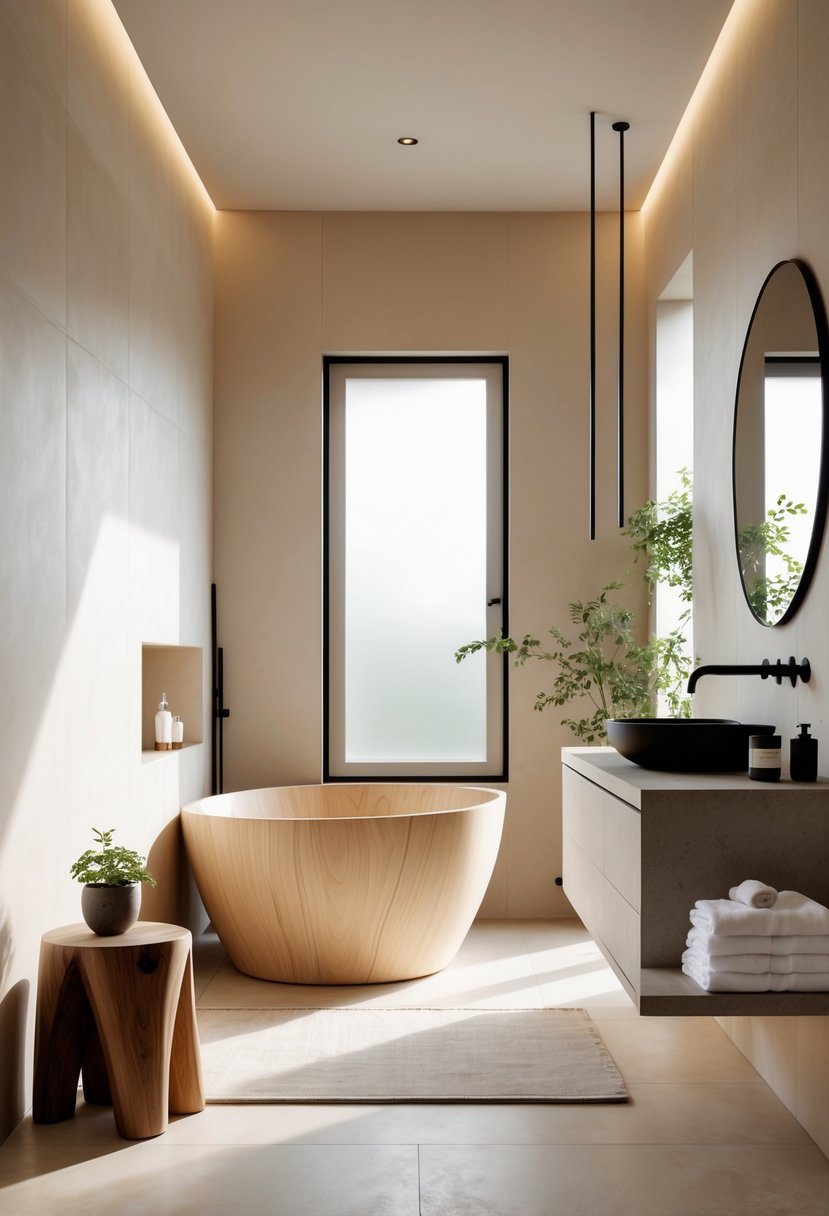
A Japanese-style wooden bathtub brings natural warmth and calm to a Japandi bathroom. It is usually made from cedar, cypress, or teak, which resist water damage well.
The simple shape and smooth finish fit the style’s focus on minimalism and comfort. This tub creates a quiet, inviting spot for relaxation.
It often stands alone or is partially sunken, emphasizing clean lines and balance. The wood adds texture and a natural element that pairs well with the neutral colors in Japandi design.
Minimalist matte ceramic sinks
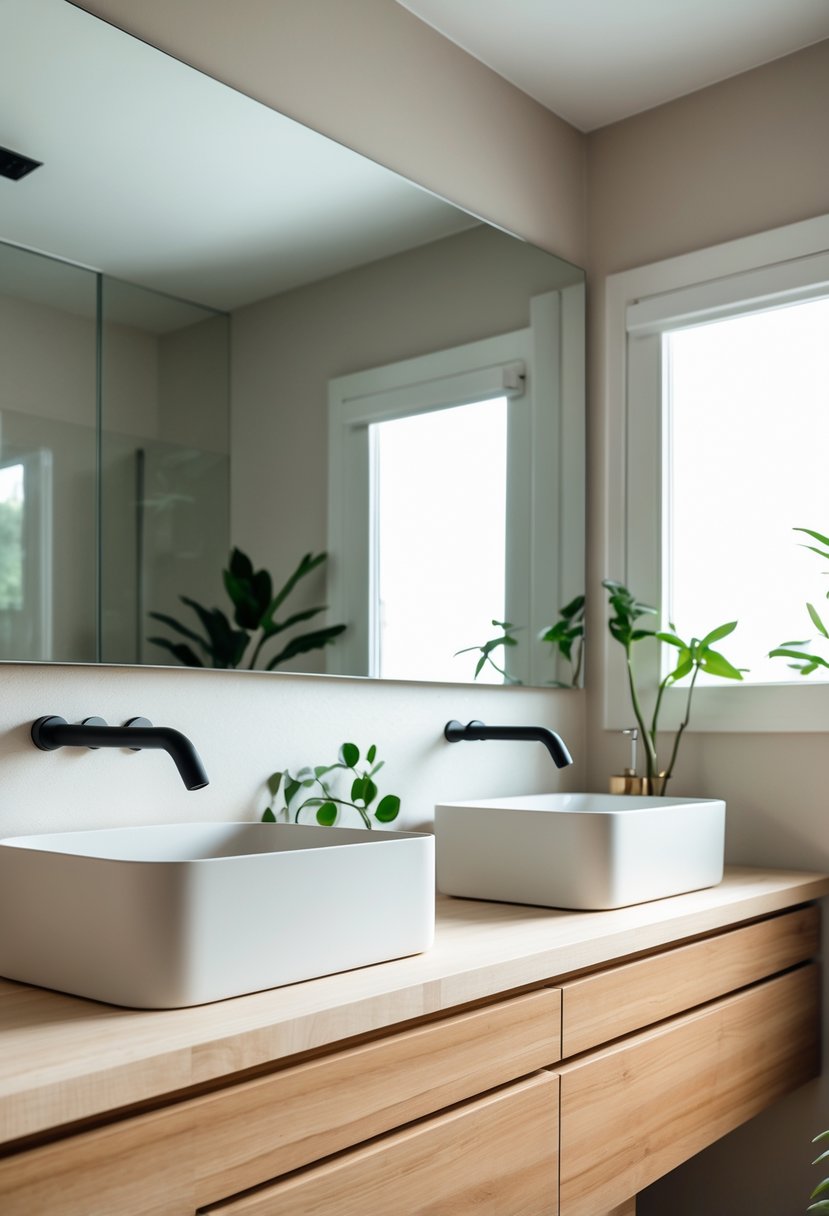
Matte ceramic sinks fit well in Japandi bathrooms because they offer a simple, clean look. Their smooth, non-glossy finish adds subtle texture without drawing too much attention.
These sinks often come in soft white or neutral tones, matching the natural and calm color palette common in Japandi design. They pair nicely with light wood vanities and minimalist fixtures.
Matte ceramic is also practical. It hides water spots better than shiny surfaces, keeping the bathroom looking tidy with less effort. This makes it both a stylish and functional choice.
Recessed lighting for soft illumination
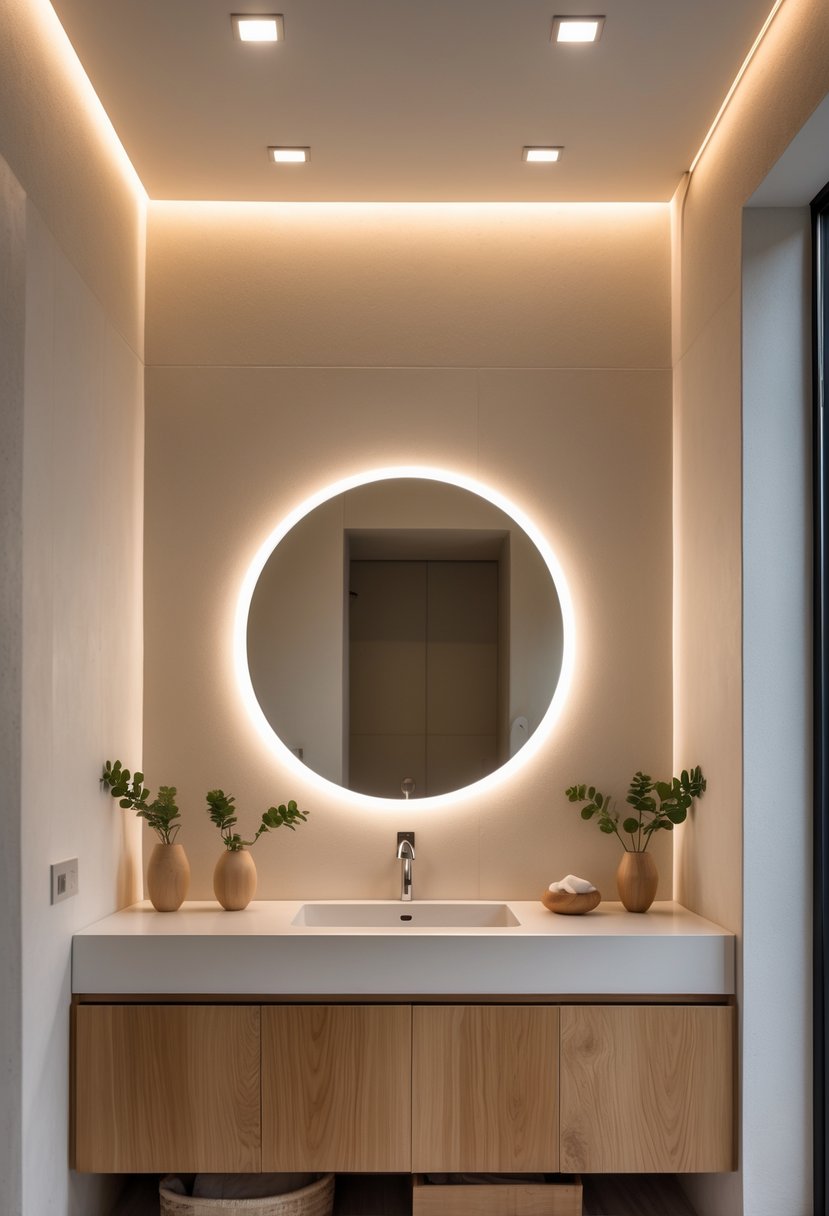
Recessed lighting is a key feature in Japandi bathrooms. It provides a clean, minimalist look while offering soft, even light. This type of lighting avoids harsh shadows, which helps maintain a calm atmosphere.
Placing recessed lights directly above the vanity ensures good task lighting. It brightens the space without overpowering the natural textures and materials.
Dimmable recessed lights allow flexible control of brightness. This makes it easy to create a peaceful mood or add more light when needed. The simplicity of recessed lighting fits well with Japandi’s focus on balance and simplicity.
Textured natural fiber rugs
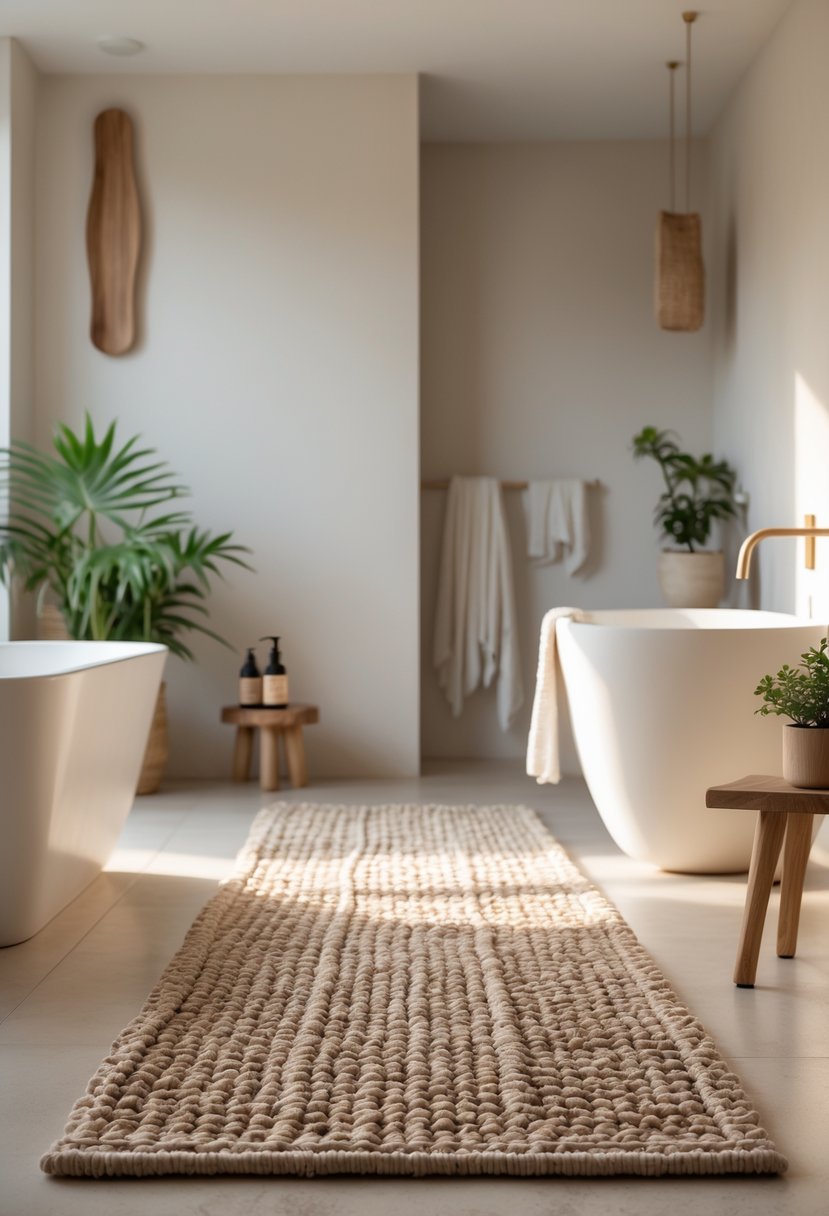
Natural fiber rugs add texture and warmth to a Japandi bathroom. Materials like jute, sisal, seagrass, or wool are common choices. They create an earthy, organic feel that matches wood and stone elements.
These rugs often come in neutral tones, which help keep the space calm and balanced. Placing a rug near the bathtub or sink adds softness underfoot. The simple design of these rugs fits well with the minimal style of Japandi decor.
Using natural fibers also supports breathability and durability in a bathroom setting. They bring subtle beauty without overpowering the room’s clean, serene look.
Wall-mounted wooden towel racks
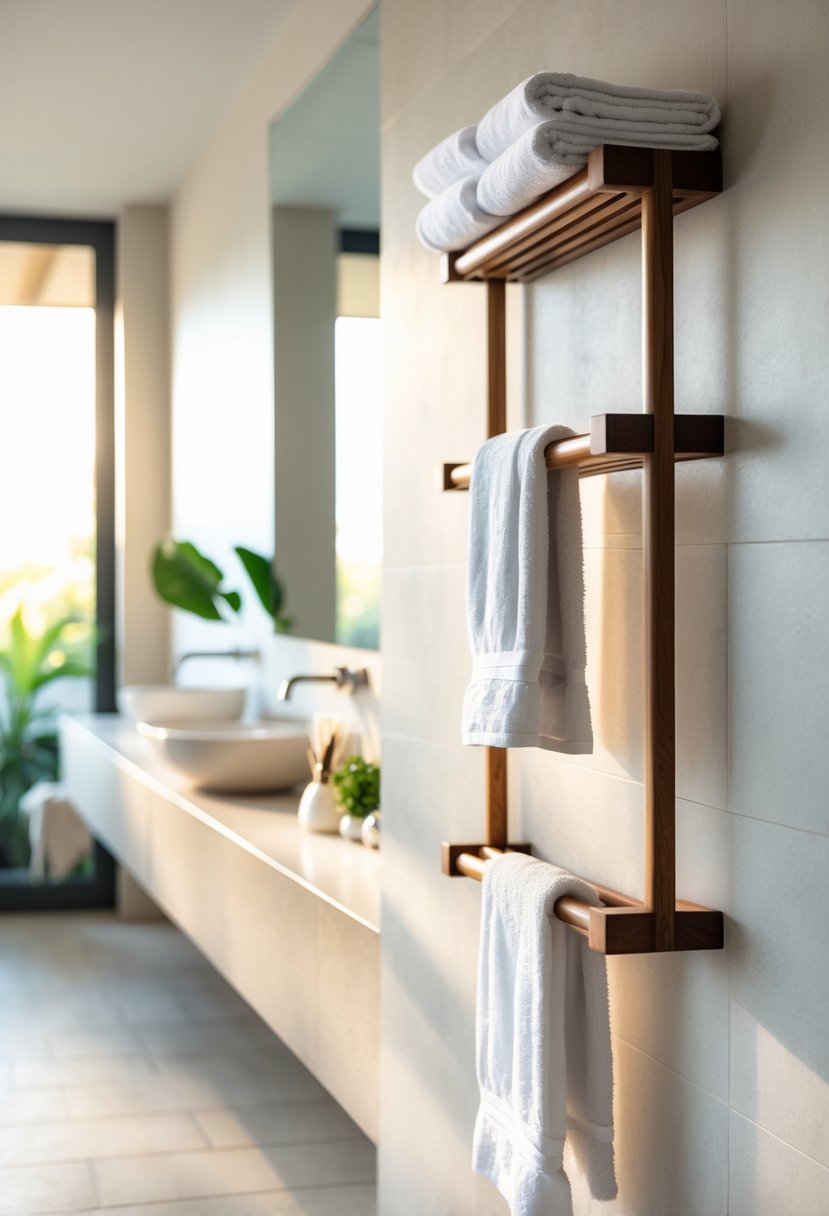
Wall-mounted wooden towel racks add natural warmth to a Japandi bathroom. They combine simplicity and functionality, fitting well with the style’s minimal and calm aesthetic.
These racks save space and keep towels organized and accessible. They often feature clean lines and smooth finishes, emphasizing craftsmanship and natural materials.
Wood’s texture brings an organic feel, balancing modern design with rustic charm. This type of rack can complement bamboo, stone, or neutral-toned elements common in Japandi spaces.
Indoor plants for natural greenery
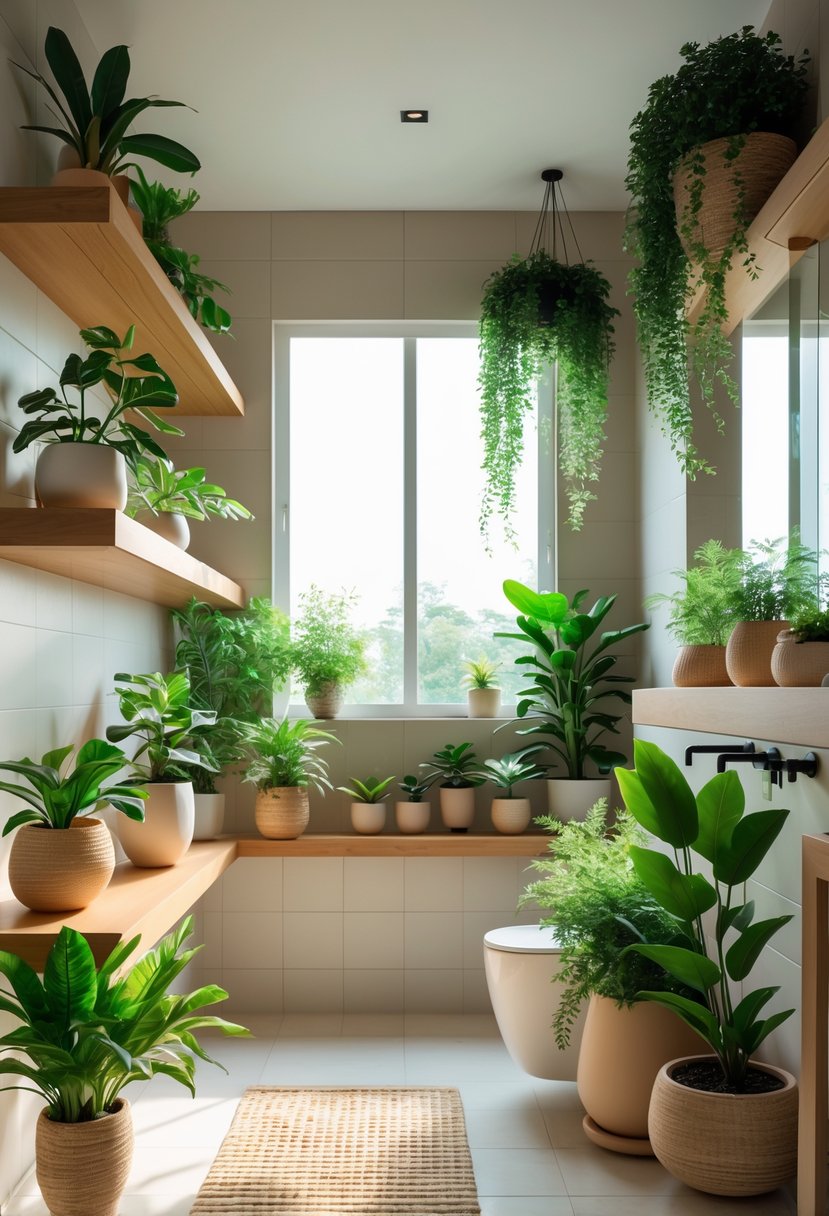
Indoor plants bring a natural touch to Japandi bathrooms. They add life without making the space feel cluttered.
Low-maintenance plants like snake plants, peace lilies, and ferns work well. These plants thrive in humid conditions, common in bathrooms.
Using simple planters made of wood or unglazed ceramic matches the Japandi style. This keeps the look natural and balanced, fitting the room’s calm atmosphere.
Shoji screen-inspired window treatments
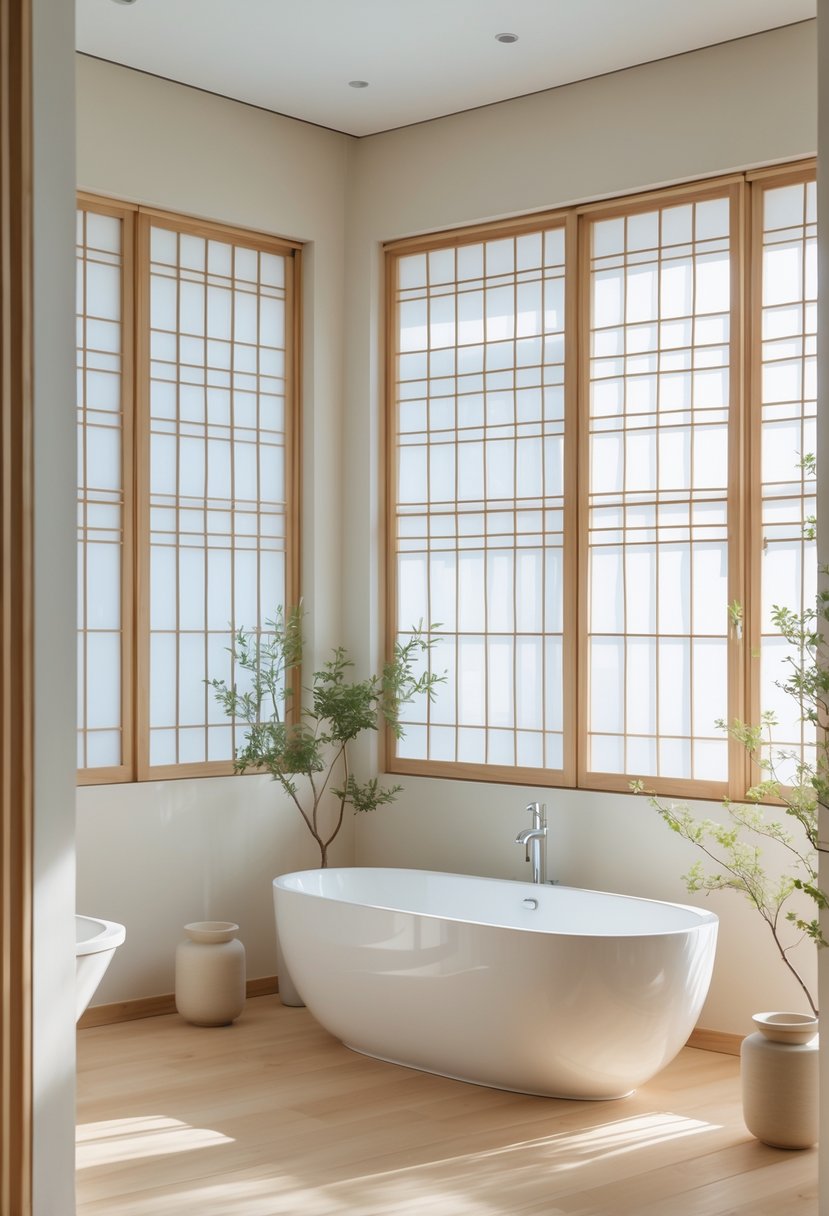
Shoji screen-inspired window treatments bring a soft, diffused light into the bathroom. They use wooden frames and translucent paper-like material to create a calm, natural glow.
These treatments add privacy without blocking sunlight. They fit well with the Japandi style, balancing simplicity and warmth.
Sliding shoji-style panels can also save space. They offer a clean, uncluttered look while enhancing the room’s serene feel.
Using shoji screens helps connect the bathroom to traditional Japanese design. It also blends smoothly with Scandinavian minimalism, key to Japandi aesthetics.
Concrete or large-format tile flooring
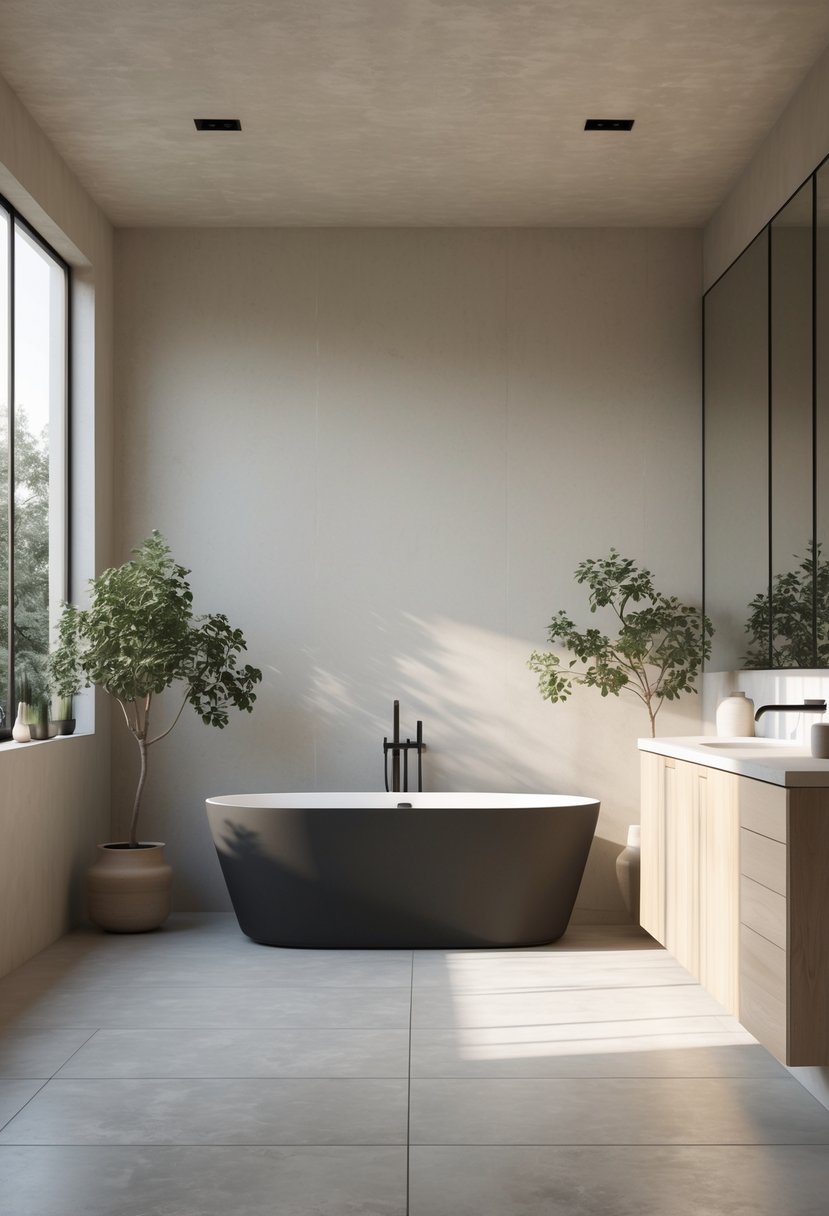
Large-format tiles are a common choice in Japandi bathrooms. They create a smooth, seamless look by minimizing grout lines. This helps the space feel clean and open.
Concrete or tiles with stone-like textures add a natural, calming touch. Their neutral shades fit well with Japandi’s simple and earthy color palette.
These flooring options are durable and easy to maintain. They support the style’s focus on balance and understated beauty. Combining concrete or large tiles with wood accents enhances warmth in the room.
Scandinavian-style simple wooden stools
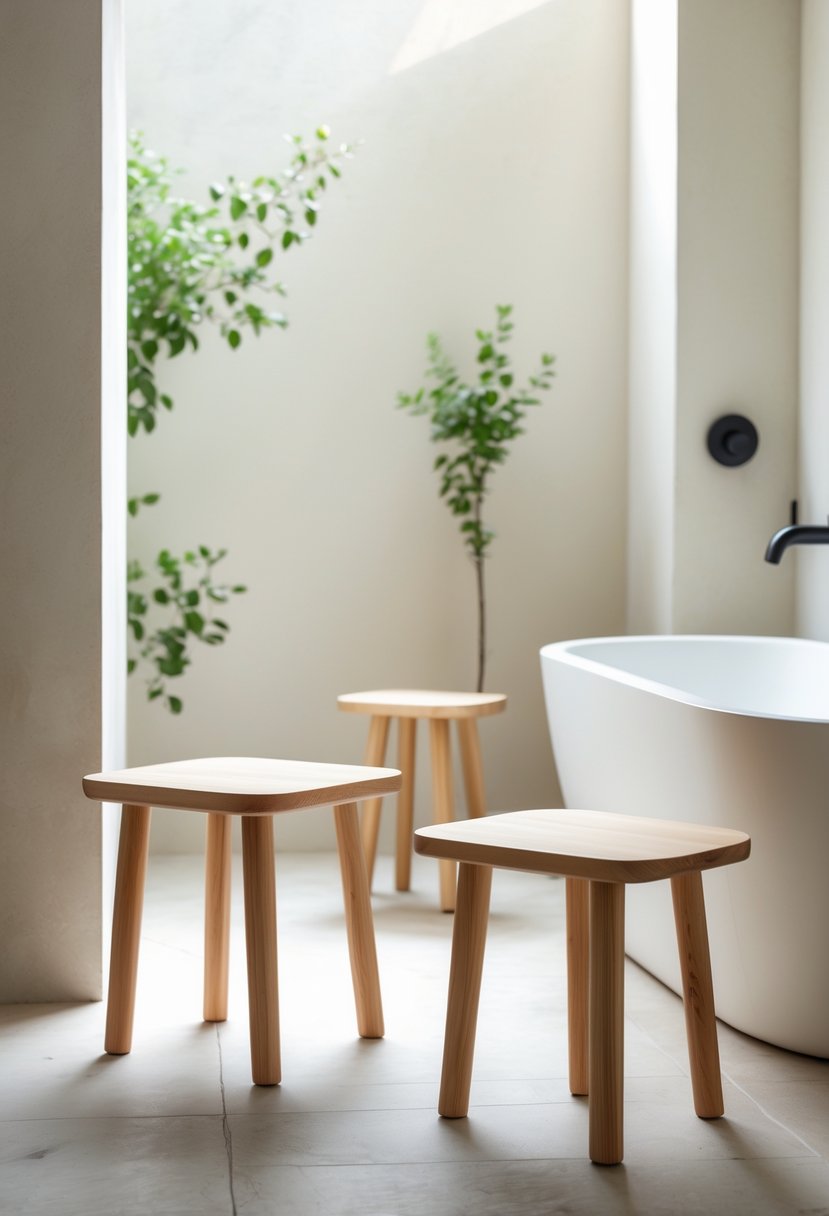
Scandinavian-style wooden stools are a key element in Japandi bathroom design. They offer both function and a clean, minimalist look. Their simple shapes and natural wood tones blend well with the neutral palettes typical of Japandi style.
These stools provide practical seating or a spot to place towels and toiletries. The use of light-colored woods such as oak or birch adds warmth without cluttering the space.
The craftsmanship focuses on smooth lines and sturdy construction. This helps maintain a calm and organized atmosphere that Japandi design values.
Combination of smooth and rough textures
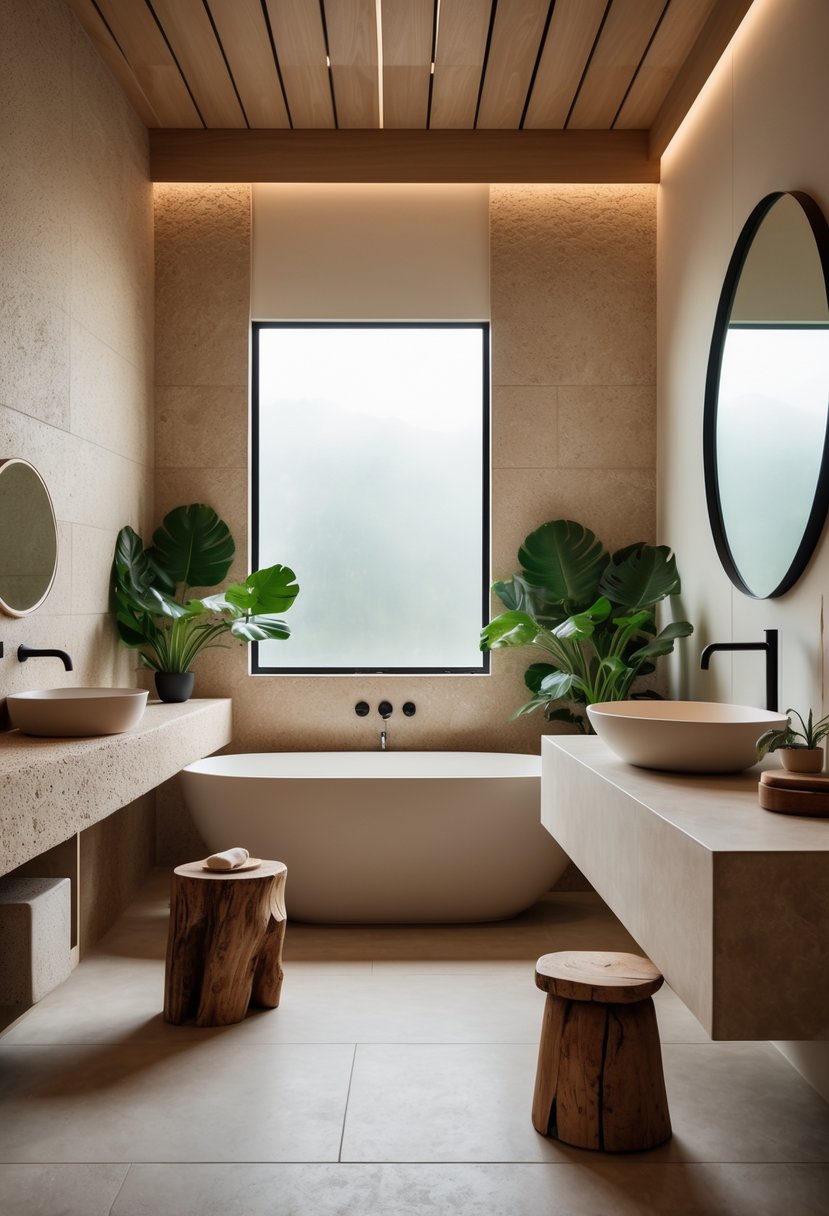
Japandi bathrooms balance smooth and rough textures to create visual interest and calm. Smooth surfaces like polished stone or sleek tiles contrast with rougher elements such as natural wood or textured wall panels.
This mix highlights the craftsmanship and natural beauty of materials without overwhelming the space.
Combining these textures also adds warmth and depth while keeping the minimalist feel. The interplay between soft and rugged surfaces helps maintain a serene and grounded atmosphere.
Wooden stools or benches with natural grain bring functionality and texture. Smooth stone tubs or countertops provide simplicity and ease of maintenance.
Maintaining Your Japandi Bathroom
Keeping a Japandi bathroom looking its best depends on gentle care and attention to detail. Natural materials require specific cleaning methods, and the calm color scheme needs to be preserved carefully to avoid fading or damage.
Cleaning Tips for Natural Materials
Natural wood and stone are common in Japandi bathrooms. They need cleaning with mild, non-abrasive products. Harsh chemicals can damage wood finishes and stone surfaces.
Use a soft cloth or sponge with warm water and a little gentle soap. Avoid soaking wood to prevent warping. After cleaning, dry surfaces immediately with a dry cloth.
For stone, avoid acidic cleaners like vinegar or lemon. Instead, use specialized stone cleaners to protect the surface.
Regular dusting of wooden fixtures helps stop dirt buildup. Oiling wood occasionally can keep it from drying out, but use only products meant for the specific type of wood.
Preserving Color Harmony
Japandi bathrooms use soft, natural tones like beige, light gray, or muted greens. These colors can fade if exposed to strong sunlight for long periods.
To keep the color palette fresh, place window coverings to filter harsh light. Soft, diffused lighting also helps maintain the subtle tones without making the space feel dark.
Avoid using brightly colored cleaning products or décor items that clash with the gentle hues. Stick to neutral tones when updating accessories or towels.
Cleaning products should be tested on a small, hidden spot to ensure they do not discolor surfaces or fabrics.
Conclusion
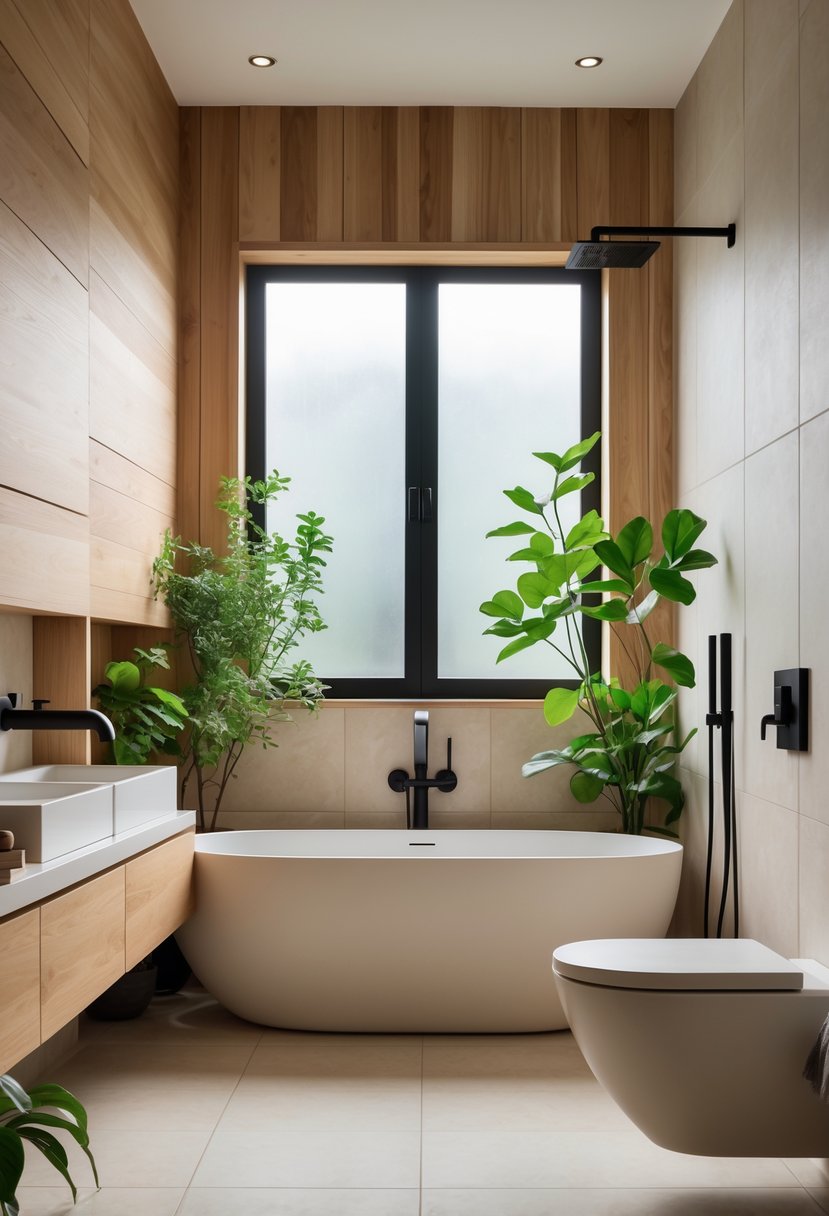
Japandi bathroom design offers a balanced blend of simplicity and warmth. It focuses on clean lines, natural materials, and neutral colors to create a calming space.
The style encourages the use of light wood, soft tones, and uncluttered layouts. These elements help bring a sense of peace and order to everyday routines.
Functionality is key in Japandi design. Every piece should serve a purpose while contributing to the overall calm atmosphere.
By combining Japanese minimalism with Scandinavian comfort, Japandi bathrooms feel both elegant and practical. This makes them suitable for a variety of bathroom sizes and budgets.
A few important features to consider:
- Natural wood accents for warmth
- Muted color palettes for relaxation
- Simple fixtures to reduce clutter
- Thoughtful storage to maintain order
Careful attention to detail creates a space that supports relaxation and daily use alike. The Japandi bathroom is a practical retreat that encourages well-being without excess.