
25 Transitional Home Office Ideas That Blend Comfort and Class Effortlessly
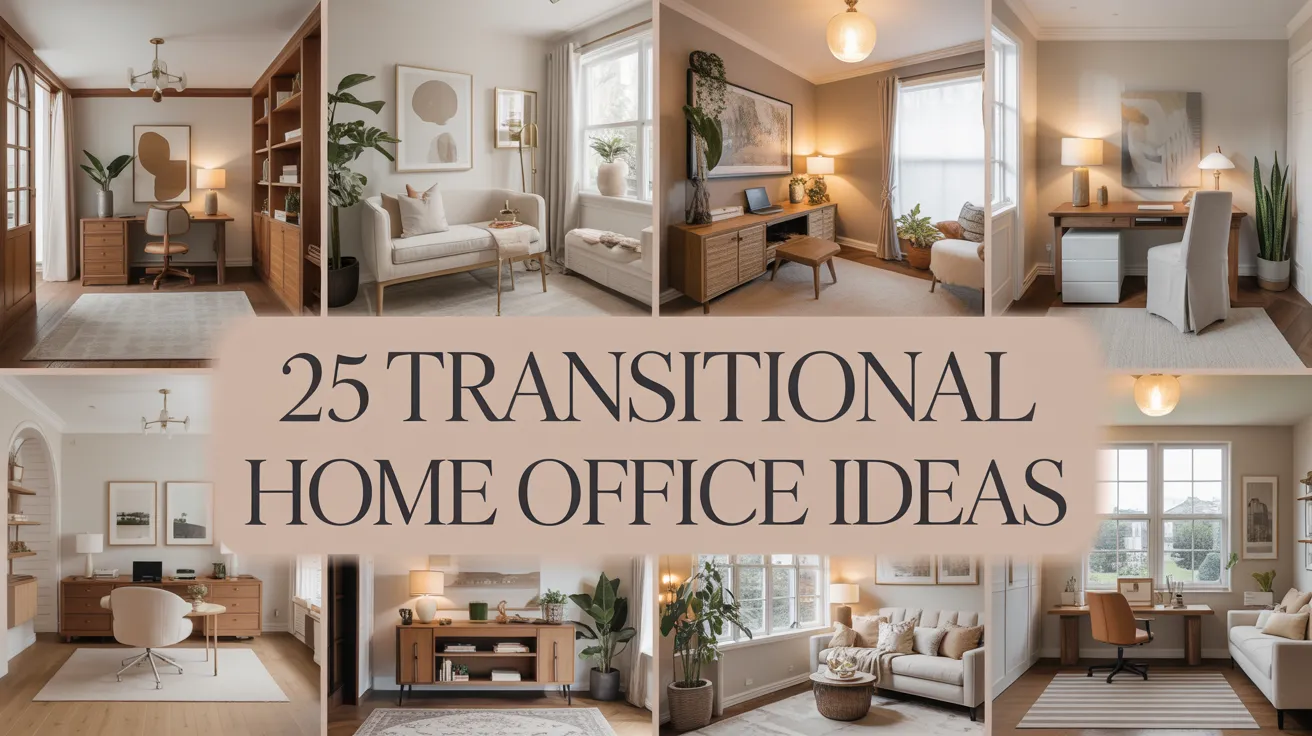
Ever feel like your workspace just doesn’t match who you are anymore? Too modern to feel warm, too classic to feel current it’s that awkward middle ground that never quite inspires. Transitional home office design bridges that gap beautifully. It blends comfort with sophistication, giving you a space that looks stunning and feels easy to live in.
Soft neutrals, warm woods, layered lighting, and timeless accents turn everyday work into something calming. Whether you’re reworking a corner nook or redesigning your full home office, these ideas help you build balance between function and beauty. Get ready to create a workspace that feels as productive as it looks.
Blending Warm Woods with Sleek Lines
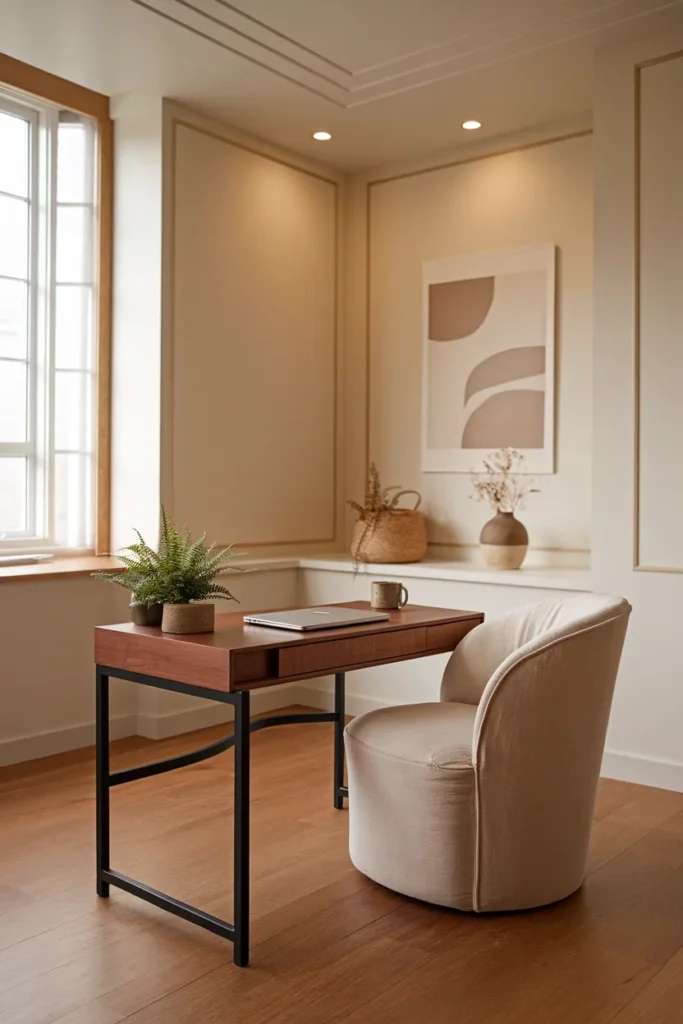
You walk into your office and the scent of wood hits first. That earthy, cozy smell that somehow makes you feel productive. A walnut desk sits near the window, smooth to the touch, reflecting soft daylight across the room. It feels old and new at once. That’s the charm of a transitional home office.
Pair that wood with matte black or brushed brass accents. Maybe it’s the desk lamp or cabinet pulls, doesn’t matter. It grounds the whole look without stealing attention. The space feels balanced, neither too stiff nor too relaxed.
Add a woven rug under your chair and a plant on the shelf. Small touches. They soften the sharp lines and keep the vibe warm. You’ll feel proud sitting there every morning.
Neutral Palette with a Pop of Character
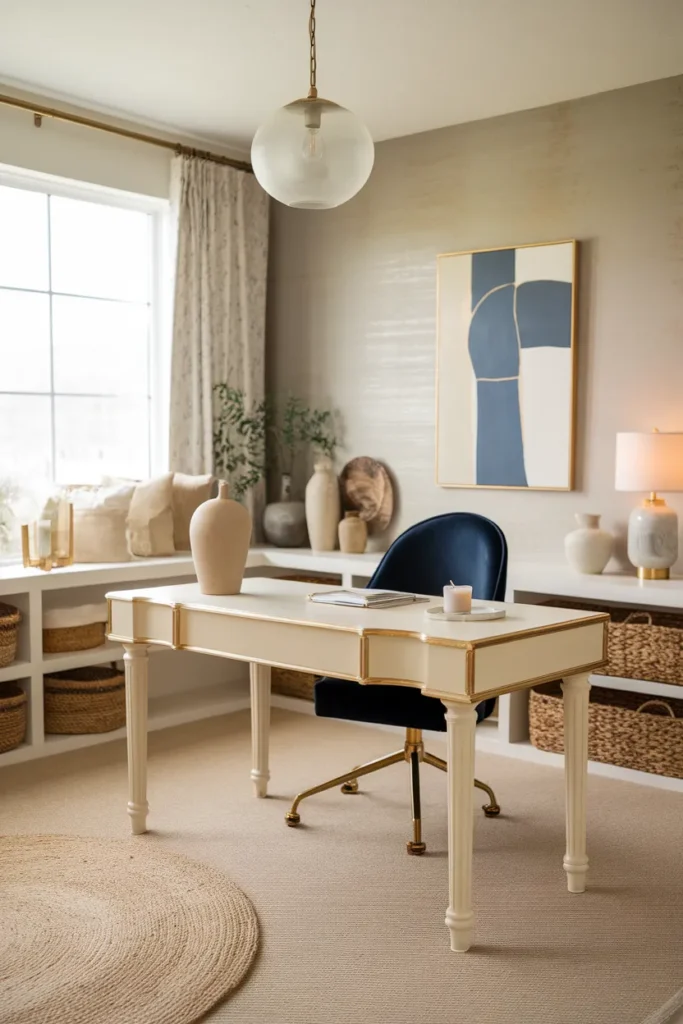
Picture this. The walls are soft cream, the curtains a light greige, and the room smells faintly of coffee and calm. That neutral base works like a blank canvas. It clears your head before the day begins.
Now bring in something unexpected. Maybe a bold velvet chair in navy or an art piece with messy brush strokes. One element that breaks the calm just enough to spark energy. Transitional design lives in that space between quiet and curious.
A textured throw, linen shades, maybe a small brass vase on the desk. These little things keep your office from feeling flat. Everything breathes together, simple but full of life.
Statement Lighting that Defines the Space
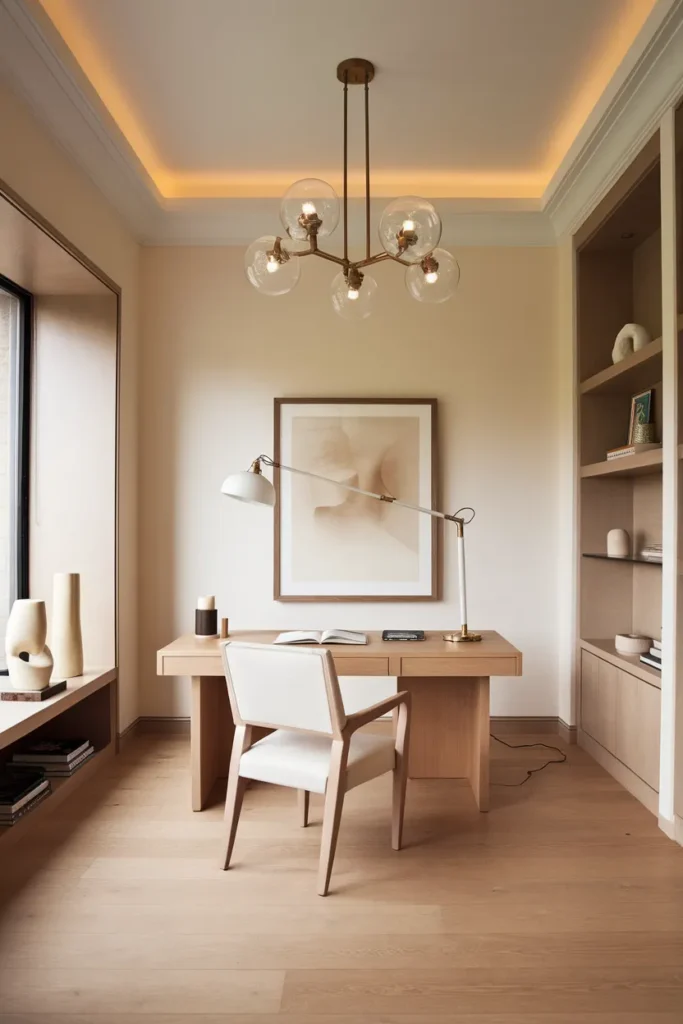
Lighting changes how you work, and you don’t even realize it at first. A warm glow bouncing off glass and brass can make an ordinary desk feel luxurious. It’s like your own little spotlight moment.
You can hang a pendant above the desk or go classic with a chandelier. The kind that throws soft light instead of glare. When dusk settles in, that light warms the space and somehow makes you want to keep going.
Add a small table lamp for layers. It gives the corners a soft fade instead of harsh shadows. Transitional home office lighting is about atmosphere, not just function. You’ll feel it every evening.
Textured Walls for Subtle Depth
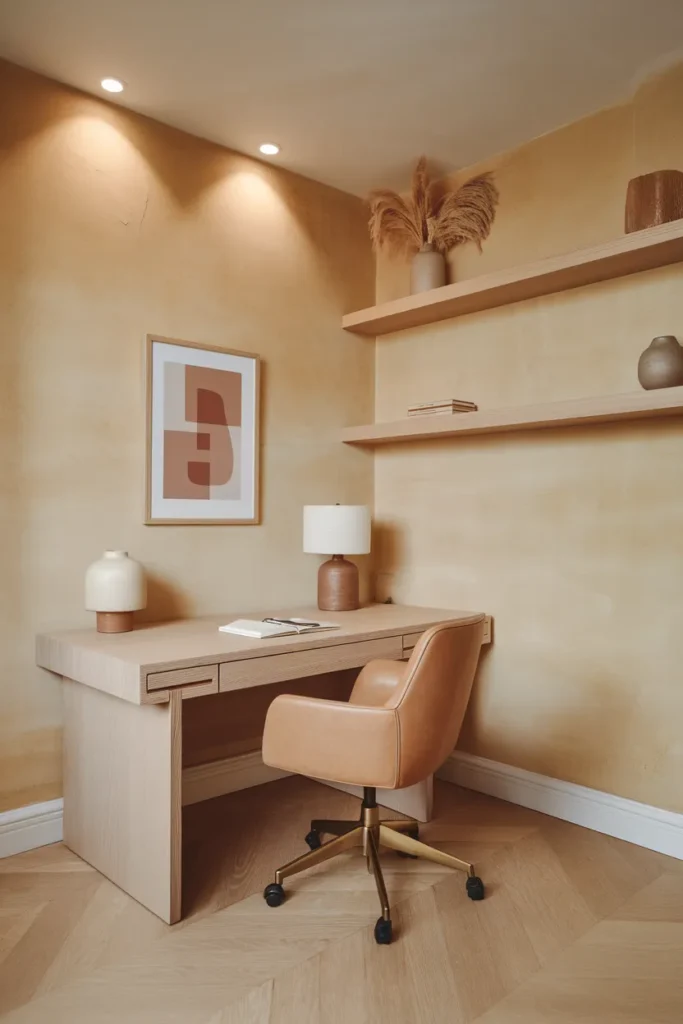
Sometimes a wall can do more talking than your furniture. A soft limewash or grasscloth wallpaper adds quiet character that you only notice when the sun hits it right. It’s subtle but rich. It makes your home office feel designed, not just arranged.
You don’t need to go bold with color. Even beige or warm gray looks amazing when texture steps in. The depth catches your eye but doesn’t fight for attention. You’ll keep glancing up during work, just to appreciate it.
Pair it with smooth furniture and neutral fabrics. The contrast works beautifully. It’s the kind of detail that makes your office feel finished without trying too hard.
Classic Built ins with Modern Flair
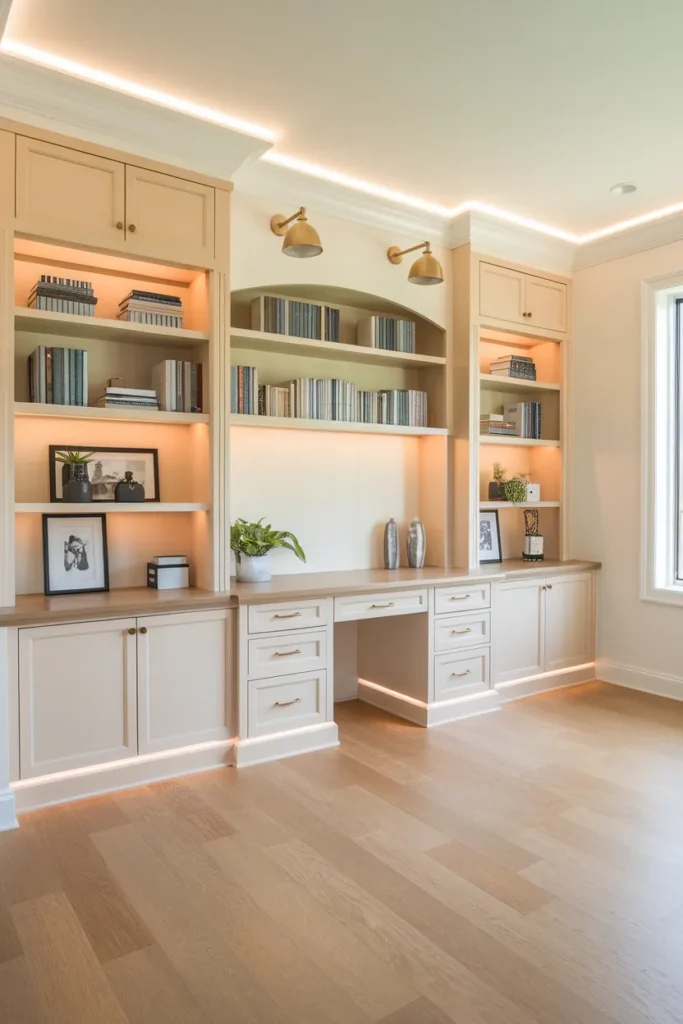
Built ins always feel like they belong. They remind you of older homes but when styled right, they fit seamlessly in a transitional workspace. Imagine creamy white shelves filled with books, a few plants, and framed family photos. It feels personal and elegant all at once.
Update the look with sleek hardware. Matte black knobs or brushed gold handles give it a fresh twist. It’s a small change but it wakes the room up. Transitional design is all about that mix old soul, new energy.
Add subtle lighting inside the shelves if you can. It brings warmth and makes the whole wall glow softly in the evenings. It’s not just storage anymore. It becomes part of your story.
Mixing Metal Accents with Soft Neutrals
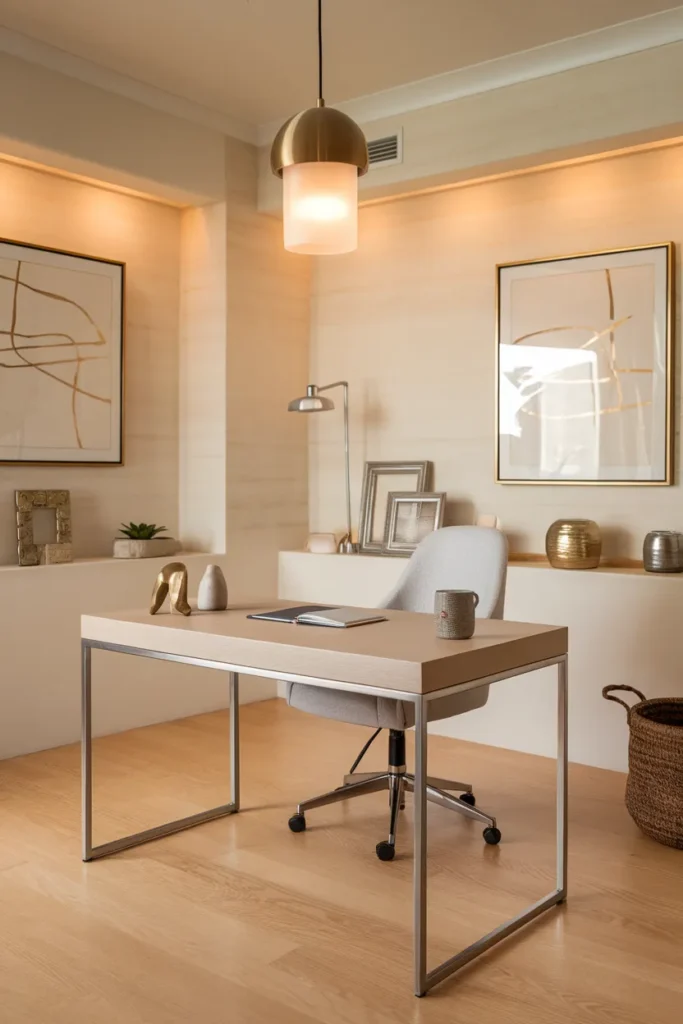
You know that quiet satisfaction when everything feels balanced? That’s what happens when soft neutral tones meet a few bold metal touches. Think brushed nickel frames, a steel legged desk, or a brass lamp that catches the sunlight just right. It’s not flashy. It’s confident.
The trick is to use metal as a detail, not a theme. You want warmth first, shine second. So maybe your walls stay calm in ivory or greige, while the hardware brings a tiny spark of energy. Transitional home offices thrive on these small contrasts.
Add a ceramic vase or a rattan tray to soften the edges. The mix of texture keeps your office from feeling cold. It feels lived in, balanced, and quietly stylish.
Layering Natural Textures for Warmth
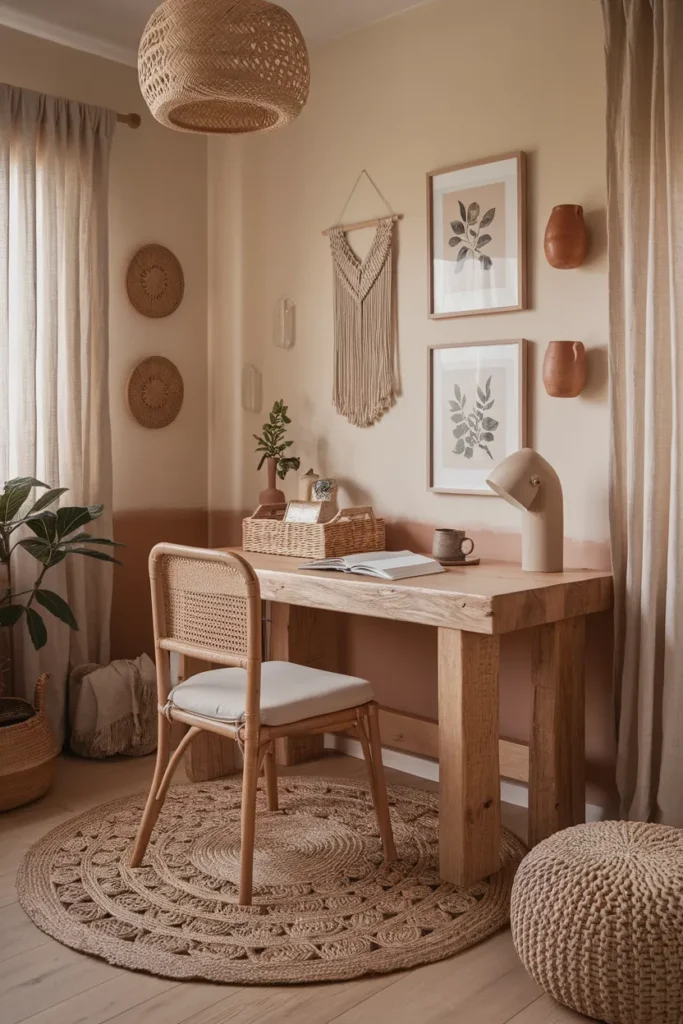
There’s something comforting about a space that feels touchable. You run your hand over the wood grain, the soft cotton throw, and maybe the cool surface of a marble coaster. Each texture tells a different story. That’s the soul of a warm transitional home office.
Start simple. A wooden desk, linen drapes, maybe a jute rug under your chair. Let the materials speak for themselves. They create calm without needing color. You’ll notice how the light plays differently across every surface.
Add greenery for freshness. A plant softens the corners and brings a small rhythm to the room. You’ll want to stay longer, maybe just to feel how calm it all feels.
Black and White with a Cozy Twist
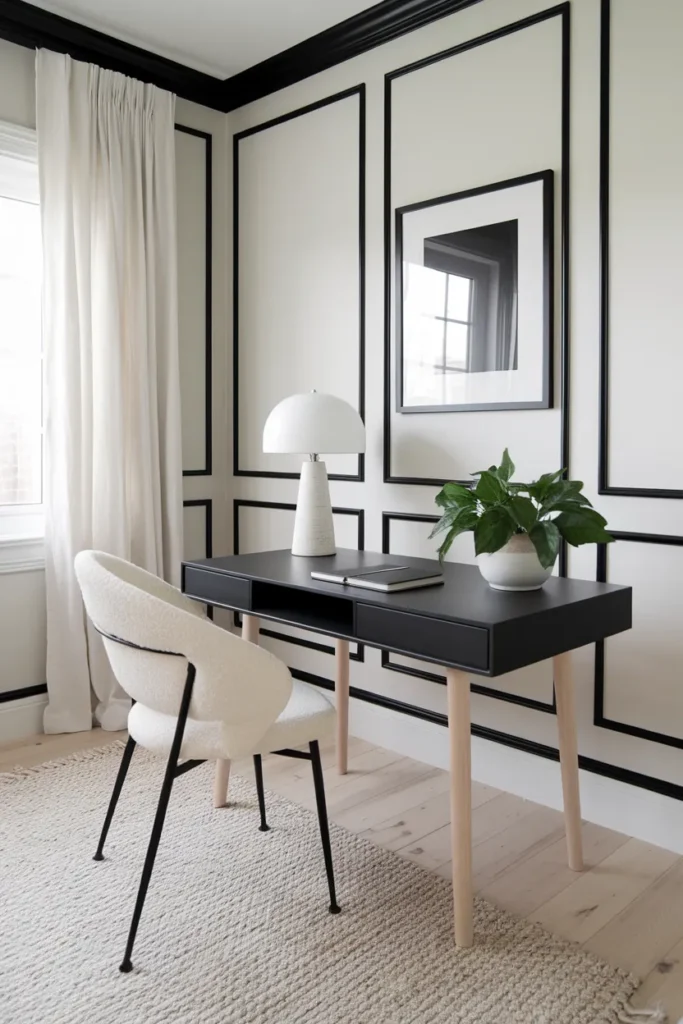
A black and white home office sounds sharp, but transitional design turns it into something softer. Imagine creamy white walls with a charcoal desk and subtle patterns scattered around. It’s modern, but not sterile.
Add warmth through fabrics a knit pillow, a boucle chair, maybe a woven wall art piece. These details stop the space from feeling too stark. You want contrast, not coldness.
Balance is the secret. A black picture frame here, a white vase there. It feels crisp, clean, but still human. The kind of space that clears your mind but doesn’t erase your comfort.
Timeless Desk with Updated Seating
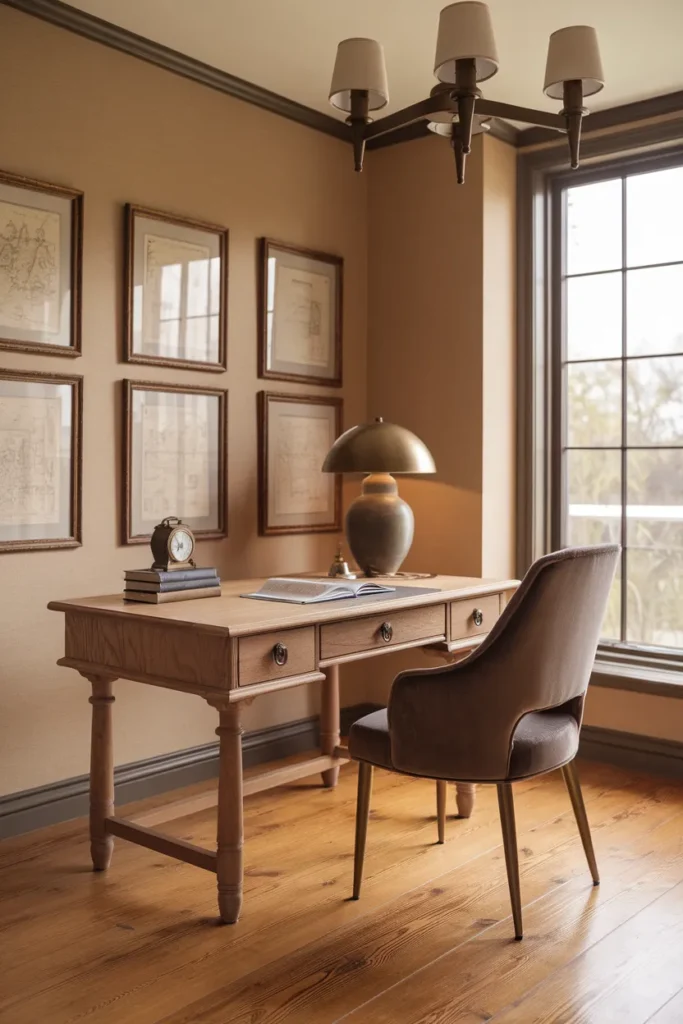
Sometimes, one piece anchors everything. A solid wood desk, full of character, maybe something passed down or picked up from a vintage store. It sets the tone classic, strong, enduring. Transitional home office design loves pieces with stories.
Pair that desk with a modern chair. Sleek lines, soft upholstery, something that makes sitting for hours feel like less of a chore. You’ll feel the difference the moment you lean back.
Add a soft rug underneath and a minimal lamp on top. The mix of old and new feels balanced, not forced. It’s the kind of space that looks timeless without feeling stuck in time.
Soft Color Palette with Layered Lighting
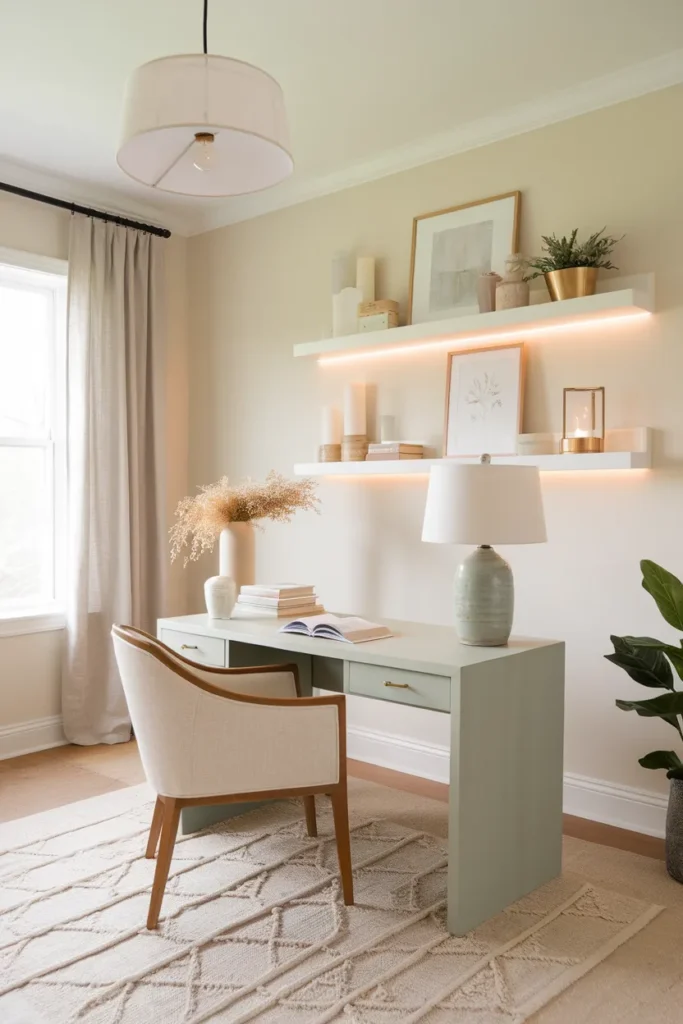
A calm color palette sets the mood before you even sit down. Shades of ivory, muted sage, or pale blush work wonders. They don’t demand attention. They just let the space breathe.
Now add layers of light. A pendant above, a desk lamp close by, maybe a small floor light tucked near the corner. Each one builds warmth. Transitional home office lighting isn’t just about brightness it’s about creating atmosphere.
You’ll notice how your focus improves when light feels right. It’s almost emotional, the way the room shifts from morning brightness to evening glow. You’ll never want to work anywhere else.
Cozy Corner Workspace with Layered Comfort
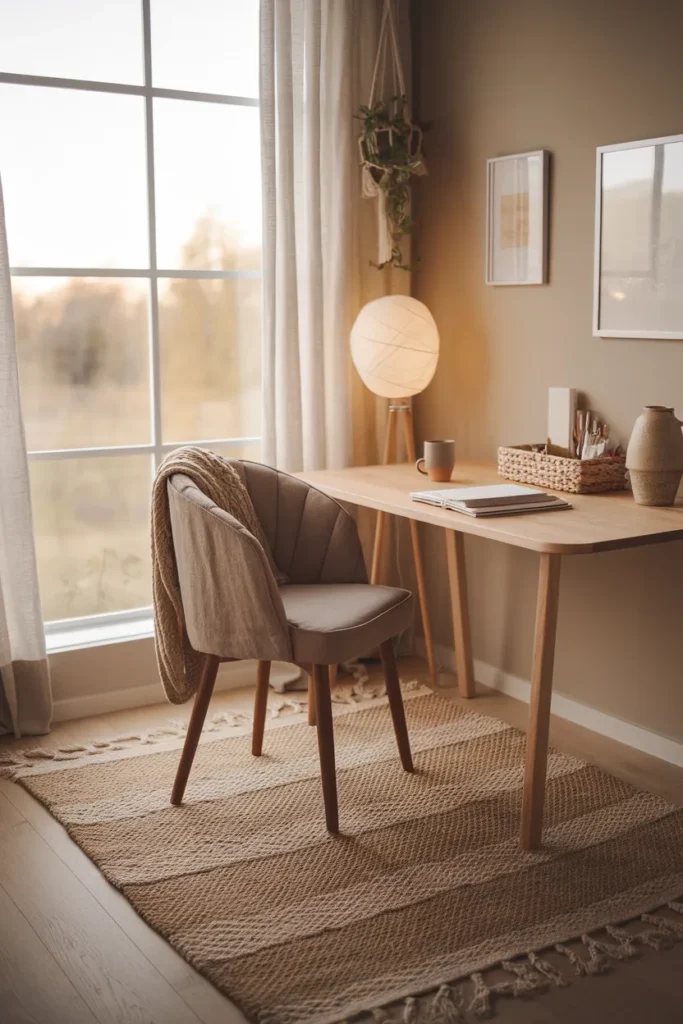
Sometimes all you need is one corner to create your own little world. A simple desk tucked under a window, a soft chair, maybe a throw draped over the back. You sit down, sunlight hits your face, and suddenly the space feels like a gentle pause in your day.
Use warm tones here taupe, sand, or soft beige. They make small corners feel bigger, lighter. A plush rug underfoot adds instant coziness, the kind that keeps you grounded through long hours.
Add a floor lamp that bends softly over your desk. The glow it casts in the evening will make you forget how small the space really is. It feels intimate, calm, and quietly beautiful.
Floating Shelves that Open the Room
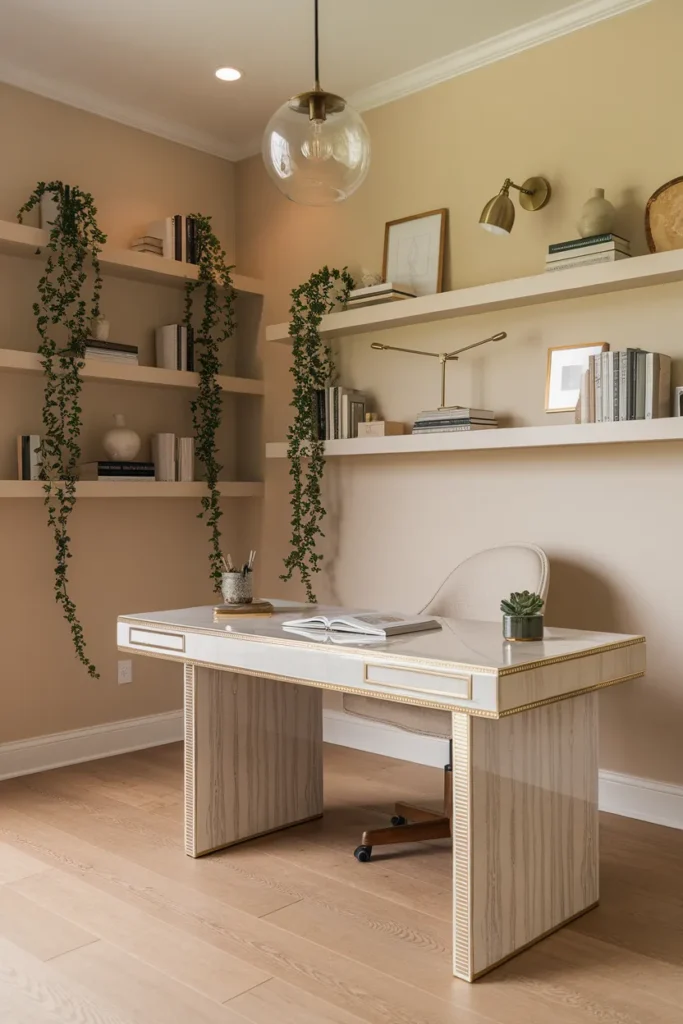
Floating shelves are like magic. They open up the walls, draw the eye upward, and make a room breathe. You can line them above your desk or along a side wall either way, they give structure without bulk.
Mix open shelving with decorative storage boxes and plants. It keeps things organized but still visually light. Transitional home office design is all about finding that sweet spot between function and beauty.
Don’t crowd the shelves. Leave space for air, a little white room for your eyes to rest. You’ll notice how it makes even a small workspace feel intentional and grown up.
Artwork that Tells Your Story
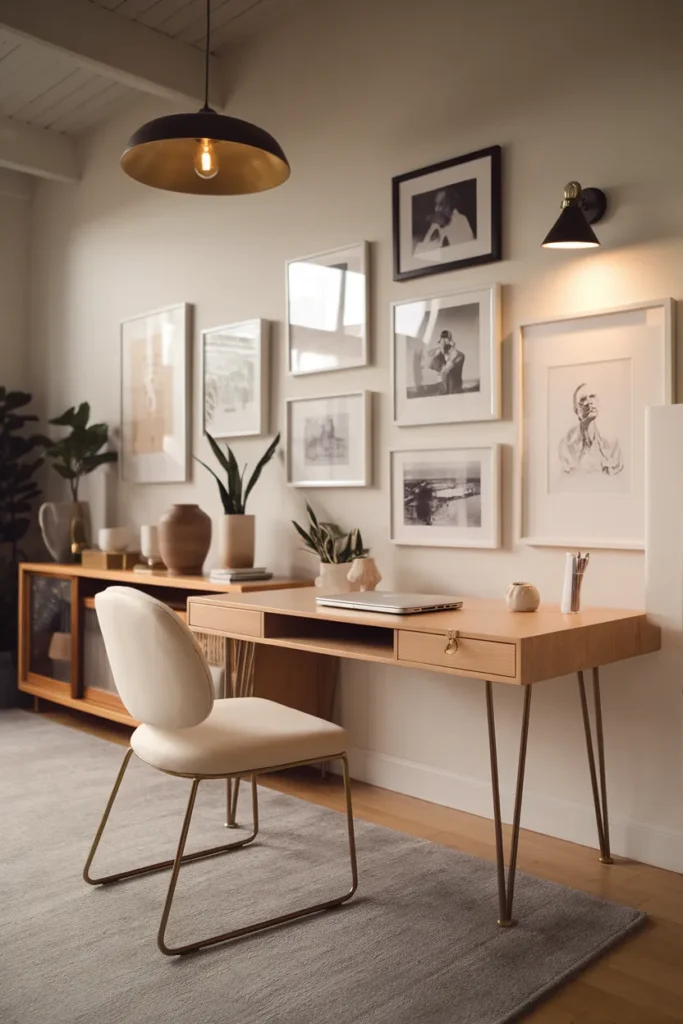
A wall without art feels unfinished. The right piece can completely change the energy of your workspace. It could be an abstract print in muted colors or an old black and white photo that reminds you where you started.
Hang it just at eye level behind your desk or near the window. Let it be something that catches your attention when your mind drifts during work. Transitional design works best when it feels personal, not staged.
Mix frame sizes or finishes for a layered look. A little gold, a little black, maybe some natural wood. It feels like a collection, not a gallery. Real. Human. Yours.
Mix of Vintage Finds and New Touches
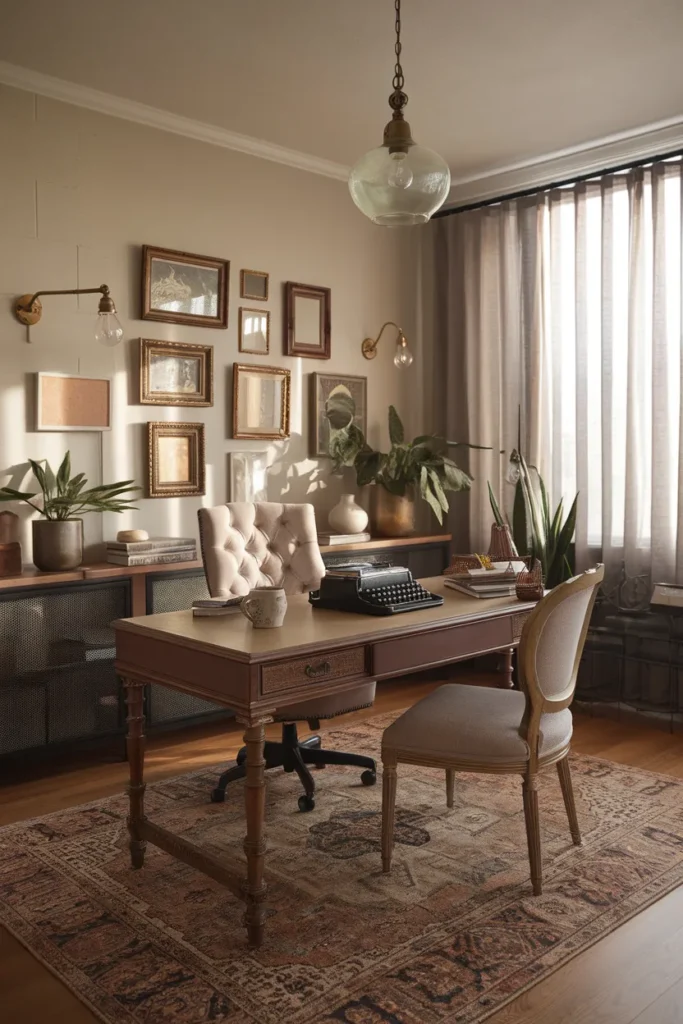
Every transitional home office benefits from a little nostalgia. A vintage side table. A weathered wooden box that holds your pens. Something that brings soul into the clean lines of modern furniture.
Don’t overthink the pairing. That old piece with character will only highlight how sleek your new desk looks. It’s contrast that feels warm instead of awkward. The mix makes your space look collected over time, not just bought last week.
Add a modern lamp or a sculptural vase to bridge the eras. Suddenly, your workspace feels layered, rich, and alive with personality.
Glass Elements that Reflect Light
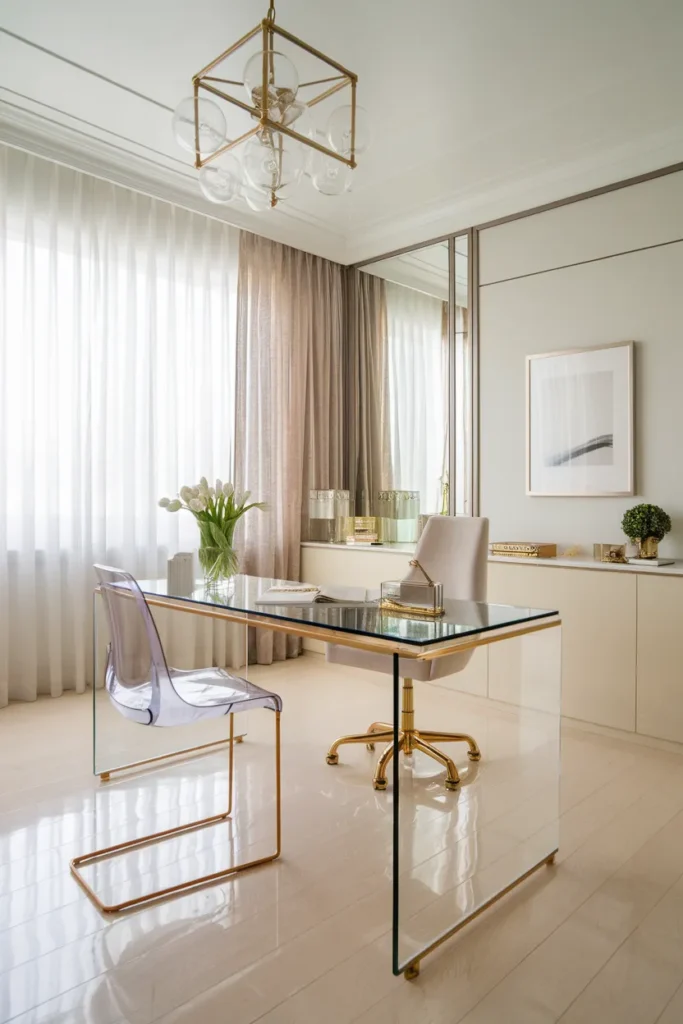
When natural light bounces around the room, everything feels open. Glass helps you achieve that. Maybe it’s a glass desk, a mirror leaning on the wall, or a glass pendant that glows soft at dusk. It adds shine without clutter.
You’ll notice how these surfaces make the space feel larger and fresher. They reflect color, texture, and energy all at once. Transitional home office design often uses glass to balance the heavier materials like wood or brass.
Keep it minimal. Too much glass can feel cold. But just enough, paired with warm fabrics or natural tones, creates a sense of effortless calm.
Earthy Accents that Keep You Grounded
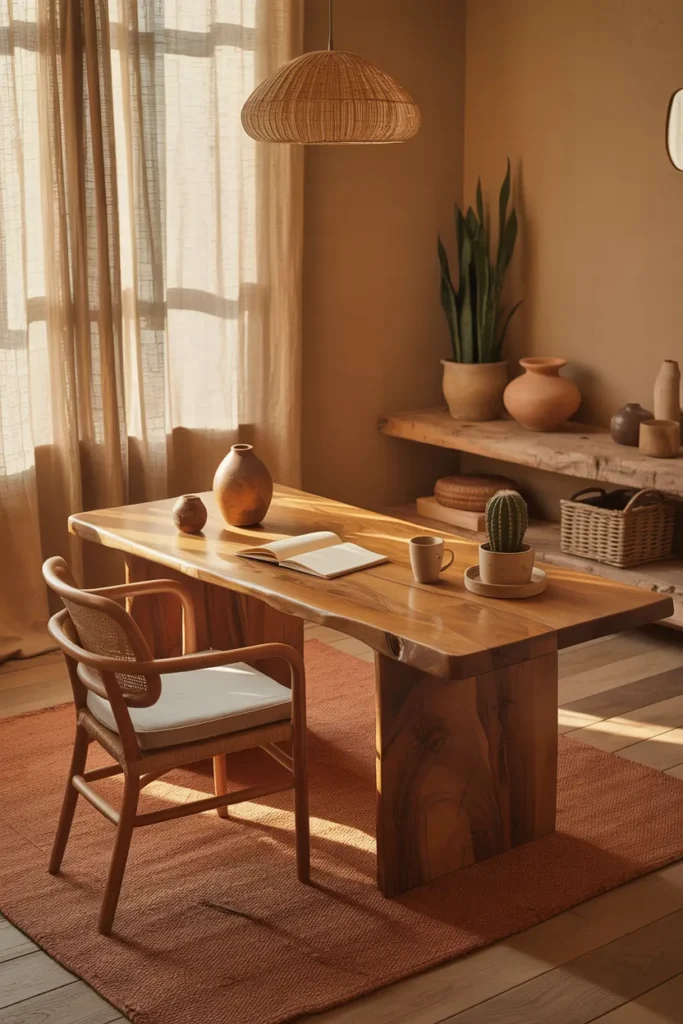
You know that calm feeling you get after a walk outside? Bring that same grounding energy into your office. Start with earthy tones terracotta, clay, olive, and muted browns. They make the space feel centered, calm, real.
You can add woven baskets, ceramic planters, or a natural wood desk that shows off its grain. The imperfections in the surface tell a story, one that modern pieces can’t fake. Transitional design loves that mix of rough and refined.
Throw in a soft rug or a jute mat under your chair. You’ll notice how quiet everything feels when the textures start working together. It’s a workspace that lets you breathe.
Built In Nook for Focused Work
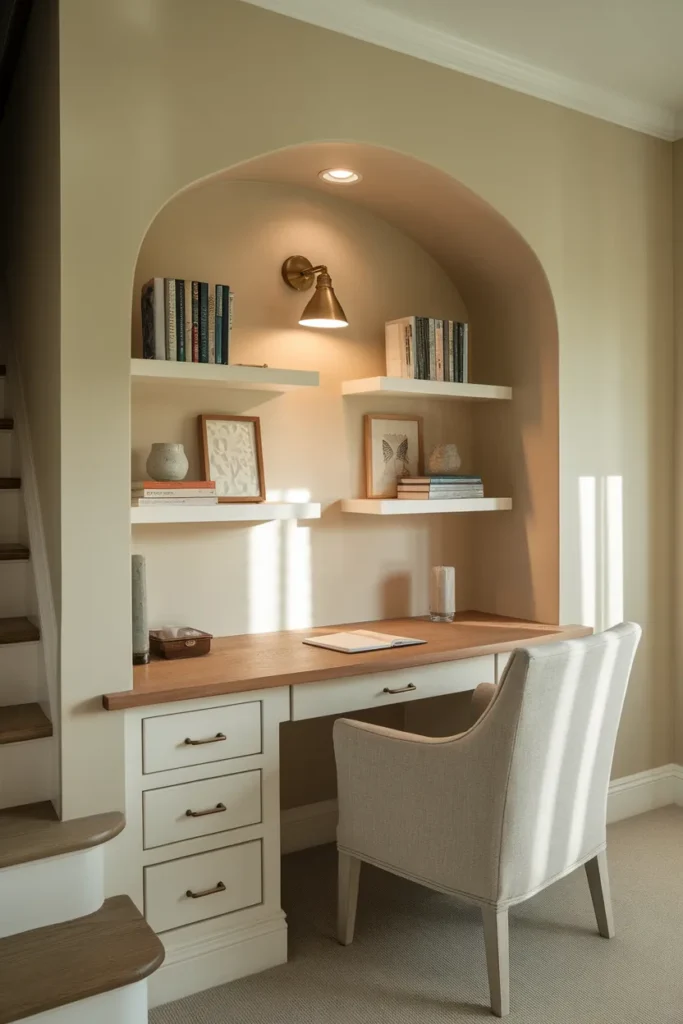
Some spaces just call for a built in nook. Maybe it’s under the stairs or tucked between two walls. It doesn’t need to be big just enough room for a desk, a chair, and your thoughts. These tucked away corners are perfect for focus.
Paint the nook in a slightly darker shade than the rest of the room. It gives it definition, makes it feel intentional. Add a small floating shelf for books or a candle for that faint warm scent during late nights.
A single wall sconce or focused desk light can change everything. When it’s on, it tells your brain it’s time to work. When it’s off, the space disappears again. Clean and peaceful.
Soft Curtains for Natural Flow
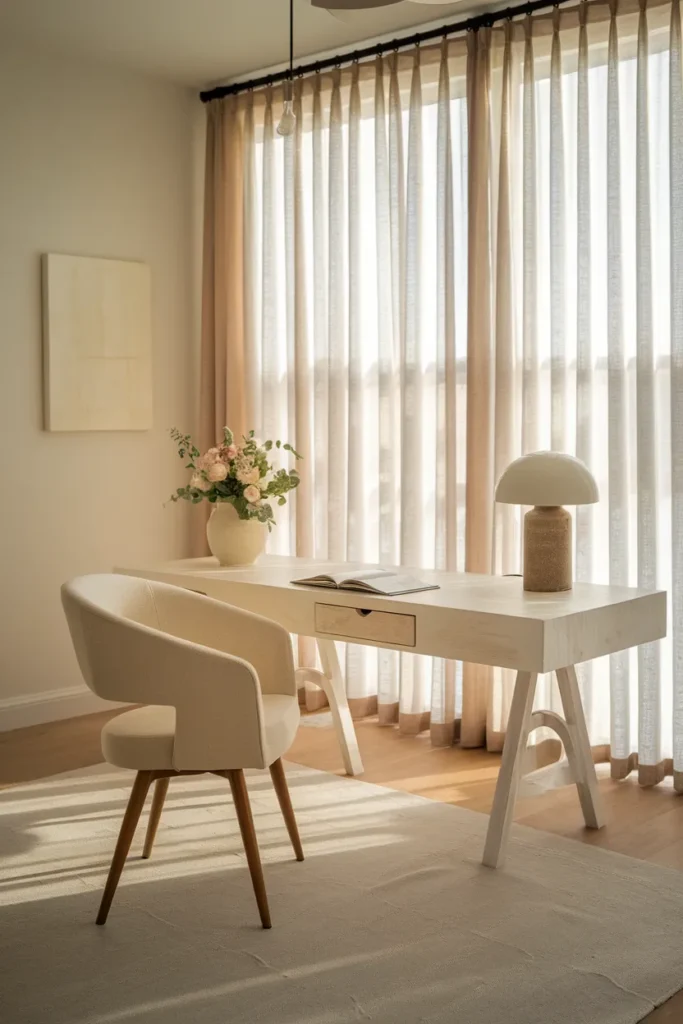
Curtains aren’t just about privacy. They change how a room feels. Sheer linen curtains filter the light in a way blinds never can. The air feels softer, the glow warmer, like sunlight through morning fog.
Go for light colors ivory, sand, or pale gray. They keep the tone neutral while adding texture and movement. Transitional home office design thrives on these gentle, layered moments.
When the breeze moves through them, it adds life to the space. The soft rustle of fabric can be oddly comforting during quiet work hours. Little details like that make an office feel like home.
Built Around a Window View
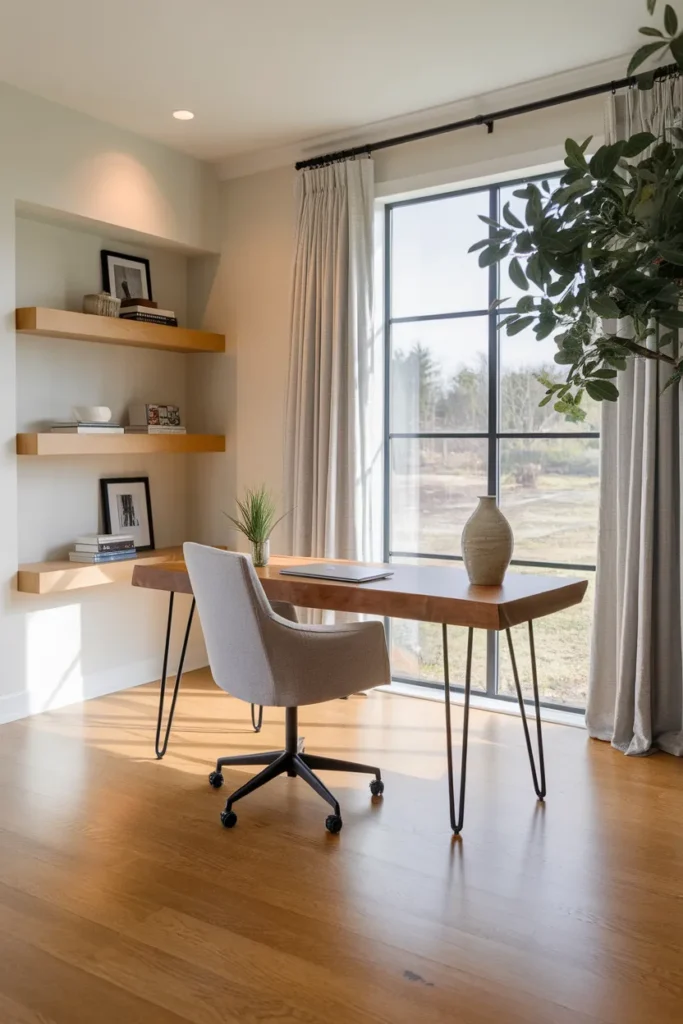
There’s something about working near a window that changes everything. The light shifts through the day, the view keeps your eyes from tiring, and you feel more alive. If you can, set your desk where you can see out.
Frame the window with simple curtains or bamboo shades. It softens the light without blocking it. Add a small plant on the sill and watch how it catches the glow every afternoon.
You’ll find yourself pausing between tasks, just watching the world move. It’s not distraction it’s a reset. A window workspace keeps your mind clear and your focus steady.
Compact Layout for Smaller Spaces
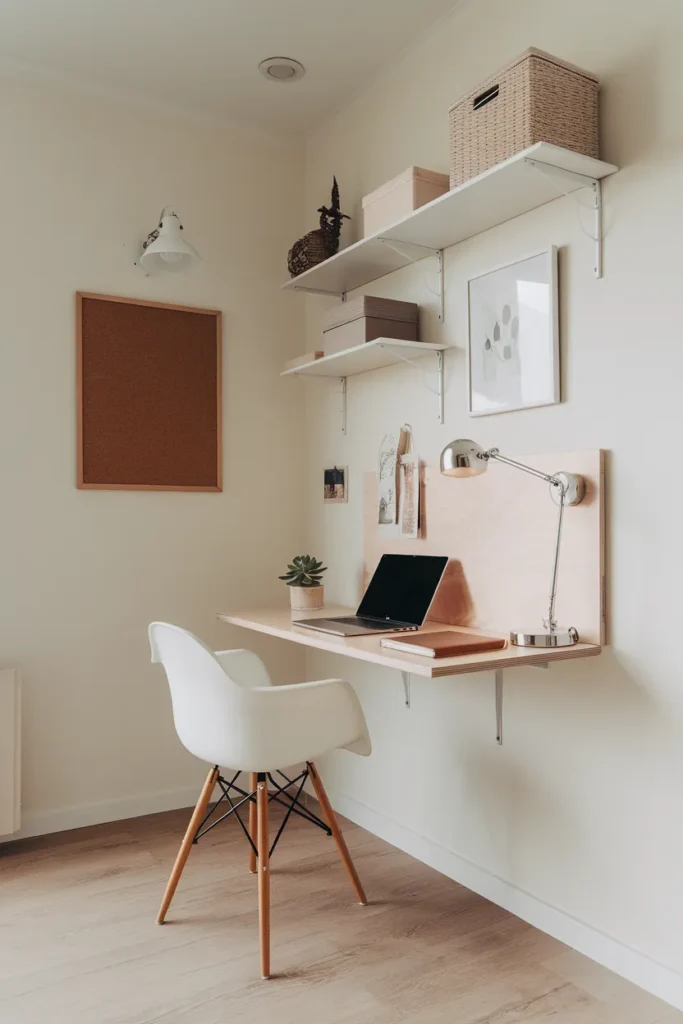
Not every home office has room to sprawl, and that’s okay. Transitional design works beautifully in small layouts because it thrives on intention. Every piece has purpose. Every inch counts.
Start with a wall mounted desk or a foldable table that disappears when you’re done. Add a slim chair that’s comfortable but light enough to move easily. Keep storage vertical with shelves and pegboards.
Use light tones to open the space visually pale beige, warm white, soft sage. A mirror helps bounce light and gives the illusion of depth. Small, yes, but so thoughtfully done it feels twice the size.
Calm Greenery that Refreshes the Mind
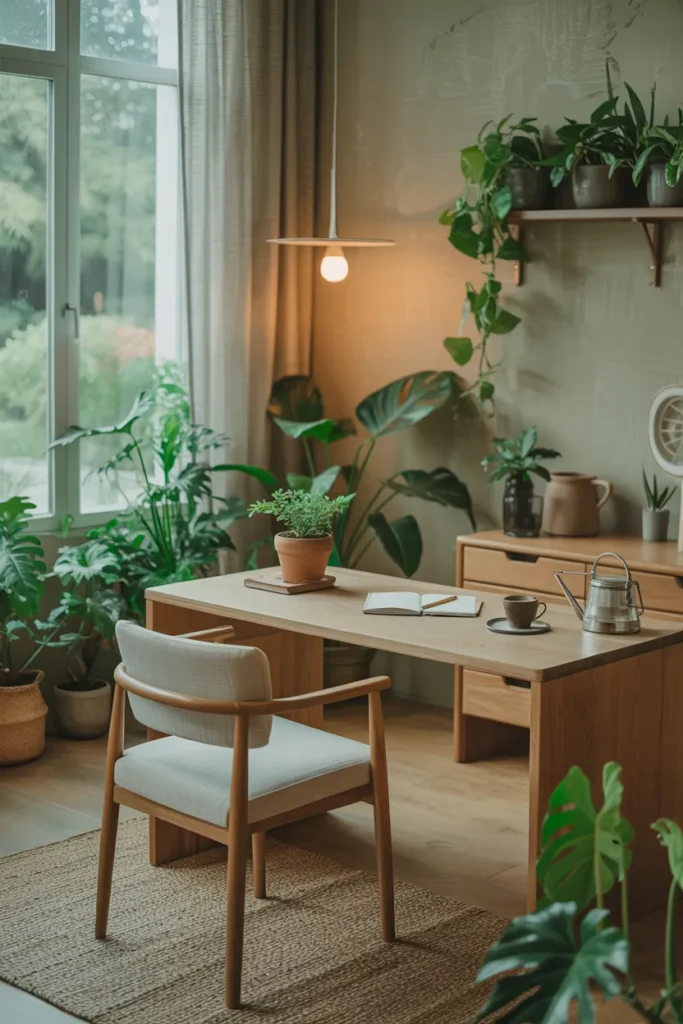
You can’t underestimate what a few plants do for your focus. The moment you bring in greenery, the whole room changes. It smells fresher, feels calmer, and suddenly work doesn’t seem that heavy.
Place a snake plant beside your desk or a fern near the window. A small potted ivy on the shelf adds quiet charm. You’ll find yourself looking at the leaves when your thoughts get tangled.
Transitional home offices shine when nature joins the mix. The greens balance the wood tones, the neutral walls, the metal accents. Everything feels softer, more human, more alive.
Layered Rugs for Texture and Warmth
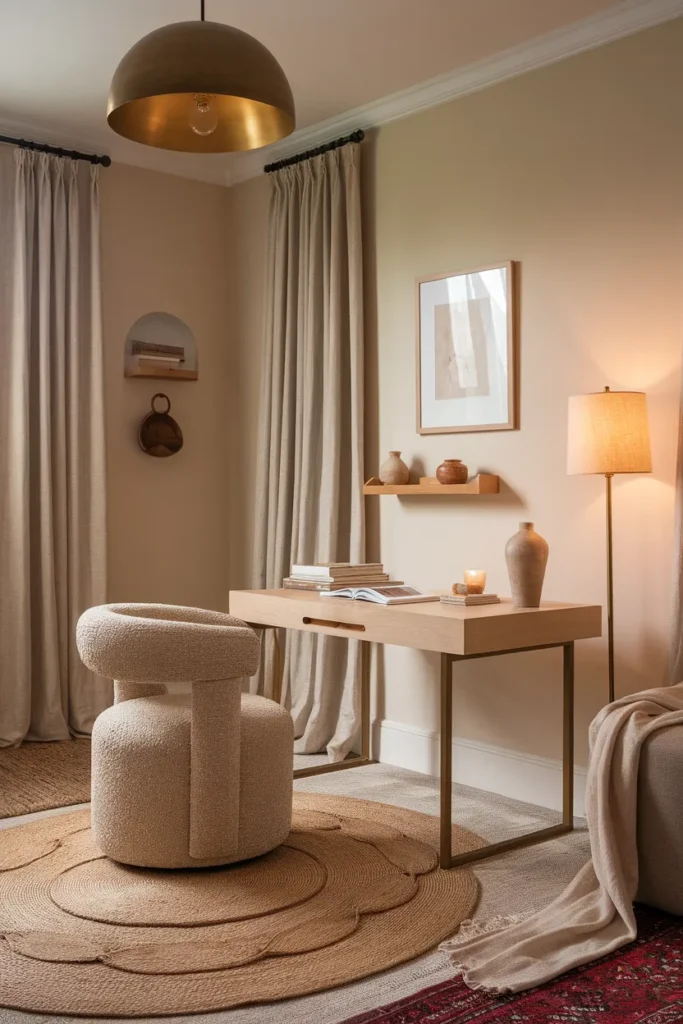
There’s something comforting about rugs layered just right. You walk across them and feel that mix of softness and texture under your feet. It makes even the most polished space feel approachable.
Start with a neutral base rug jute or sisal works great then layer a patterned one on top. Maybe muted Moroccan, maybe faded Persian. Transitional design is flexible enough to handle both.
The look feels collected, not planned. It’s warmth without clutter, detail without fuss. And the best part? It muffles the sound, making your workspace quietly focused.
Art Lit Corners for Evening Work
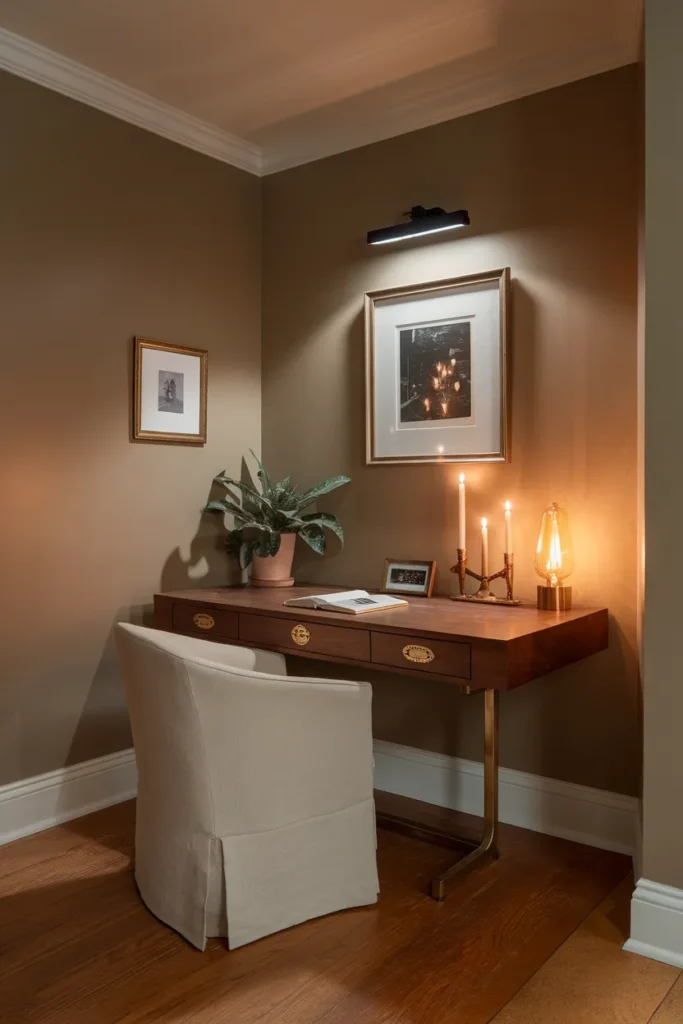
As the sun fades, the right lighting keeps your creativity alive. A small gallery light above your wall art or a focused lamp on your side table can shift the mood completely. It’s soft, intimate, and inspiring.
These little art lit corners add character to your transitional home office. They turn blank spaces into focal points. A framed sketch or abstract print under a gentle glow makes the room feel intentional.
You’ll love working in that light. It feels calm, steady, a bit like late night jazz playing low in the background. Work doesn’t feel like work anymore.
Upholstered Comfort for Long Hours
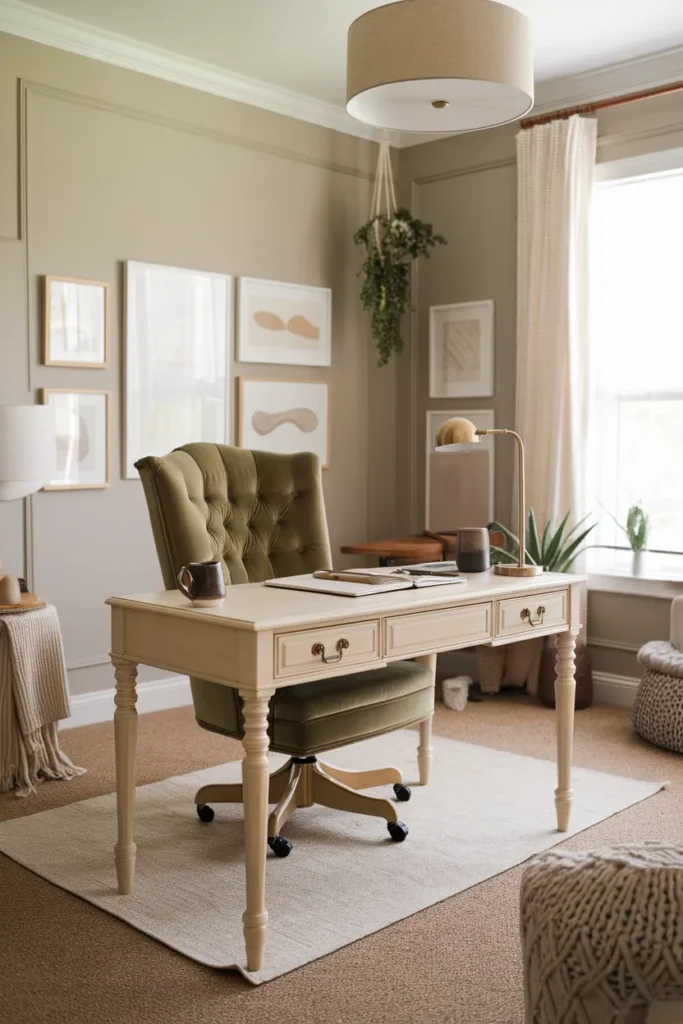
Comfort matters more than you think. A stylish chair that hugs your back, a soft cushion that feels just right it’s the kind of detail you notice after hours of sitting.
Choose an upholstered chair with a subtle pattern or textured fabric. Neutrals with warmth cream, beige, or dusty olive work beautifully. They blend into your transitional home office design while adding a touch of softness.
Add a throw pillow if you like. Maybe even a blanket for those long winter evenings. It turns your workspace into a place you actually enjoy spending time in.
Balanced Symmetry for Peace of Mind
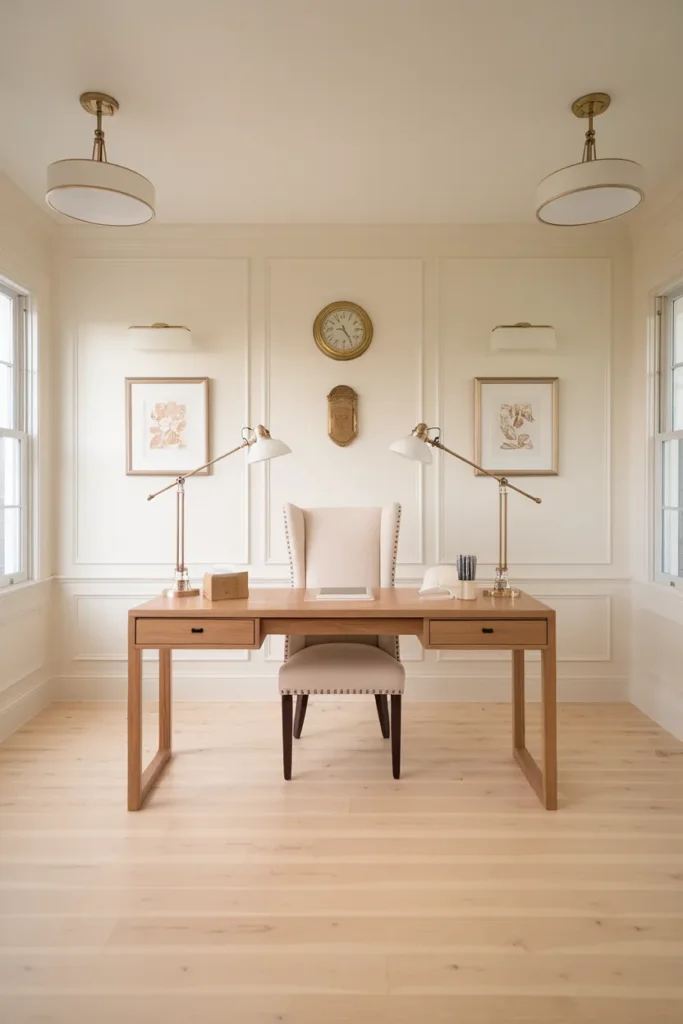
There’s quiet power in symmetry. When things line up just right the desk centered under a window, lamps on both sides, shelves balanced it calms the eye and the mind.
Symmetry gives your transitional home office a sense of order without feeling rigid. It’s subtle but deeply satisfying. Every item feels like it belongs exactly where it is.
Pair this layout with soft lighting and layered textures. The result is peace. Simple, steady peace. The kind that helps you focus, think, and breathe.
Conclusion
A well styled workspace doesn’t just look good it changes how you feel about your day. Transitional home office ideas give you more than design tips; they help you find comfort, focus, and rhythm right where you work. Every detail, from textures to lighting, adds quiet confidence to your daily routine.
Now it’s your turn to bring warmth and purpose into your home. Start small. Switch up a light, add texture, move a plant, or refresh your wall color. You’ll see how quickly your space transforms into something that supports you back. Explore these ideas, mix your favorites, and design a transitional home office that truly fits your story.