
How to Build a DIY Pergola for Your Backyard

So, you’re staring at that empty patch in your backyard, thinking it needs… something. A little bit of shade, a touch of class, maybe a spot to hang some twinkly lights and enjoy a drink on a warm evening. I’ve been there. My own backyard used to be a sad, sun-scorched stretch of lawn. The solution? I built a pergola. And let me tell you, if I can do it, you can definitely do it.
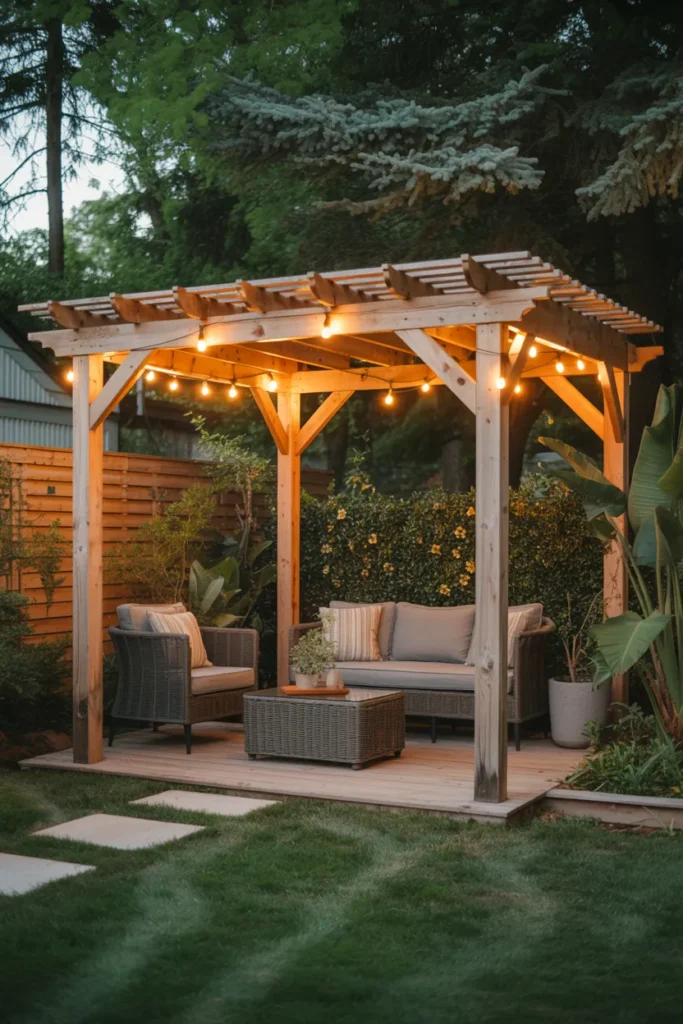
Building a pergola sounds like a monumental task, reserved for seasoned contractors with trucks full of expensive tools. But it’s not. It’s basically a giant, adult-sized Lego project, but with more splinters and a much better-looking final product. This guide will walk you through building a freestanding pergola that will completely transform your outdoor space. Let’s get to it.
Getting Started: Plan Before You Panic
Before you run to the lumber yard with wild ambition in your eyes, we need a plan. A solid plan is the difference between a stunning backyard feature and a leaning tower of timber that haunts your weekends. Trust me on this.
What’s Your Pergola’s Purpose?
First, think about what you want this pergola to do. Is it purely for looks? Do you need serious shade? Are you planning to grow climbing plants like wisteria or jasmine all over it? The function will dictate the design.

For example, if shade is your main goal, you’ll want the top rafters placed closer together. If you’re creating a green canopy, you’ll need a structure strong enough to support the weight of mature vines. I wanted a spot for my morning coffee and a place to hang string lights, so my design was a simple, open-top structure.
Size and Location: The Big Decisions
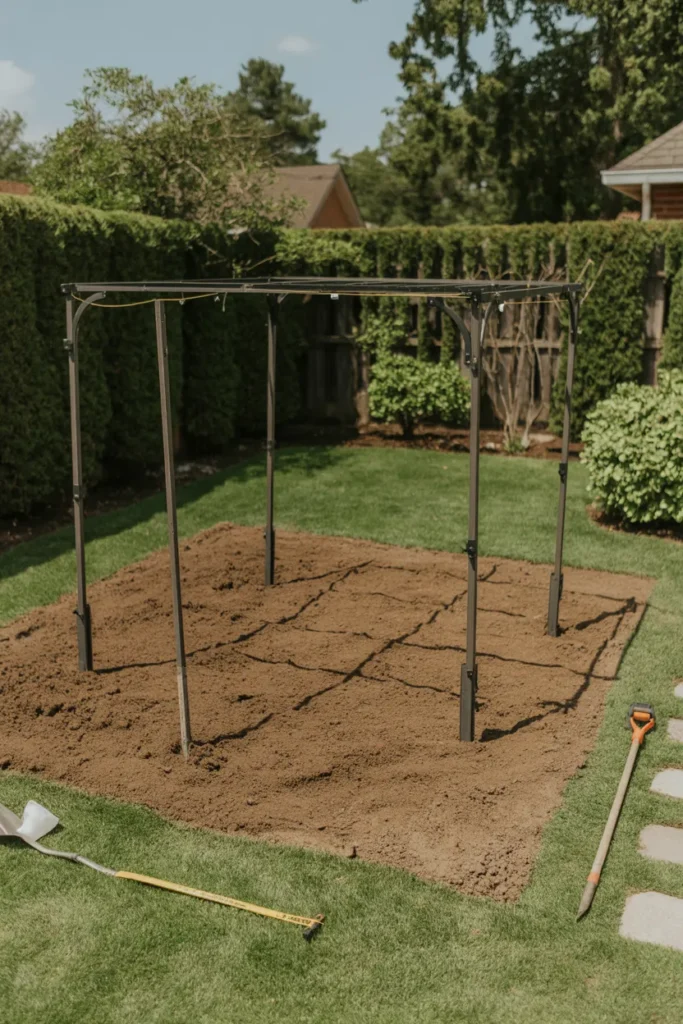
Where is this thing going to live? Grab a tape measure and map out the footprint in your yard. Use stakes and string to visualize the space it will occupy. This simple step can save you a world of hurt. You don’t want to finish building only to realize it’s blocking your access to the grill. That would be a tragedy.
Consider these points when choosing your location:
- Sunlight: Track how the sun moves across your yard throughout the day. Position your pergola to provide shade when and where you need it most.
- Ground Level: Is the ground flat? Building on a slope is a nightmare I wouldn’t wish on my worst enemy. You’ll need to level the ground or use footings of different heights, which adds a whole new layer of complexity. Find the flattest spot you can.
- Utilities: This is a big one. Before you dig any holes, call 811 (the “call before you dig” number in the US). It’s a free service that marks underground utility lines. Hitting a water pipe or electrical line is a surefire way to ruin your weekend and your budget.
Tools and Materials: Your Shopping List
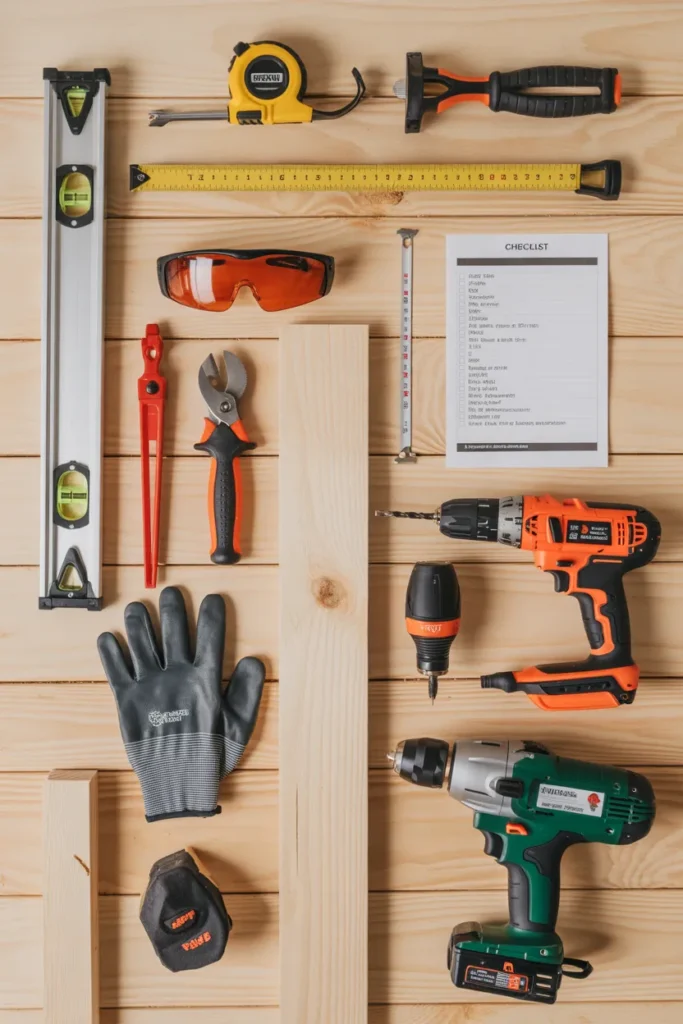
Alright, you have a plan. Now it’s time to gather your supplies. This list might seem long, but you probably have many of these tools already.
The Tools You’ll Need
- Tape Measure
- Level (a 4-foot level is your best friend here)
- Post Hole Digger or Auger
- Drill/Driver with bits
- Circular Saw or Miter Saw
- Socket Wrench Set
- Shovel and Wheelbarrow
- Clamps
- Safety Glasses & Gloves
You don’t need the fanciest tools on the market. A decent circular saw will do the job just fine. A miter saw makes the angled cuts for the decorative ends a breeze, but it’s not strictly necessary.
The Materials List
This list is for a standard 10×12 foot freestanding pergola. Adjust quantities based on your own design.
- Posts: (4) 6×6 inch posts, 10 or 12 feet long. Don’t skimp here; 6×6 posts provide the stability you need. 4x4s can look a bit spindly and may warp over time.
- Beams: (4) 2×8 inch boards, 12 feet long. These will be bolted to the sides of your posts.
- Rafters: (8-10) 2×6 inch boards, 12 feet long. These will sit on top of the beams.
- Top Slats (Optional): 2×2 inch boards if you want extra shade.
- Concrete: (8-10) bags of quick-setting concrete mix.
- Hardware:
- (16) 1/2-inch x 8-inch galvanized carriage bolts with nuts and washers.
- (16-20) 3-inch galvanized deck screws.
- (16-20) Galvanized hurricane ties or rafter hangers.
- Gravel: A few bags for drainage at the bottom of your post holes.
- Wood Stain/Sealer: To protect your beautiful creation from the elements.
A quick note on wood: Pressure-treated lumber is your most budget-friendly option. It’s chemically treated to resist rot and insects. Cedar or redwood are gorgeous alternatives that are naturally resistant to decay, but they come with a higher price tag. IMO, a good quality stain on pressure-treated wood looks fantastic and lasts for years.
The Build: Step-by-Step Instructions
Here’s where the fun begins. Put on some music, grab a cold drink, and let’s start building. It’s best to have a friend help you with this, especially when it comes to lifting the posts and beams.
Step 1: Dig and Set Your Posts
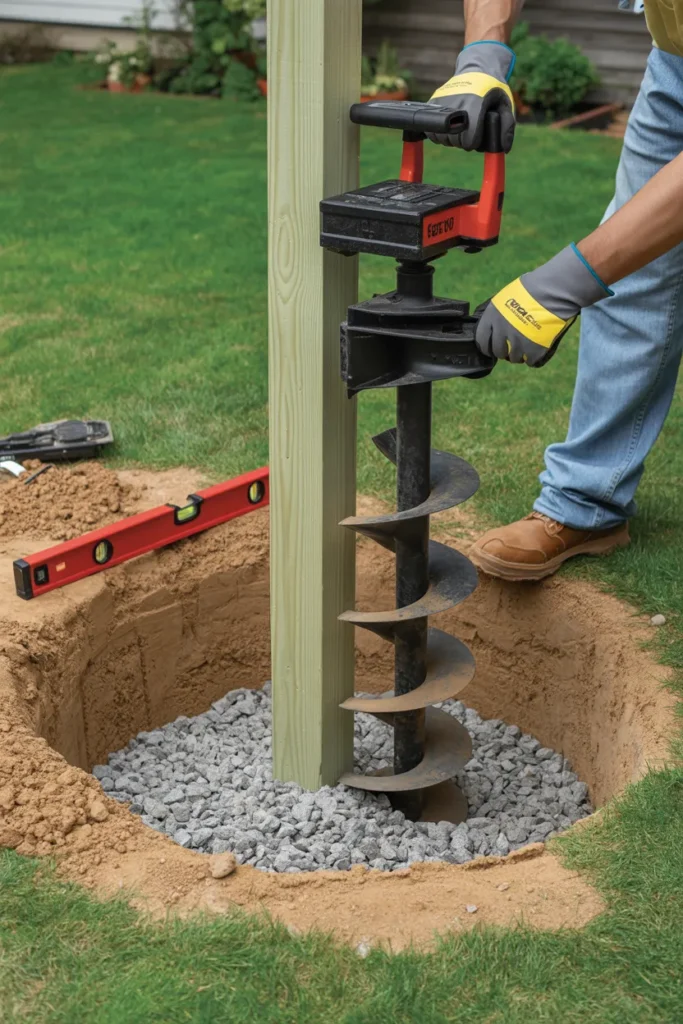
This is the most physically demanding part of the job, but it’s also the most critical. Your entire pergola relies on these posts being solid, square, and level.
- Mark Your Holes: Based on your plan, mark the center of each of your four post holes. Measure the diagonals between the marks. The measurements should be identical. If they aren’t, your footprint isn’t square. Adjust until they match perfectly.
- Dig, Dig, Dig: Using a post-hole digger, excavate holes that are about 12 inches in diameter and 24-30 inches deep. The depth should be below your local frost line to prevent heaving in the winter.
- Add Gravel: Pour 4-6 inches of gravel into the bottom of each hole. This helps with drainage and prevents the wood from sitting in moisture.
- Set the Posts: Place one 6×6 post in each hole. Use your level to ensure it’s perfectly plumb (vertically straight) on two adjacent sides. Brace it in place with some scrap 2x4s. Repeat for all four posts, constantly checking that they are level and square to each other.
- Pour the Concrete: Mix your concrete according to the package directions. Pour it into the holes, filling them up to a few inches below ground level. Double-check that your posts are still plumb before the concrete starts to set. It sets fast! Let the concrete cure for at least 24-48 hours. Seriously, walk away and let it do its thing.
Step 2: Attach the Beams
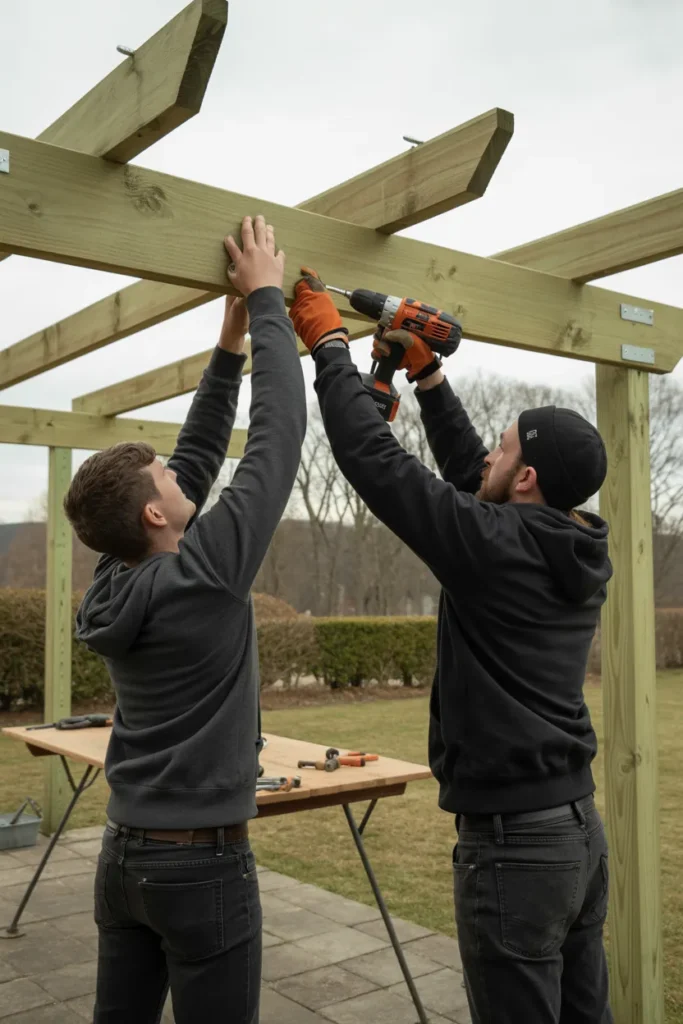
Once the concrete is rock solid, it’s time to add the main support beams. We’re using a double-beam design (one 2×8 on each side of the posts) for strength and aesthetics.
- Mark Your Height: Decide on the final height of your pergola. A good height is around 8 feet off the ground. Mark a level line on all four posts at this height. This line indicates where the bottom of your beams will sit.
- Cut the Beams: Your 2×8 beams should be cut to length. For a 10×12 pergola, you’ll have two pairs of beams.
- Lift and Clamp: This is where a helper is essential. Lift one of the 2×8 beams into place, aligning its bottom edge with the line you drew. Clamp it securely to the posts. Do the same for the parallel beam on the other side.
- Drill and Bolt: Drill two 1/2-inch holes through the beam and the post. Hammer the carriage bolts through and tighten the nuts with a socket wrench. Now, attach the second beam to the other side of the posts, creating a “sandwich” with the post in the middle.
Step 3: Install the Rafters
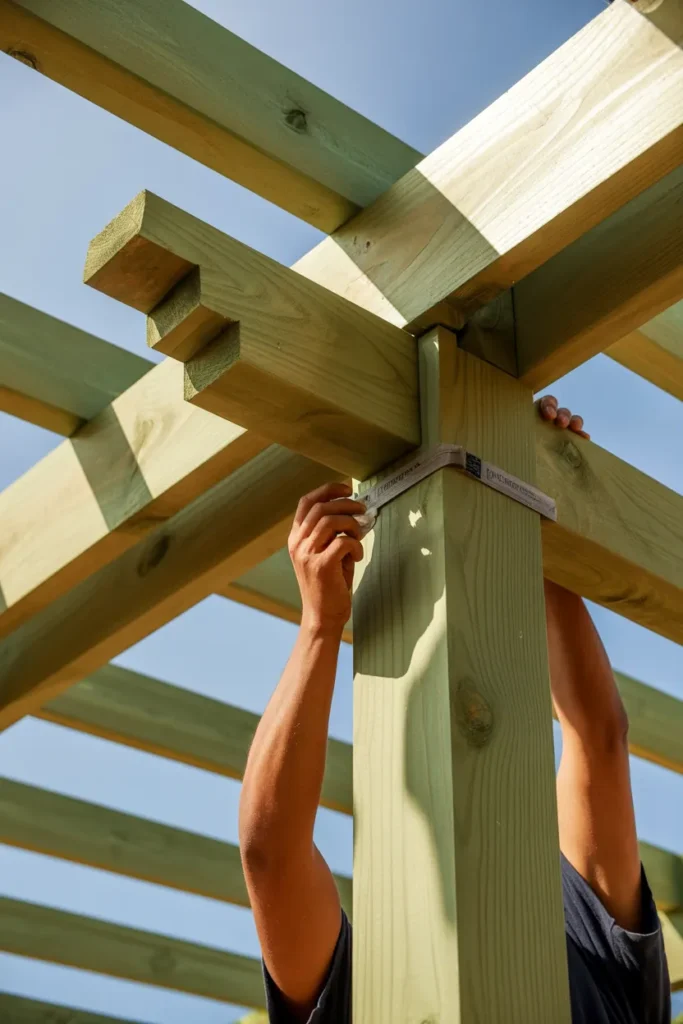
The rafters define the look of your pergola and provide the shade.
- Cut the Rafters: Your 2×6 rafters will sit on top of the beams and overhang by about a foot on each side. You can cut the ends at a 45-degree angle or create a more decorative shape for a custom look.
- Mark Rafter Spacing: On top of your beams, mark the placement for each rafter. Spacing them 12-16 inches apart is typical. Consistent spacing is key to a professional-looking result.
- Attach the Rafters: Place each rafter on its marks. Secure them to the beams using hurricane ties or by “toenailing” (driving screws in at an angle) with 3-inch deck screws. Hurricane ties are the stronger, more secure option and are highly recommended, especially if you live in a windy area.
Step 4: Add the Finishing Touches
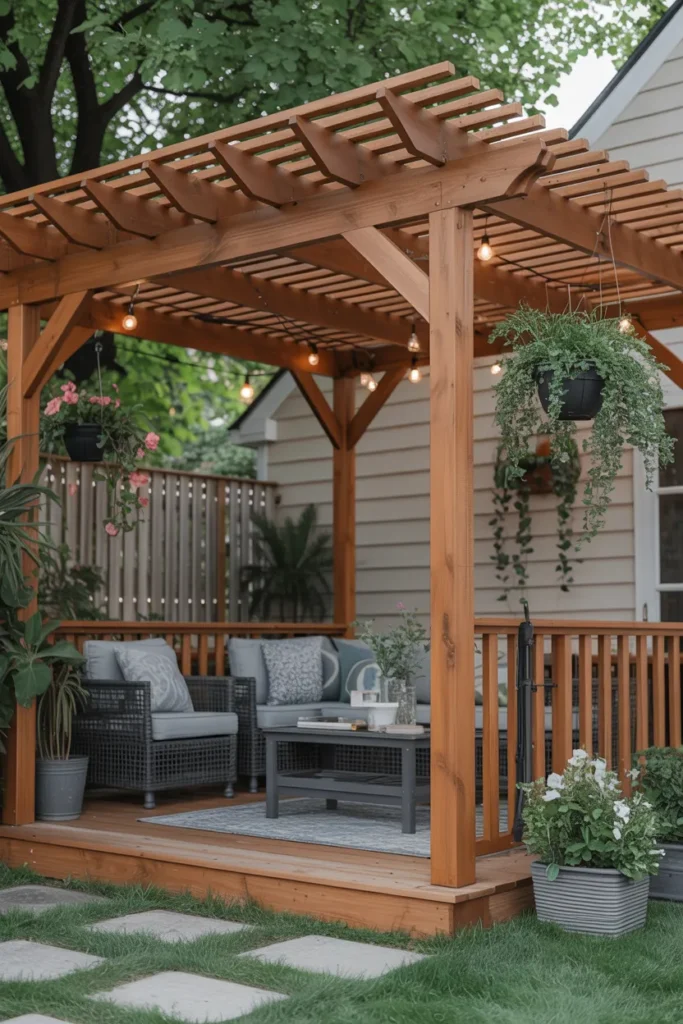
You have a pergola! Now for the details that make it yours.
- Top Slats: If you want more shade, you can add 2×2 slats running perpendicular to the rafters. Screw them into the top of each rafter, spaced about 6-8 inches apart.
- Stain and Seal: Now is the time to protect your investment. Apply a high-quality exterior wood stain or sealer. This will prevent the wood from turning gray and protect it from moisture and UV damage. Choose a color that complements your house and landscaping.
And that’s it! Step back and admire your handiwork. You just built a major addition to your home with your own two hands.
Final Thoughts: Was It Worth It?
Building my own pergola was one of the most rewarding DIY projects I’ve ever tackled. It was a weekend of hard work, a few frustrating moments (mostly involving getting things level), and a lot of sawdust. But the result? A beautiful, custom-built structure that adds thousands of dollars in value to my home and countless hours of enjoyment to my life.
So, are you ready to transform your backyard? You have the plan, you have the list, and you have the know-how. Go build something amazing. You won’t regret it.