
DIY Floating Shelves for Bedrooms: Step-by-Step Guide to Secure, Stylish Storage

Floating shelves are a smart way to add storage and style to any bedroom without taking up floor space. They offer a clean, modern look and keep items organized and easily accessible. Building them yourself lets you choose the size, finish, and placement to fit your room perfectly.
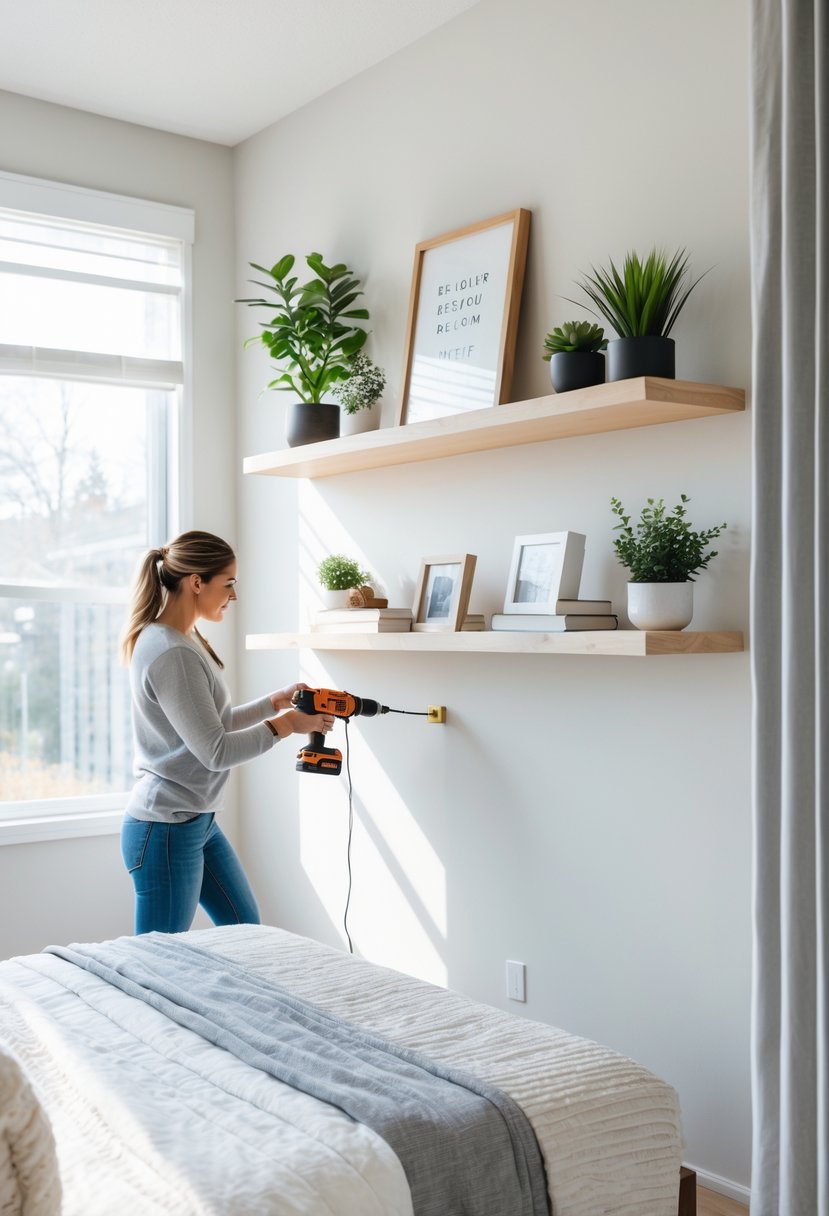
DIY floating shelves that are well-made can hold a good amount of weight and look seamless, with no visible brackets or hardware. This guide provides clear, step-by-step instructions to help create strong, stylish shelves that stay secure and straight over time. Anyone with basic tools and some patience can make these shelves a valuable addition to their bedroom.
This project is practical and customizable. It suits busy bedrooms where space is limited, or for anyone who wants an affordable way to upgrade their walls with elegant, functional shelves. With careful planning and the right materials, floating shelves can be both useful and attractive.
Understanding DIY Floating Shelves for Bedrooms
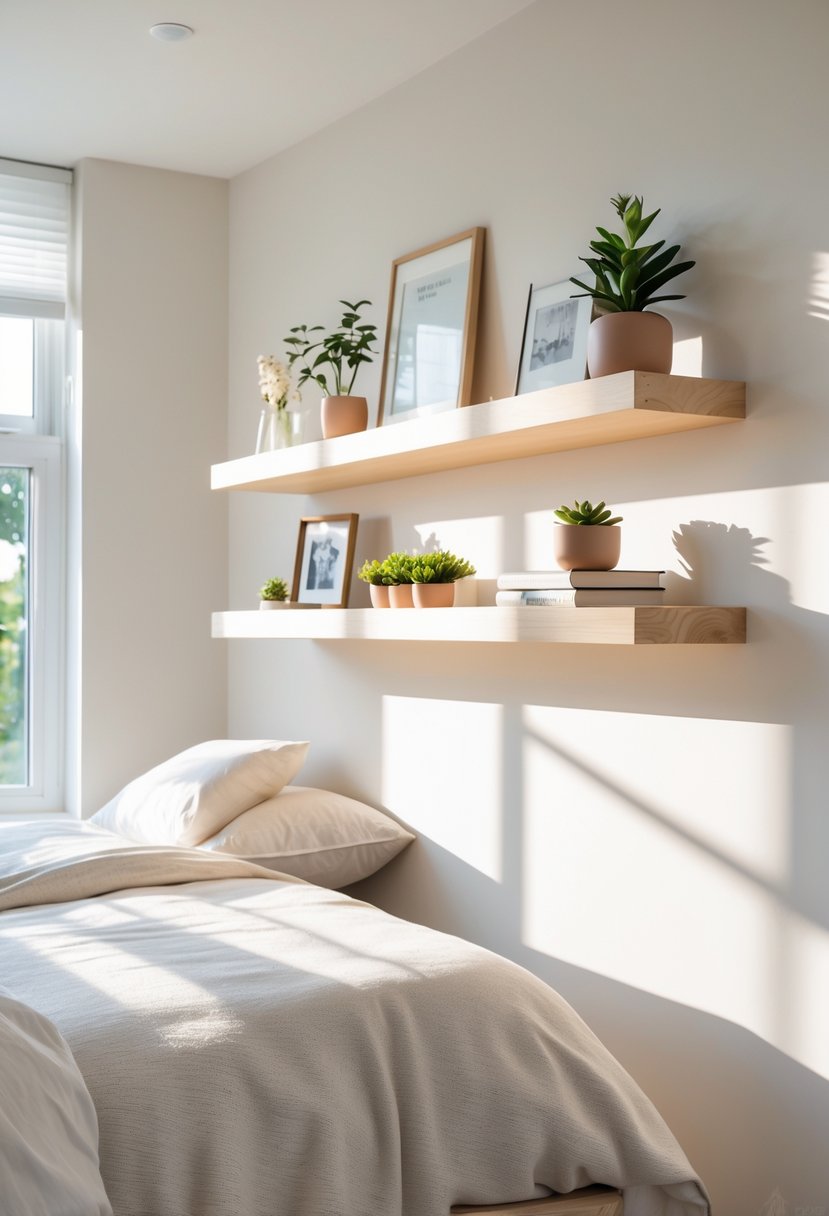
Floating shelves offer a clean, modern way to add storage and display space in bedrooms. They attach directly to the wall with hidden supports, making them appear to “float” without visible brackets. Their design and installation vary to fit different needs, styles, and room layouts.
What Are Floating Shelves?
Floating shelves are wall-mounted shelves that do not show any visible support brackets. They use internal cleats or hidden hardware attached to the wall studs to hold the shelf securely. This creates a minimalist look with clean lines.
They differ from traditional shelves because they don’t have supports underneath or on the sides. This makes floating shelves ideal for tight spaces since they take up less visual and physical room.
DIY floating shelves allow customization in size, wood type, and finish. Builders can adapt them to fit specific bedroom needs, whether for books, decor, or small storage.
Benefits of Floating Shelves in Bedroom Design
Floating shelves save floor space, which is important in smaller bedrooms. By mounting on the wall, they free up room for other furniture or walking space.
They also provide a sleek, modern look that can fit many styles, from rustic wood to smooth painted finishes. Floating shelves create clean surfaces that help keep the room organized and uncluttered.
Installing DIY floating shelves can be cost-effective compared to buying ready-made units. Homeowners can tailor them to match their decor and choose durable materials based on their budget.
Because they don’t have visible brackets, floating shelves make displaying keepsakes, photos, or small plants elegant without bulky hardware drawing attention away.
Common Types of Floating Shelves
There are several common designs for floating shelves used in bedrooms:
- Box Shelves: Create a framed box that sits on a hidden cleat. They offer sturdy support and a distinct look.
- Slab Shelves: Simple flat boards with cleats inside. These are minimalist and work well for lightweight items.
- Ledge Shelves: Have a small lip on one edge, which helps keep items from falling off.
- Corner Shelves: Designed to fit snugly into corners, maximizing unused space.
Choosing the right type depends on the shelf’s intended use, the bedroom style, and how much weight it needs to hold. Most DIY floating shelves use hardwood or sturdy softwood for durability.
Essential Tools and Materials for Building Floating Shelves
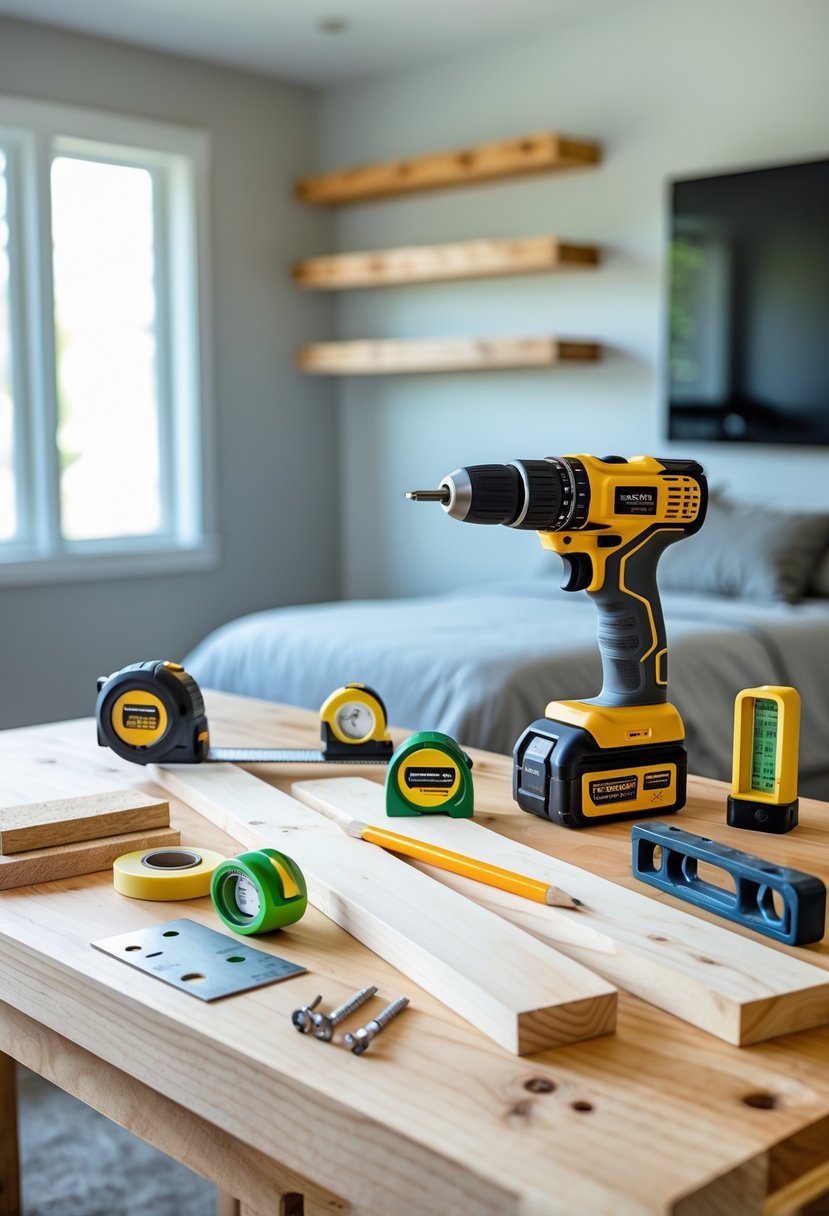
Building floating shelves requires specific tools and materials to ensure a strong, clean finish. Proper wood choices, secure supports, reliable fasteners, and safety gear all contribute to successful installation and long-lasting shelves.
Recommended Wood and Finishes
For floating shelves, hardwoods like oak, maple, and walnut are popular because they are strong and resistant to warping. Pine or plywood can be used for budget options but may need extra sealing or reinforcing.
Finish the wood to protect it from moisture and wear. Options include:
- Polyurethane: Durable and glossy or satin finish.
- Oil-based finishes: Enhance natural grain and add moderate protection.
- Paint: Offers color and surface protection but may hide the wood grain.
Sanding the wood smooth before finishing ensures a clean surface. Applying 2-3 coats of finish improves durability.
Types of Brackets and Supports
Floating shelves need hidden brackets or supports for a clean look.
Metal brackets are most secure, especially with heavy loads. Wood cleats work well for lighter shelves.
Drywall anchors are necessary if studs are not accessible but provide less support than studs.
Fasteners and Adhesives
Secure the shelves with proper fasteners:
- Drywall anchors: Use heavy-duty anchors for shelves mounted without studs.
- Wood screws: Long screws (2.5 to 3 inches) that go deep into studs or brackets.
- Wood glue: Can strengthen joints between panels or supports but should be paired with screws or brackets.
Clamps help hold glued parts tight while drying for a solid bond. Speed squares assist in marking precise angles for cutting and aligning shelves with brackets.
Safety Equipment and Workspace Preparation
Safety is critical when working with power tools like a miter saw or table saw. Recommended gear includes:
- Safety goggles: Protect eyes from dust and debris.
- Hearing protection: Reduce noise exposure from saws.
- Dust mask: Prevent inhalation of sawdust particles.
- Gloves: Protect hands from splinters and cuts.
Prepare a clean, well-lit workspace with a stable surface for cutting and assembling. Clear clutter to avoid accidents and keep tools organized within reach. Proper preparation makes the process smoother and safer.
Planning Your Floating Shelves Project
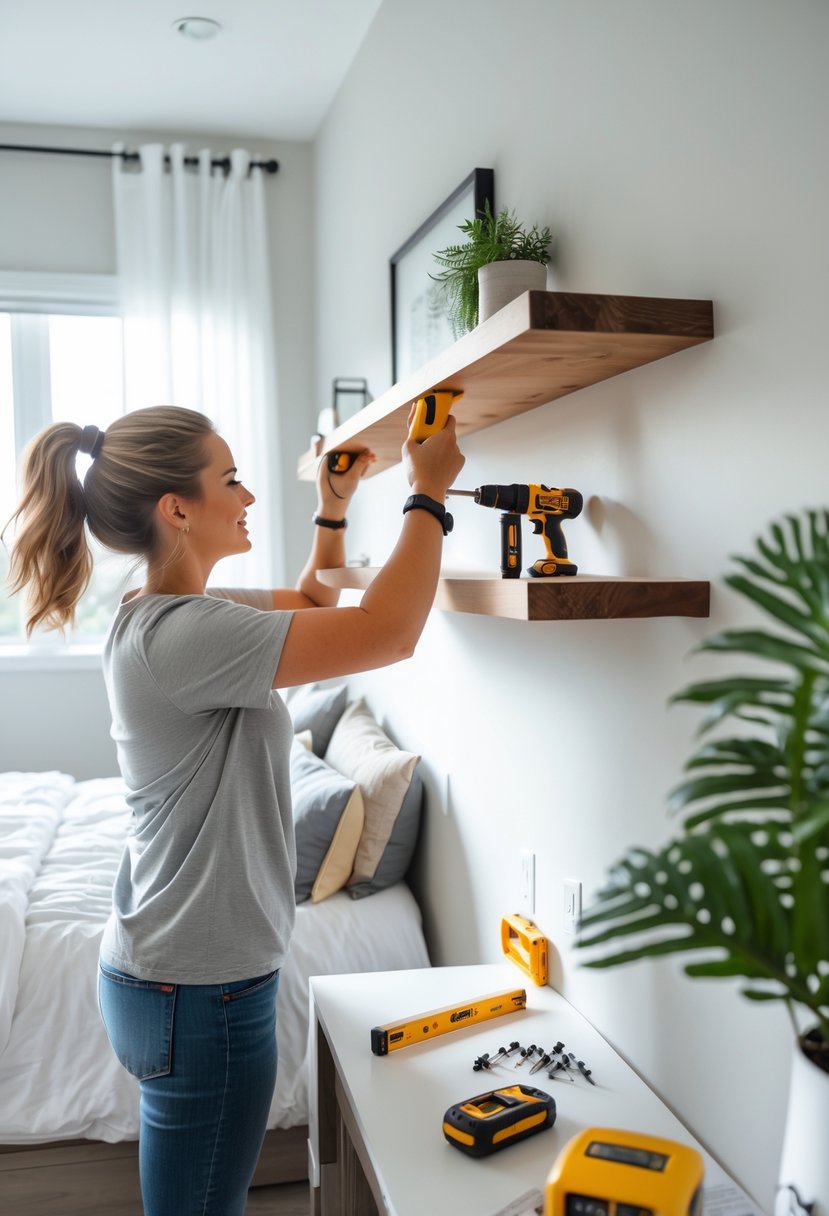
Careful preparation sets the foundation for a sturdy, well-placed floating shelf. This involves precise measurements, picking the right spot on the wall, and understanding how much weight the shelf will hold. These details ensure the shelf fits the room and holds items safely.
Measuring and Marking
Accurate measurements are critical to a clean, level shelf. Start by using a measuring tape to determine the exact length and depth needed for the shelf. Mark these dimensions clearly on the wood before cutting.
On the wall, a stud finder helps locate studs, which provide the strongest support for mounting. Mark stud locations with a pencil to guide where the shelf brackets will go. Use a level to draw straight, horizontal lines for consistent alignment.
Marking the positions ahead prevents common mistakes like uneven shelves or holes drilled in weak drywall areas.
Choosing Location and Dimensions
Choose a location where the shelf will be both functional and visually balanced. Avoid spots where the shelf could obstruct doorways or windows.
Standard shelf depths range between 8 to 12 inches. The length depends on available wall space and what will be placed on the shelf. For example, a shelf intended for books should be longer and deeper than one for small décor.
Measure the wall space carefully and sketch the planned shelf placement. Align the shelf height so it is easy to reach and fits with other room elements, such as furniture or wall art.
Determining Shelf Spacing and Load Requirements
Spacing between shelves depends on what will be stored or displayed. Books typically need 12 to 15 inches of vertical clearance, while decorative items may require less.
Evaluate the expected load before building. Use sturdy wood and heavy-duty bracket hardware for heavier items. Mount the brackets directly into studs to ensure the shelf’s strength.
If necessary, use longer screws rated for wall studs to secure the shelf against sagging or falling. This step is essential for shelves holding heavy books, electronics, or multiple items.
Step-by-Step Guide to Building DIY Floating Shelves
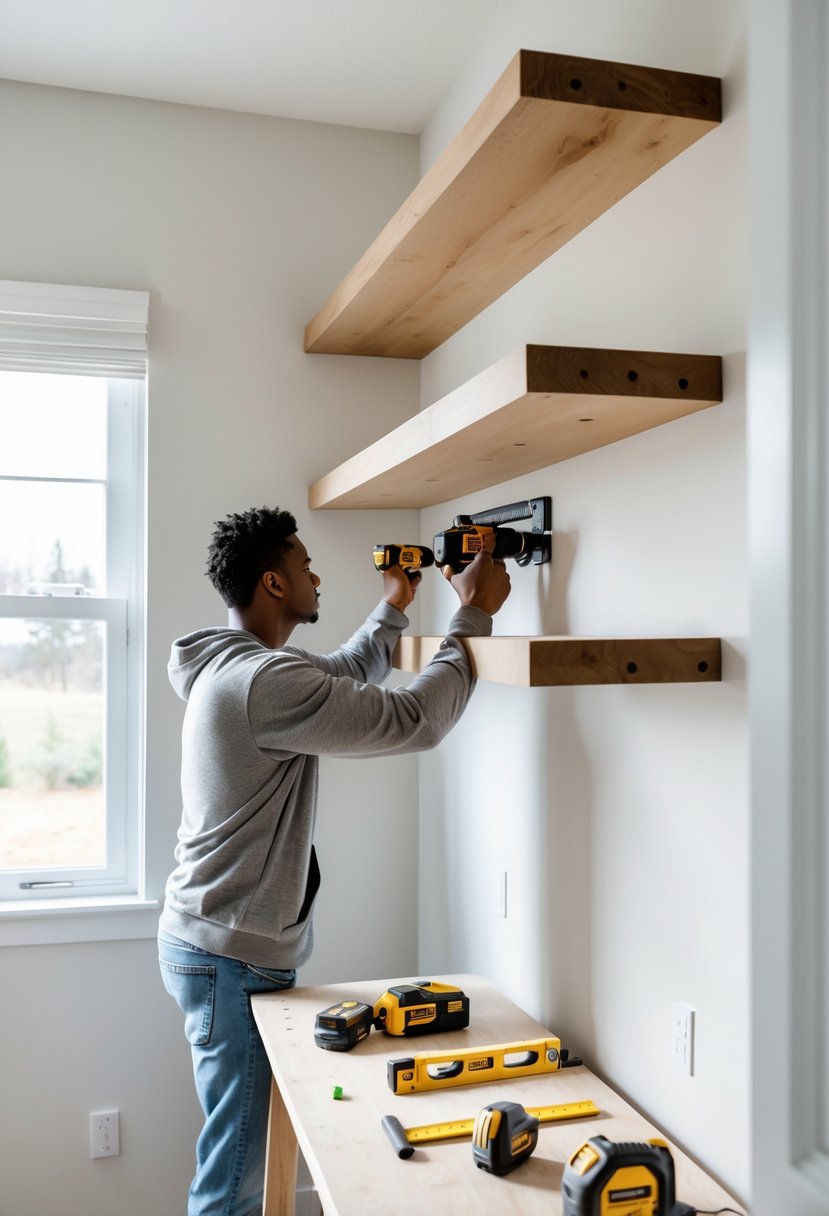
Building floating shelves requires precise cutting, careful assembly, proper bracket installation, and secure leveling. Each step ensures the shelves will hold weight safely and look clean and modern. Attention to detail during the process prevents common problems like sagging or uneven shelves.
Cutting the Wood Accurately
Accurate wood cutting is essential for clean, straight shelves. He should use a table saw or miter saw to cut boards to the exact length and width needed. A speed square helps mark straight lines to guide each cut.
Choosing wood with a thickness between 1 and 2 inches provides a good balance of strength and appearance. After cutting, sanding all edges smooths rough spots and prepares the wood for finishing. Clamps can hold wood pieces steady during cutting and sanding, improving safety and accuracy.
Making and Assembling the Shelf Box
The shelf box fits around the wall bracket and hides the hardware. He should cut side panels and a back panel that match the depth and height of the desired shelf. The side panels typically wrap around the bracket, creating a hollow box.
He should assemble the box using wood screws and wood glue for extra durability. Clamps keep the pieces tight while the glue dries. Clean joints reduce gaps, making the shelf stronger and more attractive. Sanding the assembled box smooths any uneven areas before finishing or painting.
Preparing and Installing Wall Brackets
Finding studs is key to supporting the shelves strongly. He should use a stud finder to locate studs behind the wall and mark them clearly. Floating shelf brackets are then positioned on the studs, ensuring the shelf will hold weight without pulling out.
Using a level, he must align the brackets perfectly horizontal. He drills pilot holes in the studs before securing brackets with long screws. If there are no studs where needed, properly rated wall anchors must be used to avoid shelf failure.
Securing and Leveling the Shelves
Once brackets are mounted, the shelf box slides over them carefully. He should check the fit so the box fully covers the bracket without gaps. The shelf is fastened to brackets using hidden screws inside or underneath to keep them invisible.
Final leveling checks are important. A level tool ensures the shelf is perfectly horizontal and adjusts screws if needed. Tightening screws firmly prevents any movement. The result should be a clean, sturdy floating shelf ready to hold books, decorations, or daily items.
Installation Techniques for Strength and Safety
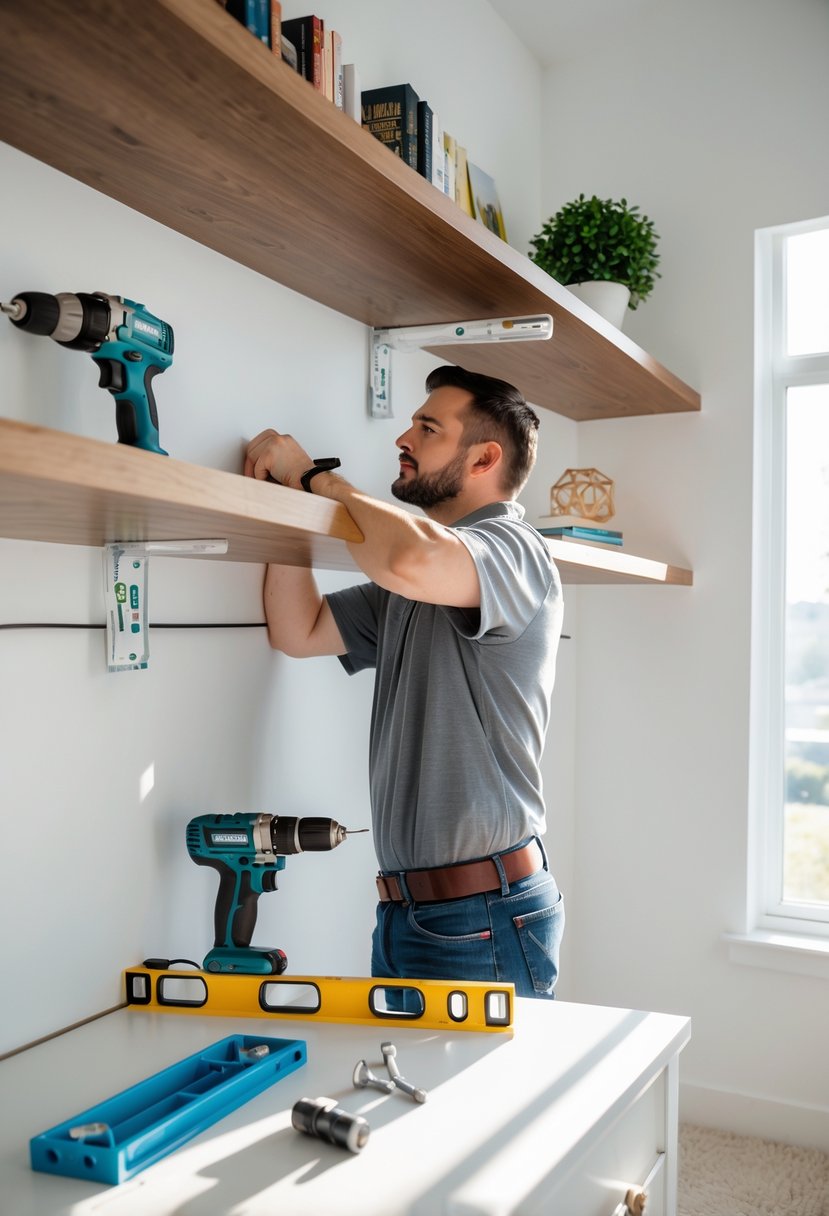
Proper installation of floating shelves ensures they hold weight safely and last longer. Careful placement, using the right hardware, and checking stability after installation are important for a secure shelf.
Securing Brackets to Studs
Finding and fastening brackets to wall studs is the most reliable way to support shelves. A stud finder helps locate the wooden studs behind the drywall. Mark the stud centers clearly before drilling.
Use floating shelf brackets designed for heavy loads. Align the bracket holes with the stud marks. Pre-drill pilot holes to prevent splitting the wood, then drive structural screws fully into the studs to hold the brackets tight.
Clamps can be used to hold the shelf and brackets in place while drilling and screwing. This helps maintain level alignment and prevents movement during installation.
Using Drywall Anchors When Studs Aren’t Available
When studs are not in the right position, drywall anchors provide extra support, but they must be chosen carefully. Heavy-duty anchors, like toggle bolts or molly bolts, offer greater strength than plastic expansion anchors.
Select anchors rated for the expected shelf weight and follow the manufacturer’s instructions closely. Drill the correct hole size and insert the anchor firmly before mounting the brackets.
Avoid relying on drywall anchors alone for very heavy items. Use brackets with multiple anchor points for even pressure distribution. Always double-check the shelf fits flush against the wall to prevent stress on a single anchor.
Testing Shelf Sturdiness Post-Installation
After mounting, the shelf must be tested for strength and levelness before use. Gently press and wiggle the shelf to identify any movement. If there is wobbling, tighten screws or readjust brackets.
Use a level to confirm the shelf is perfectly horizontal. A slightly off-level shelf can cause objects to slide or uneven weight to strain supports over time.
Add weight gradually to test load capacity. Start with light items and increase the load while observing stability. This prevents damage from overloading and ensures safety before putting heavier objects on the shelf.
Finishing Touches and Maintenance Tips
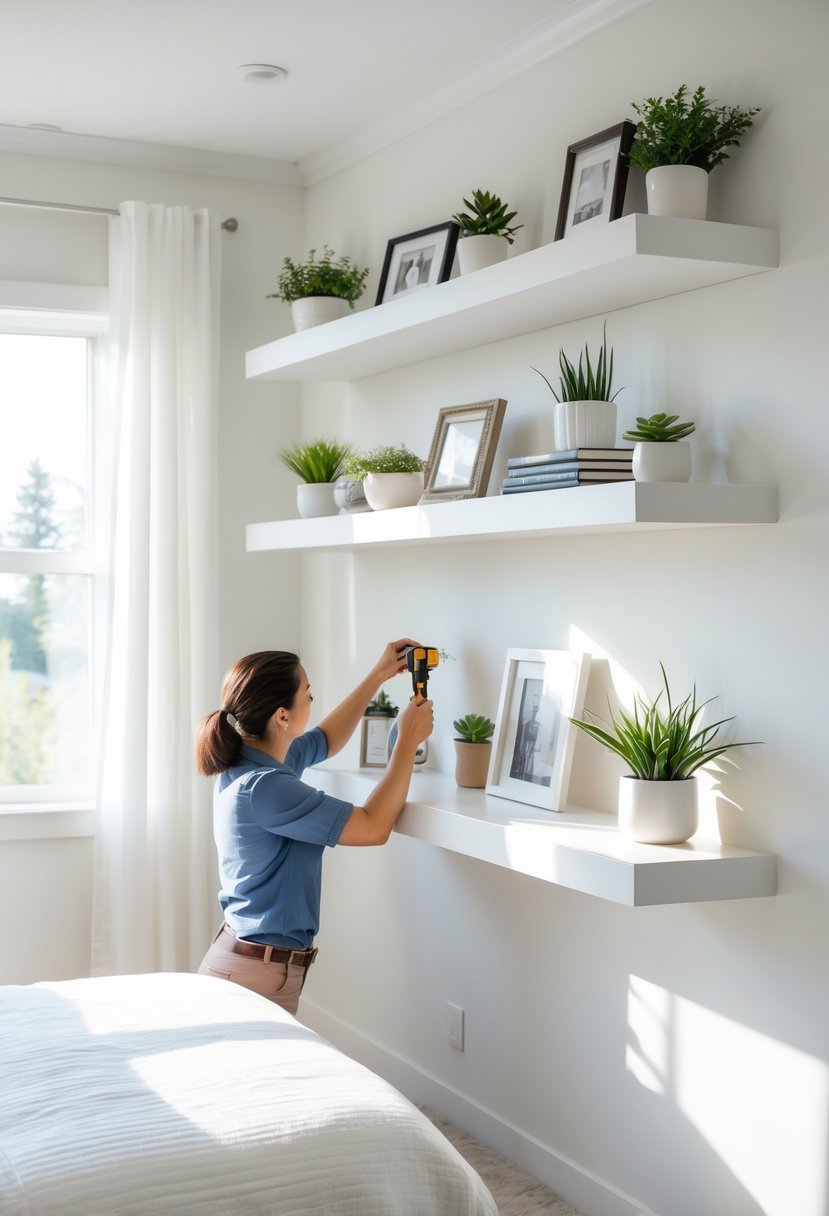
Finishing the shelves well protects the wood and improves their look. Proper care keeps them strong and attractive. Attention to sanding, staining, sealing, styling, and maintenance ensures lasting use and prevents common problems.
Sanding, Staining, and Sealing
Sanding smooths the wood and prepares it for staining or paint. Start with medium-grit sandpaper (around 120 grit) to remove rough spots, then finish with fine-grit (220 grit) for a clean surface. Always sand in the direction of the grain to avoid scratches.
Staining enhances the wood’s natural color. Apply stain with a brush or cloth, following the wood grain. Let it dry fully before adding a second coat if needed.
Sealing protects the shelf from moisture and scratches. Use an oil-based or water-based polyurethane for good durability. Apply thin coats with a brush, sanding lightly between coats with fine sandpaper. Clamps and wood glue ensure tight joints before finishing, preventing gaps or weak spots.
Styling Your Completed Shelves
After finishing, styling the shelves helps tie the room together. Keep shelf depth around 8 inches or less for safety and balance. Group items like books, plants, and small decorative objects for visual appeal.
Use matching or complementary colors to your room’s decor. Accent pieces like framed photos or candles can add personality but avoid overcrowding.
Hidden brackets keep the shelves looking clean and modern. Add set screws under the shelf to lock it in place, ensuring stability when displaying heavier items.
Ongoing Care and Avoiding Common Pitfalls
Regular dusting prevents buildup that can dull the finish. Use a soft, dry cloth and avoid abrasive cleaners. For spills, wipe up immediately to stop wood damage.
Check screws and mounts periodically for tightness. Loose hardware can cause sagging or shelf failure. Avoid overloading shelves beyond the weight limit of the brackets and studs.
Watch for signs of moisture damage, especially in humid rooms. Choose finishes rated for bathrooms or kitchens if needed. If shelves start to loosen, remove them carefully and retighten or reinforce with additional wood glue and clamps.
Conclusion
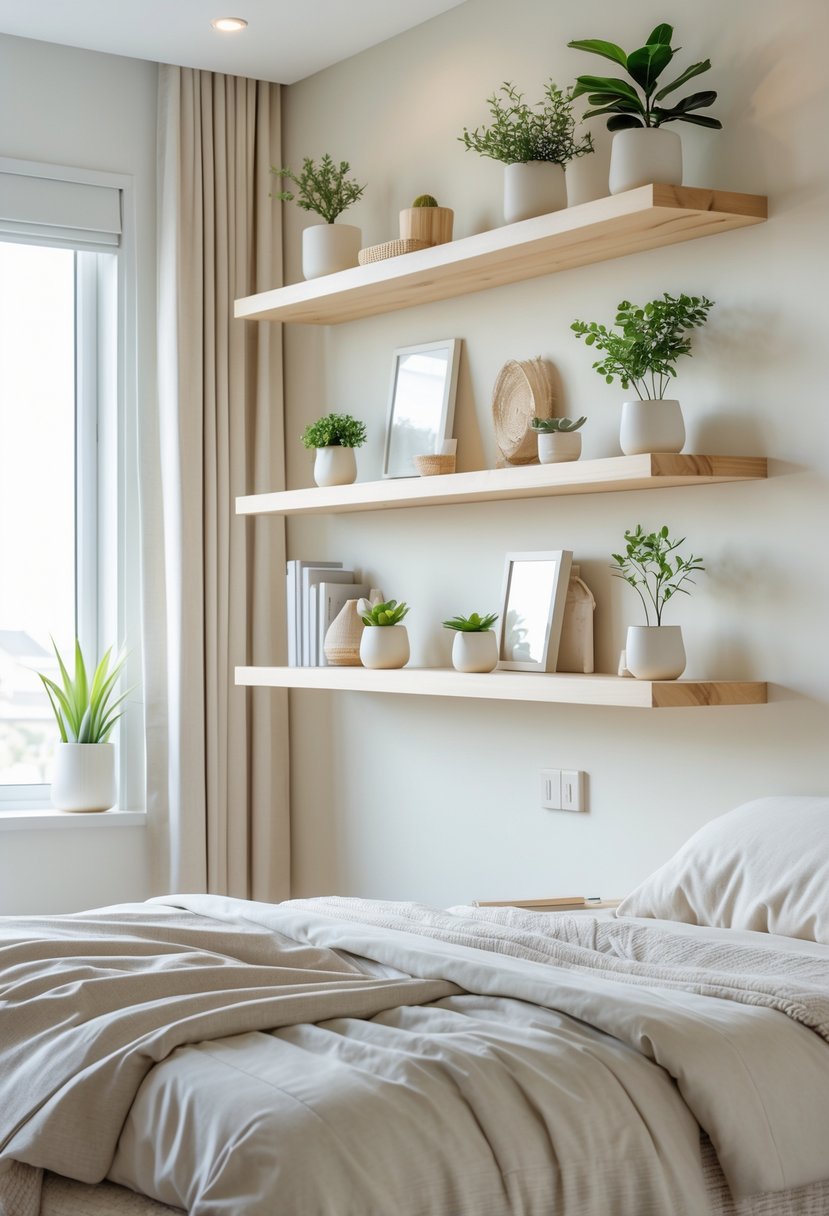
DIY floating shelves are a practical and stylish addition to any bedroom. They offer extra storage without taking up floor space and help keep the room organized.
Building these shelves requires basic tools and careful measuring. Using strong materials and following correct installation steps ensures the shelf is sturdy and safe.
Choosing the right finish—whether natural wood, paint, or stain—allows the shelf to blend with the room’s decor. Proper alignment and secure mounting will prevent sagging and damage over time.
Key points to remember:
- Measure carefully to fit the space.
- Use a solid support frame for strength.
- Pre-drill holes to avoid wood splitting.
- Check levels during installation.
With attention to detail, anyone can create floating shelves that are both functional and attractive. This project adds value to a bedroom by combining practical use with clean, modern design.