
Budget Friendly DIY Accent Walls to Transform Your Bathroom in Hours
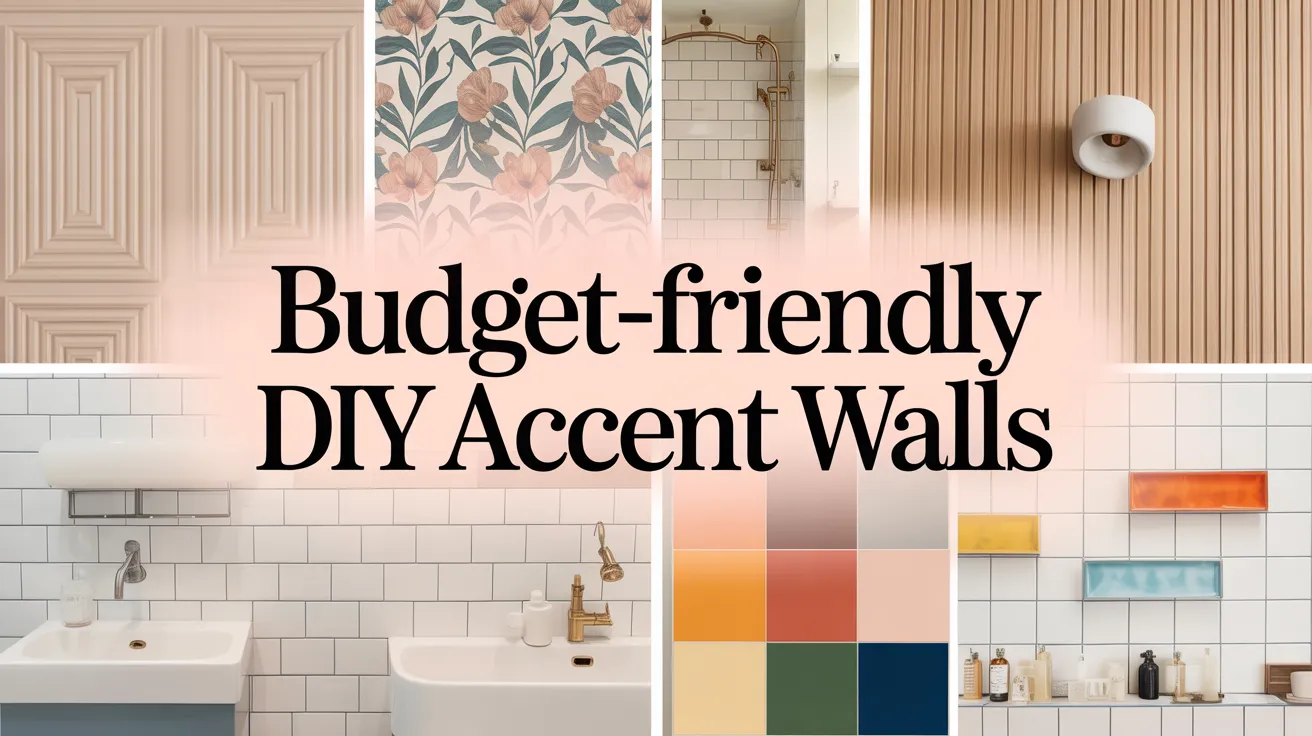
Tired of staring at the same four boring walls in your bathroom? You know the feeling. It’s that one room in the house that gets used every single day but often gets the least amount of love design wise. Let’s be real, a full bathroom renovation can cost a small fortune and take weeks, if not months. Who has time for that?
I’ve been there, scrolling through picture perfect bathrooms online, feeling a mix of inspiration and despair. My wallet just couldn’t keep up with my design ambitions. But then I discovered the magic of the accent wall. It’s the ultimate design hack for getting maximum impact with minimal effort and cost. You can completely change the vibe of your space in a single afternoon.
So, if you’re ready to give your bathroom a serious glow-up without demolishing your savings account, you’re in the right place. We’re going to explore some fantastic, budget-friendly DIY accent wall ideas that you can knock out in just a few hours. Let’s get that bathroom looking like it belongs in a magazine.
Why an Accent Wall is Your Bathroom’s Best Friend
Before we jump into the “how,” let’s talk about the “why.” Why bother with an accent wall at all? Can one wall really make that much of a difference? In a word: absolutely. In a small space like a bathroom, an accent wall is a game-changer.
An accent wall creates a focal point, drawing the eye to a specific area and making the entire room feel more intentional and designed. It’s your chance to play with color, texture, or pattern without committing to a full-room takeover. This is especially useful in a bathroom where you might have tile, fixtures, and cabinetry to work around. It adds a punch of personality that a simple coat of paint just can’t match.
Plus, it’s a fantastic way to hide imperfections. Got a wall with a few dings or an awkward layout? Slap an accent feature on it, and suddenly it’s a design choice, not a flaw. It’s the design equivalent of putting on a great pair of shoes to distract from a bad hair day.
The Classic Charm of Beadboard Paneling
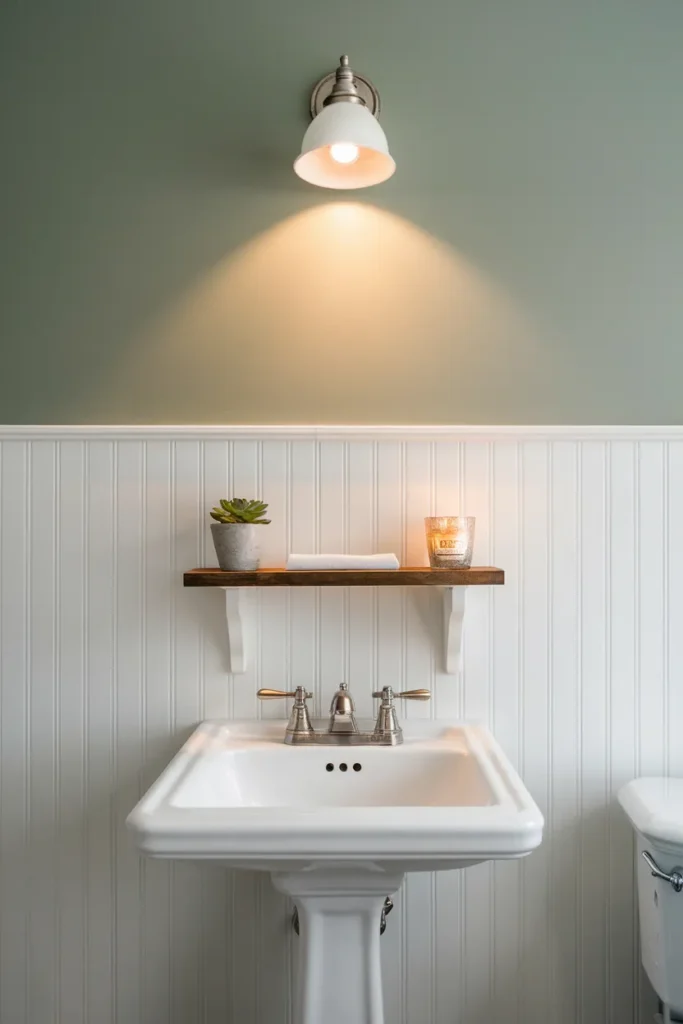
If you want to add a touch of timeless, cottage-style charm, beadboard is your answer. It’s clean, classic, and adds architectural interest without being overwhelming. Plus, it’s surprisingly easy to install.
What is Beadboard?
Beadboard consists of panels with distinctive vertical grooves, or “beads,” milled into the surface. It traditionally came in individual planks, but for our sanity and budget, we’re talking about the large sheets. These sheets make installation a breeze, and they’re incredibly affordable.
The best part? It adds a layer of texture that instantly makes a room feel more sophisticated and put-together. You can install it halfway up the wall (wainscoting style) or take it all the way to the ceiling for a more dramatic effect. I personally love the wainscoting look in a bathroom, topped with a small ledge for placing tiny decor items.
How to DIY a Beadboard Accent Wall
Installing beadboard is a perfect weekend project. Here’s a quick rundown of what you’ll need to do.
- Measure and Cut: First, measure your wall carefully. You know the saying, “measure twice, cut once.” It really applies here. Use a circular saw or jigsaw to cut your beadboard panels to the desired height. You’ll also need to cut out holes for any outlets or light switches.
- Find Your Studs: Use a stud finder to locate and mark the studs in your wall. This is where you’ll be nailing the panels to ensure they are secure. Don’t just guess, unless you enjoy the thrill of your accent wall randomly falling off.
- Apply Adhesive: Squeeze a generous amount of construction adhesive in a zigzag pattern on the back of your first panel. This provides the primary hold, so don’t be shy with it.
- Secure the Panel: Press the panel firmly against the wall. Use a finish nailer or a good old-fashioned hammer and finishing nails to secure the panel to the studs you marked earlier.
- Finish the Look: Once all your panels are up, install trim along the top (and baseboards at the bottom) to hide the seams and give it a polished look. Caulk all the seams, fill the nail holes with wood putty, and get ready to paint.
I highly recommend using a semi-gloss or satin paint finish in the bathroom. These finishes are moisture-resistant and much easier to wipe clean. A crisp white is classic, but a moody dark green or deep navy can look incredibly chic.
Bold and Beautiful with Peel-and-Stick Wallpaper

Let’s be honest, traditional wallpaper is terrifying. The glue, the bubbles, the commitment… it’s a lot. But peel and stick wallpaper? It’s the hero we all needed. It gives you all the impact of a high end designer pattern with none of the long term relationship drama.
Why Peel-and-Stick is Perfect for Bathrooms
Peel and stick wallpaper is essentially a giant, high quality sticker. It’s made from vinyl, which makes it durable and, most importantly, water resistant. This makes it an ideal choice for a humid environment like a bathroom. If you mess up, you can just peel it off and reposition it. If you get tired of it in a year, you can peel it off with no damage to the wall.
The variety is endless. You can find everything from bold floral and geometric patterns to faux textures like brick or wood. It’s an amazing way to inject a huge dose of personality into a tiny powder room or create a stunning feature wall behind your vanity. FYI, this is probably the fastest transformation on the list.
Tips for a Flawless Application
Applying peel and stick wallpaper isn’t hard, but it does require a bit of patience. Rushing will lead to bubbles and crooked lines, and nobody wants that.
- Prep Your Wall: This is the most important step. Your wall needs to be perfectly clean, dry, and smooth. Wipe it down with a damp cloth and let it dry completely. If you have any bumps or holes, fill and sand them first.
- Start in the Corner: Begin applying the wallpaper in a top corner of your wall. Peel back only a few inches of the backing at a time.
- Smooth as You Go: As you apply the paper, use a squeegee or a plastic smoother to press it onto the wall. Work from the center out to push any air bubbles toward the edges.
- Overlap and Match: Most wallpapers require a slight overlap (usually about half an inch) to ensure the pattern lines up perfectly. Pay close attention to the pattern repeat to avoid a visual disaster.
- Trim the Excess: Once a panel is up, use a sharp craft knife and a straight edge to trim the excess paper at the ceiling and baseboard. A sharp blade is crucial for a clean cut.
This is one of those projects that looks super impressive but is secretly simple. Your friends will think you hired a professional. We won’t tell them your secret. 🙂
Modern and Moody with a Painted Geometric Design
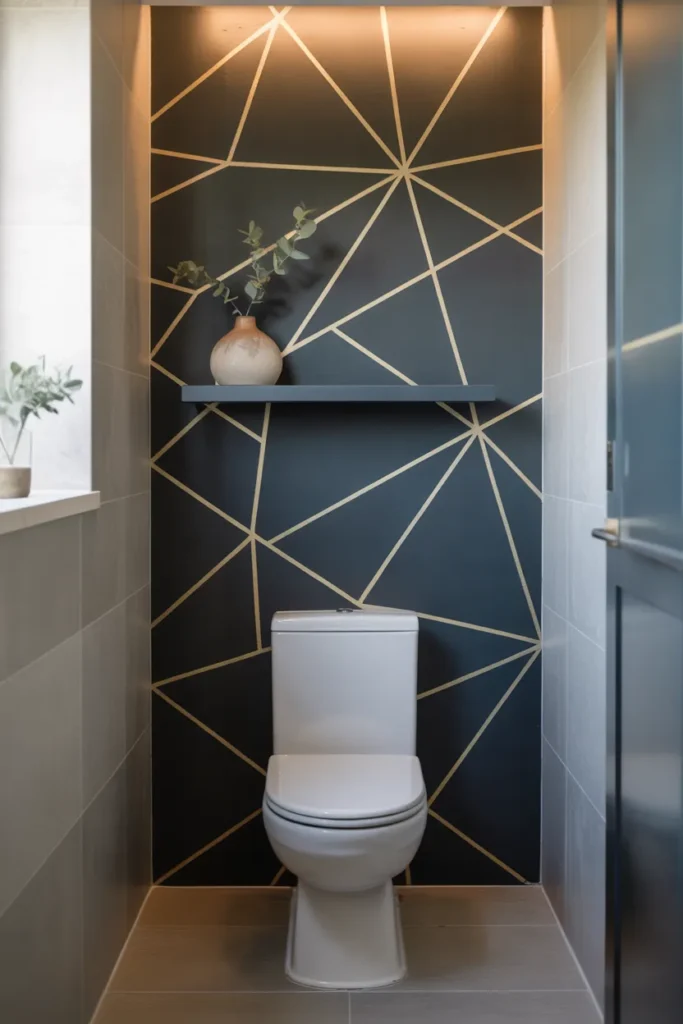
If you’ve got paint and some painter’s tape, you’ve got everything you need for a jaw-dropping accent wall. A geometric design is modern, custom, and costs next to nothing. This is where your inner artist can really shine.
Unleash Your Creativity with Tape and Paint
The concept is simple: you use painter’s tape to create a pattern of shapes on your wall, paint over it, and then peel the tape away to reveal a crisp, clean design. You can go for a simple pattern of intersecting lines, a complex honeycomb design, or a series of bold, color-blocked triangles.
This is your chance to play with color. You can use a single color for a subtle, tone-on-tone effect or go wild with multiple complementary or contrasting colors. The possibilities are truly endless, and the result is guaranteed to be one-of-a-kind.
How to Create Your Geometric Masterpiece
This project is all about precision. Sharp lines are key, so take your time with the taping step.
- Choose Your Design: Sketch out your design on paper first. This helps you visualize the final look and figure out your color placement. Simple is often better, especially for a first-timer.
- Tape it Out: Start taping your design onto the wall. For perfectly straight lines, use a level. Press the edges of the tape down firmly to prevent paint from bleeding underneath. This is the secret to getting those super sharp lines. I like to run a credit card along the tape edges.
- Paint Inside the Lines (or Outside): Using a small roller or a brush, paint inside the taped-off sections. Apply two coats for even coverage, letting the first coat dry completely before adding the second.
- The Big Reveal: This is the most satisfying part. While the second coat of paint is still slightly wet, slowly peel the painter’s tape off at a 45-degree angle. If you wait for the paint to dry completely, you risk peeling some of the paint off with the tape.
- Touch-Ups: No matter how careful you are, you might have a few spots where the paint bled. Use a small artist’s brush to touch up any imperfections.
This method gives you complete creative control. You can create a wall that is perfectly tailored to your style and your bathroom’s existing decor.
Rustic Industrial with Faux Brick or Shiplap

Love the look of an exposed brick wall or a rustic farmhouse shiplap, but don’t live in a loft or a barn? No problem. You can easily fake it with lightweight paneling.
Faking It ‘Til You Make It
Technology has come a long way. The faux panels available today are incredibly realistic. They’re made from materials like MDF or high-density polyurethane and are molded to mimic the texture and look of real brick, stone, or wood.
- Faux Brick Panels: These panels give you that cool, industrial loft vibe without the hassle of masonry. They add a ton of texture and warmth to a space that can often feel cold and sterile. IMO, this looks amazing in a powder room.
- Faux Shiplap: If you’re aiming for a modern farmhouse look, shiplap is the way to go. While you can use individual planks, peel-and-stick shiplap panels or even wallpaper can give you a similar effect for much less work. It instantly brightens a room and adds a clean, linear pattern.
Installation is a Snap
The installation process for these panels is very similar to beadboard. They are designed to be DIY-friendly.
- Measure and Cut: Measure your wall and cut the panels to size using a saw. Again, remember to account for any outlets or fixtures.
- Adhesive and Nails: Apply construction adhesive to the back of the panel. Press it onto the wall and secure it with nails or screws into the studs.
- Interlocking System: Many of these panels have an interlocking or overlapping system, which helps to hide the seams between them. Make sure you follow the manufacturer’s instructions for a seamless look.
- Finishing Touches: For faux brick, you might want to use some grout or caulk in the “mortar” lines to make it look even more authentic. For shiplap, finishing trim is your best friend.
This is a fantastic option if you want to add significant texture and architectural character to your bathroom. It feels substantial and looks far more expensive than it actually is.
Final Thoughts: Your Bathroom, Your Masterpiece
There you have it four budget friendly ways to completely transform your bathroom with an accent wall in just a few hours. No more staring at bland walls and dreaming of a renovation you can’t afford. With a little bit of creativity and a free afternoon, you can create a space that feels personal, stylish, and new.
Whether you go for the classic elegance of beadboard, the bold fun of peel and stick wallpaper, the custom creativity of a geometric design, or the rustic charm of faux panels, the key is to choose something that you love. It’s your home, after all.
So, pick a project, put on your favorite playlist, and get ready to fall in love with your bathroom all over again. You might be surprised at what a difference one wall can make. Ready to get started? Your perfect bathroom is just a weekend project away.