
15 Japandi Living Room Designs That Prove Minimal Can Be Cozy

Japandi is a design style that mixes Japanese simplicity with Scandinavian warmth. It focuses on clean lines, natural materials, and a calm color palette. This style shows how a minimalist living room can still feel inviting and comfortable.
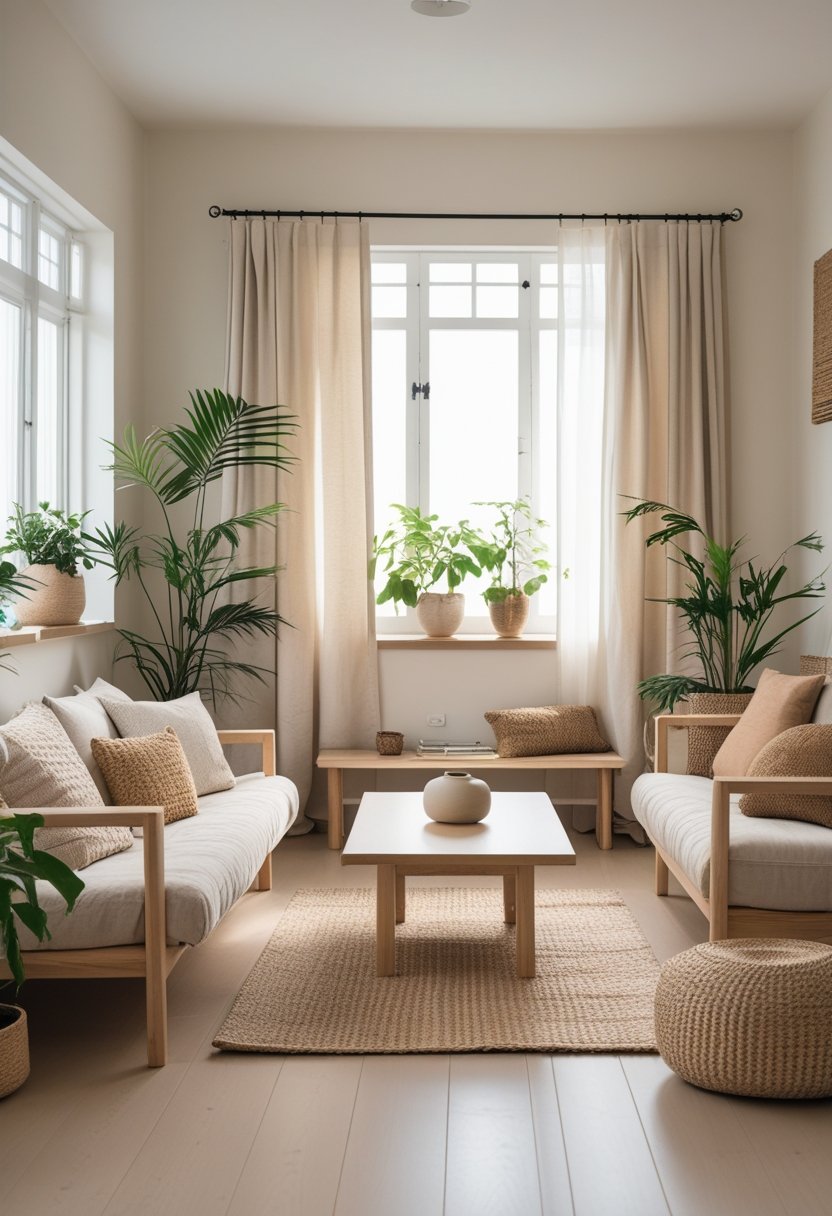
These 15 Japandi living room designs prove that minimal spaces don’t have to feel cold or empty, but can be both cozy and stylish. The blend of two cultures creates spaces that are peaceful yet full of life, balancing function with beauty in a modern way.
Neutral color palette with beige, gray, and soft white

Japandi living rooms often use a neutral color palette to create a calm and balanced space. Beige, gray, and soft white are key colors that set a peaceful tone.
These colors work well together because they are muted and natural. They help make the room feel open and inviting without being loud.
Using these tones also allows natural light to brighten the space. This supports the Japandi style’s focus on simplicity and warmth.
Low-profile wooden furniture emphasizing natural grain
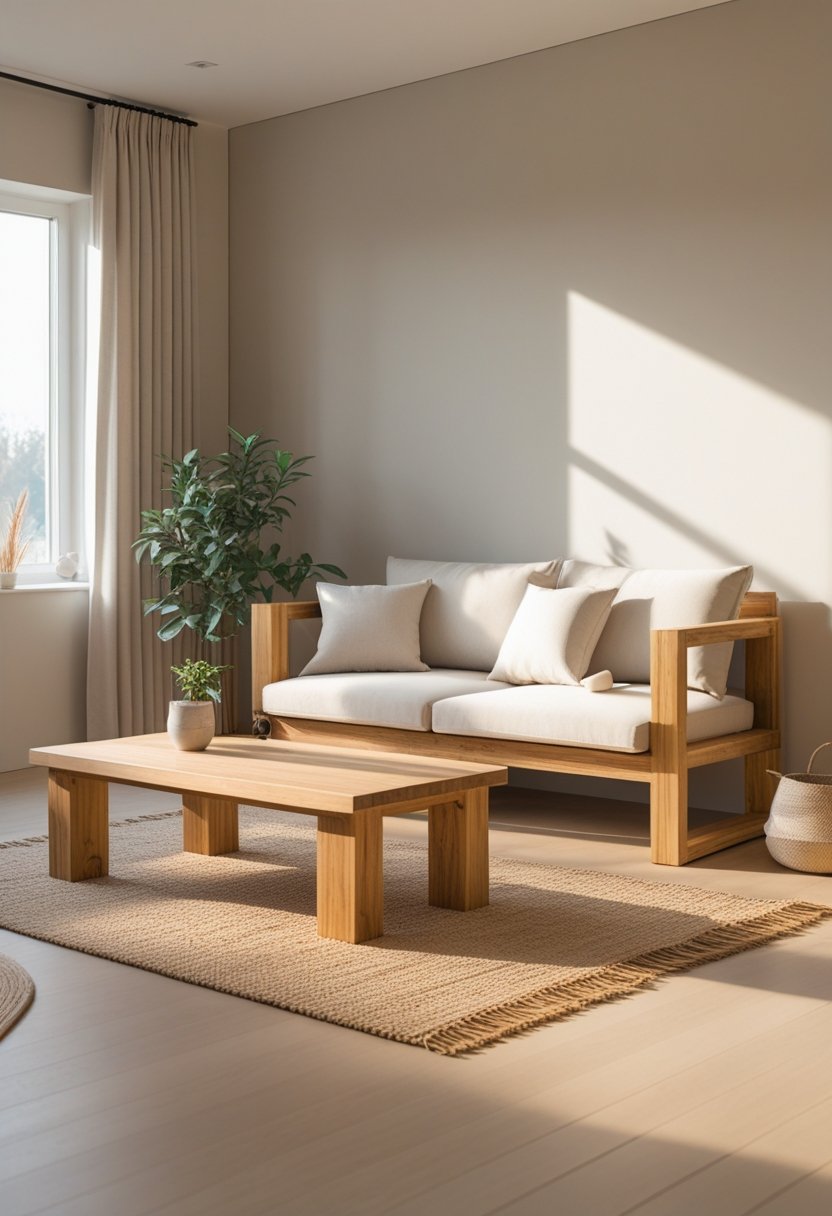
Japandi living rooms often feature low-profile wooden furniture with a clear focus on the wood’s natural grain. This approach highlights the beauty of materials like oak, ash, or teak without heavy ornamentation.
The furniture stays close to the ground, offering a relaxed and grounded feel. Simple shapes and clean lines keep the look minimal while letting the wood’s texture take center stage. Natural finishes bring warmth without adding clutter.
Incorporation of tatami mats or woven natural fiber rugs

Tatami mats bring a natural and traditional touch to Japandi living rooms. They offer a comfortable surface that supports floor seating and adds texture.
Woven natural fiber rugs provide a similar effect with easier care. Both options use neutral colors and simple patterns to keep the space calm and balanced.
These materials connect with the Japandi style by emphasizing sustainability and natural aesthetics. They help create a peaceful environment without clutter or bold colors.
Minimalist pendant lighting with wooden or paper shades

Pendant lights with wooden or paper shades fit well in Japandi living rooms. They offer simple, clean lines that keep the space uncluttered.
Wood and paper add natural texture and warmth without being heavy or flashy. These materials create a soft, diffused light that feels cozy and inviting.
The shapes tend to be geometric or organic, balancing function with subtle style. This lighting supports both the minimalist and comfortable goals of Japandi design.
Use of organic textures like linen and cotton textiles

Japandi living rooms often feature organic textiles such as linen and cotton. These fabrics add a natural touch and a soft feel to the space.
Using linen and cotton helps balance the simplicity of minimal design. They create warmth without clutter or excess decoration.
These textiles work well in cushions, curtains, and throws. They bring subtle texture and comfort, making the room inviting yet simple.
Compact furniture with built-in storage solutions
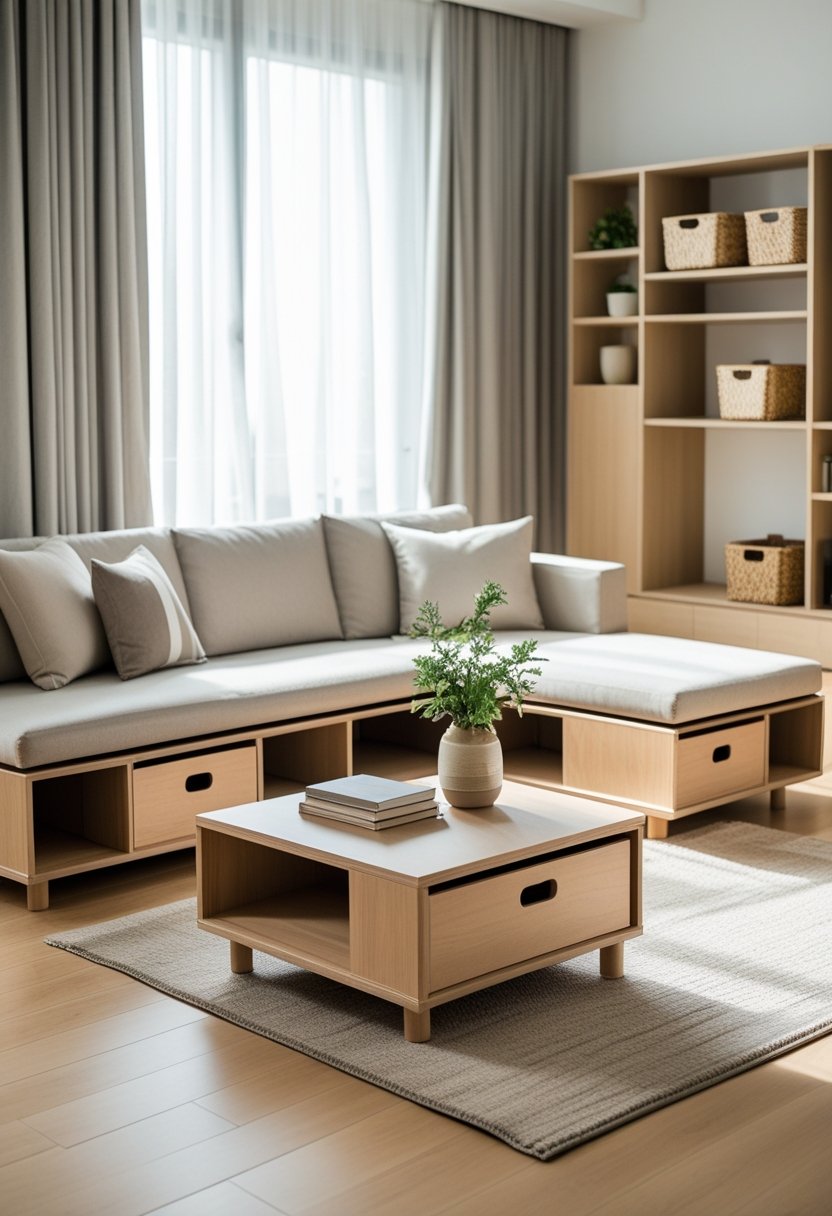
Japandi living rooms benefit from compact furniture that saves space without clutter. Pieces with built-in storage help keep the room clean and organized.
He or she can choose sofas or ottomans with hidden compartments. Wall-mounted cabinets and low-profile sideboards also provide practical storage.
This approach maintains an open, breezy feel while offering enough space for essentials. It fits well with Japandi’s focus on simplicity and functionality.
Japanese shoji screen-inspired room dividers

Shoji screens are key elements in Japandi design, blending Japanese tradition with Scandinavian simplicity. They use translucent materials like rice paper or frosted glass framed by thin wood. This allows light to pass through while offering subtle privacy.
These dividers help define spaces without blocking natural light or making rooms feel cramped. They work well as sliding doors, window frames, or freestanding panels. Their minimalist look fits perfectly in cozy, uncluttered living rooms.
Scandinavian-style cozy throws and cushions

Throws and cushions are key to adding warmth in Japandi living rooms. They bring soft textures without cluttering the space.
Natural materials like cotton and linen are common choices. These fabrics feel comfortable and fit the simple, clean design.
Using neutral colors helps maintain calmness while making the room inviting. Plush cushions and woven throws encourage relaxation and comfort.
Indoor plants emphasizing simplicity and natural elements
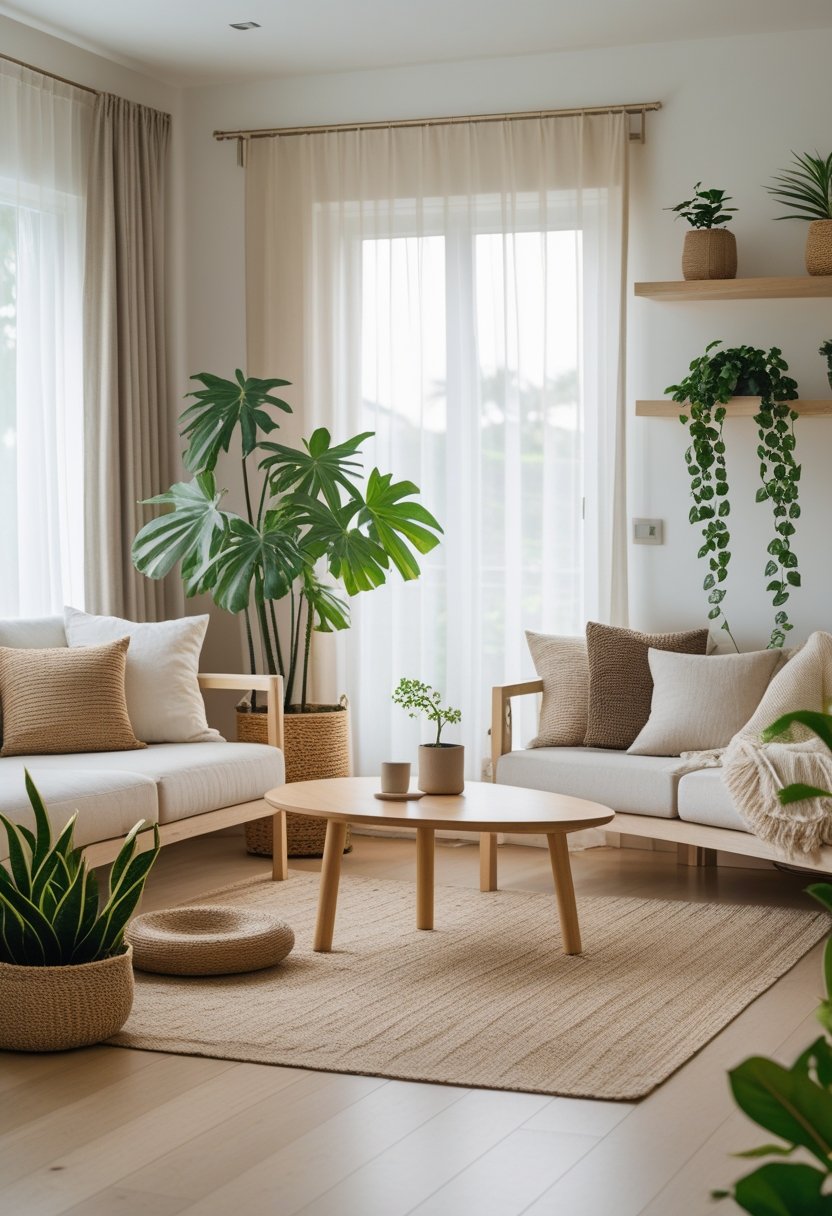
Indoor plants play an important role in Japandi living rooms. They bring a calm and natural feel without cluttering the space.
Plants soften the clean lines of furniture and add life to simple layouts. They also improve air quality and create a peaceful mood.
Choosing low-maintenance, sculptural plants fits well with the Japandi focus on minimalism. This keeps the room serene and easy to care for.
Clean lines combined with soft, rounded edges on furniture
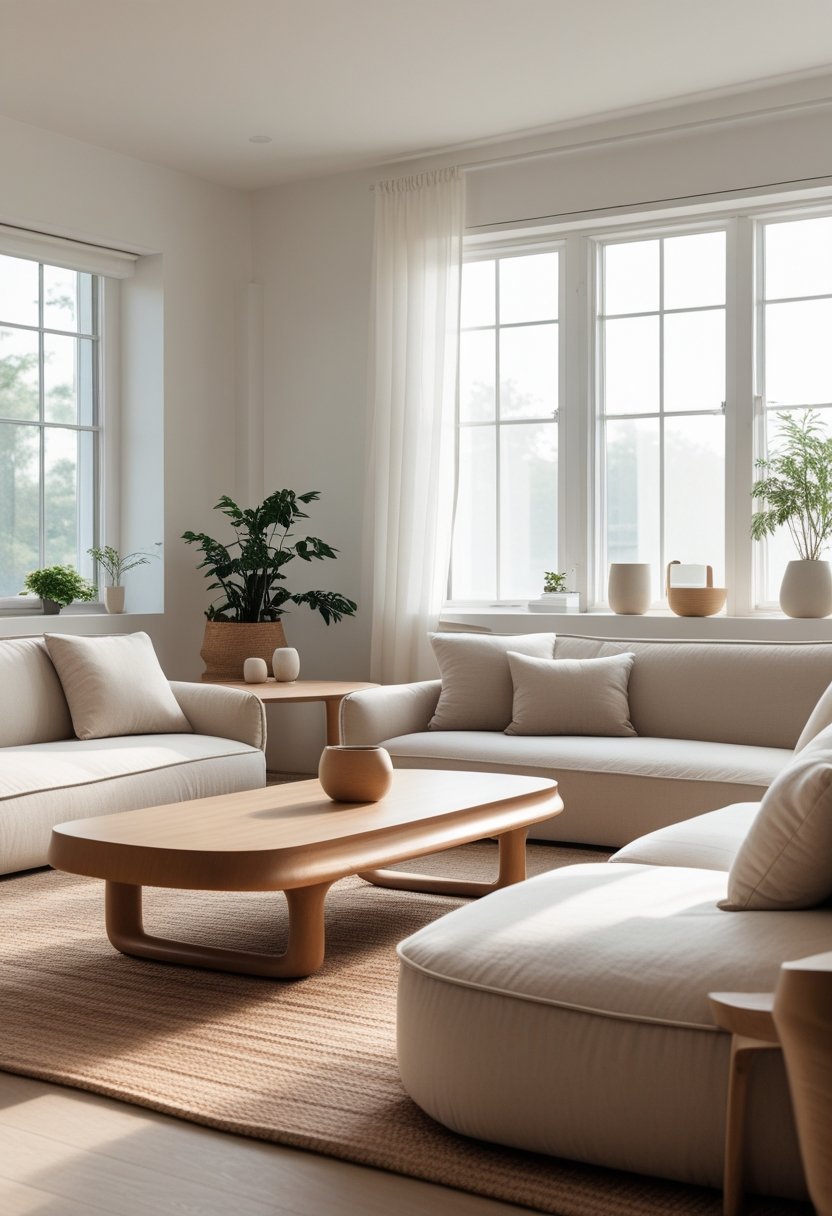
Japandi style blends clean, straight lines with soft, rounded edges in furniture design. This contrast creates balance, making spaces feel both orderly and inviting.
Furniture often features smooth curves on sofas and chairs, which soften the minimalistic shapes.
These gentle forms add warmth without cluttering the room. The mix of sharp and gentle shapes helps keep a calm, relaxed atmosphere.
Open shelving to display curated decor sparingly

Open shelves suit Japandi living rooms well. They offer space to show a few carefully chosen items without clutter.
Decor like books, ceramics, or small plants work best. These items should match the style’s natural tones and simple shapes.
Using open shelving this way adds character while keeping the room calm and organized. It balances beauty with function clearly and quietly.
A statement sculptural lamp blending wood and metal

A sculptural lamp combining wood and metal fits well in a Japandi living room. The natural warmth of wood balances the sleek, modern touch of metal. This mix creates a strong focal point without overpowering the minimalist space.
The lamp’s design often features clean lines and simple shapes. It brings subtle texture and contrast, staying true to Japandi’s blend of Japanese elegance and Scandinavian function.
Such lamps provide soft, ambient light, enhancing the room’s cozy and calm atmosphere.
Understanding the Japandi Aesthetic
Japandi style focuses on simplicity, calmness, and natural materials. It mixes clean, uncluttered spaces with cozy, warm touches. The design balances function and comfort for a peaceful living room.
Key Elements of Japandi Style
Japandi uses natural materials like wood, stone, and bamboo. These bring texture and earthiness to the space. Neutral colors such as beige, gray, and soft whites dominate the palette.
Furniture is simple with clean lines and practical design. Pieces often have low profiles and organic shapes. Clutter is avoided to keep the space open and easy to navigate.
Lighting is soft and natural when possible, enhanced by lamps with warm tones. Textiles like linen and cotton add softness without overwhelming the minimal look.
How Japandi Blends Minimalism and Warmth
Japandi combines Japanese minimalism—which is clean, empty, and calm—with the warmth of Scandinavian style. This mix avoids cold, stark spaces by adding cozy and inviting elements.
Warm wood tones contrast the minimal forms, creating balance. Textures such as woven rugs or soft pillows introduce comfort.
The design focuses on purposeful living, using only necessary items well. This thoughtful approach keeps the room uncluttered but still welcoming.
Conclusion
Japandi living room designs show that minimalism does not have to mean cold or empty spaces. Instead, they combine clean lines with warm, natural materials to create inviting rooms.
The blend of Scandinavian simplicity and Japanese elegance encourages comfort without clutter. Neutral tones and soft textures add warmth, making the space feel balanced and calm.
Key elements like functional furniture, natural light, and thoughtful accents help bring life to the room. These details work together to promote relaxation and a sense of peace.
By focusing on nature, simplicity, and practicality, Japandi designs create homes that are both stylish and cozy. This approach supports a living space that feels open yet welcoming at the same time.
Those who choose Japandi can enjoy a minimalist style that embraces warmth and purpose, proving that less really can be more.