
How to Design a Backyard Fire Pit Area Step by Step Guide
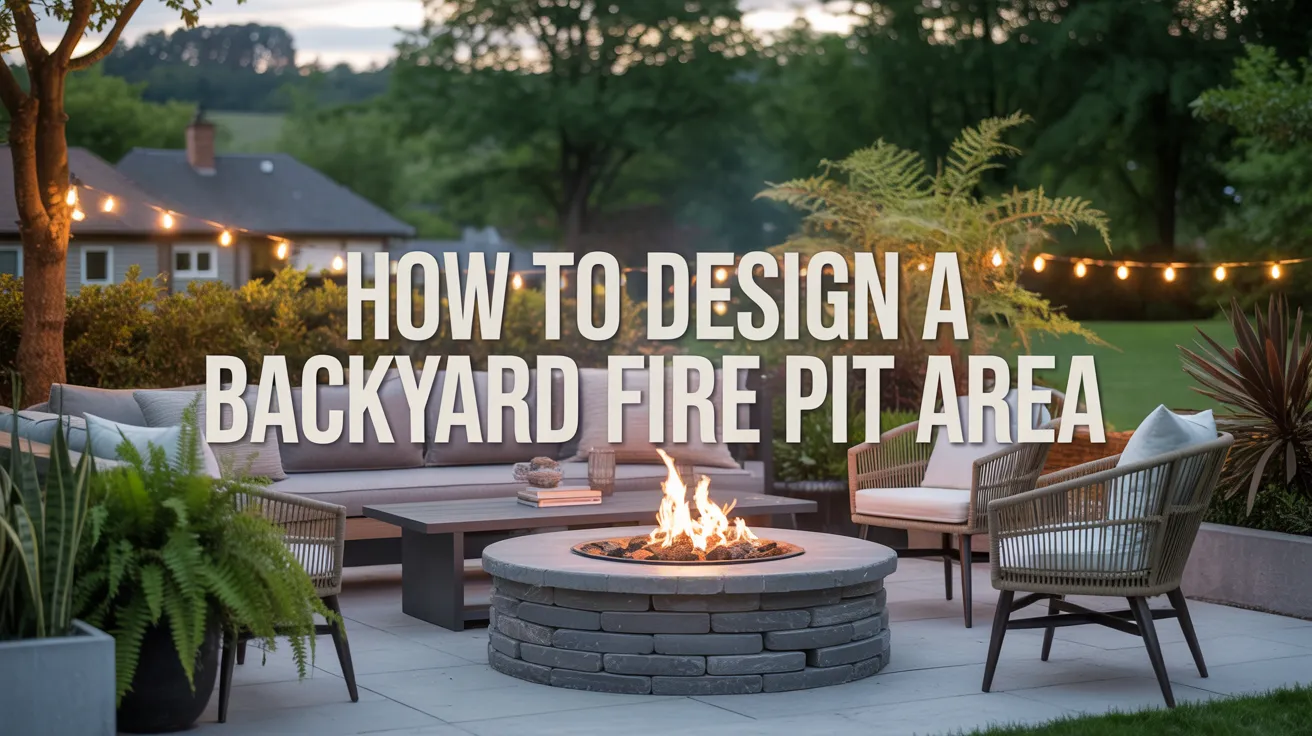
So, you’re thinking about building a backyard fire pit area. Excellent choice. There’s something primal and deeply satisfying about gathering around a crackling fire under the stars. I’ve spent more nights than I can count by my own fire pit, and let me tell you, it’s the best home improvement decision I’ve ever made.

But before you start digging up your lawn, let’s talk about how to design a space that’s not just functional, but truly awesome. This isn’t just about plopping a metal ring in the middle of your yard. We’re talking about creating an experience a dedicated zone for relaxation, conversation, and maybe a few too many s’mores. Let’s get this done, step by step.
Step 1: The Not-So-Fun But Super Important Stuff (Rules & Location)
I know, I know. You want to jump straight to picking out cool chairs and fancy lighting. But trust me, you don’t want to get a friendly visit from the local fire marshal because your cozy setup is a code violation. A little planning now saves a massive headache later.
Check Local Codes and Regulations
Before you buy a single thing, you need to play detective. Most cities and towns have specific rules about backyard fires. You’ll want to check on:
- Permits: Do you need one? Some places require a permit for permanent structures, while others don’t.
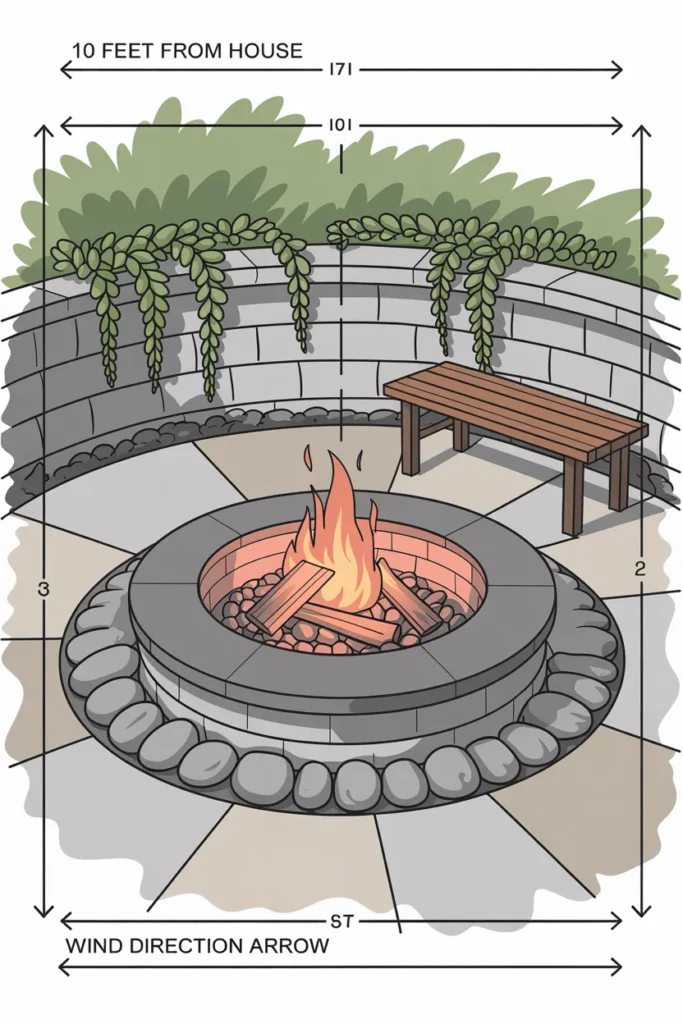
- Distance Requirements: This is a big one. There are usually rules about how far your fire pit must be from your house, your neighbor’s house, fences, trees, and anything else that could, you know, catch fire. A common rule is 10-25 feet away from any structure.
- Burn Bans: Be aware of local burn bans, especially during dry seasons. A beautiful fire pit you can’t use is just a sad, empty circle in your yard.
A quick search on your local government’s website or a call to the fire department will give you all the answers you need. Don’t skip this step. Seriously.
Choose the Perfect Spot
Now for the fun part of the planning phase: location scouting. Where in your yard will this magical oasis live? Walk around your property and think about a few key things.
First, consider the prevailing wind direction. You don’t want smoke constantly blowing into your open windows or directly into your guests’ faces. It’s a real vibe killer when everyone is coughing and shuffling their chairs around.
Next, think about privacy and ambiance. Do you want the fire pit to be a central, visible feature, or a secluded, hidden gem? Tucking it into a corner can create a cozier, more intimate feel. Placing it in the open makes it a great hub for larger gatherings.
Finally, think about the ground. You need a level surface. Trying to build on a slope is a nightmare, and having wobbly chairs is just annoying. A flat, clear area is your best friend here.
Step 2: Picking Your Pit (The Star of the Show)
The fire pit itself is the heart of your new outdoor space. You’ve got a few main options to choose from, each with its own personality. What’s the best fit for you?
Wood-Burning vs. Gas
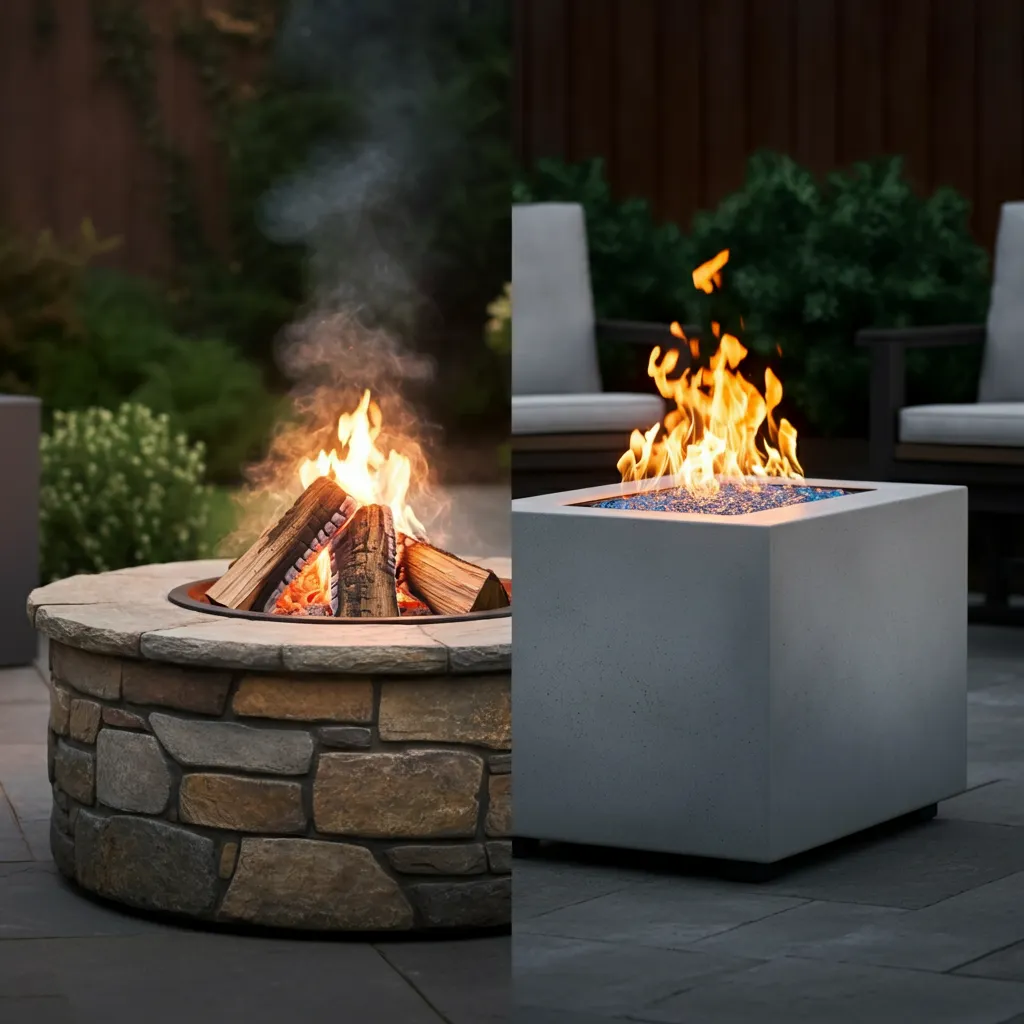
This is the great debate. IMO, there’s no right answer, just what’s right for you.
- Wood-Burning Pits:
- Pros: You get that classic, authentic campfire experience—the crackle, the smell of burning wood, the mesmerizing dance of real flames. They also tend to be cheaper upfront.
- Cons: They create smoke, which can bother neighbors (and you). You have to deal with buying or chopping, stacking, and storing wood. And cleanup means scooping out ash.
- Gas (Propane or Natural Gas) Pits:
- Pros: Convenience is king here. You flip a switch, and boom—instant fire. No smoke, no sparks, no mess. You can even control the flame height.
- Cons: They are more expensive. You miss out on the rustic campfire smell and sound. If you use a propane tank, you have to hide it and remember to refill it.
I’m a wood-burning purist myself. I love the ritual of building a fire. But I totally get the appeal of a clean, instant flame, especially for a quick weeknight hang.
Permanent vs. Portable
Next question: is this a permanent fixture or something you can move?
A permanent, built-in fire pit is a serious statement piece. Usually made from stone, brick, or concrete pavers, it becomes a structural part of your landscape. It looks incredible and can add value to your home. The downside? It’s a commitment. Once it’s built, it’s there for good.
A portable fire pit is a fantastic, flexible option. You can buy one from any big-box store, set it up in minutes, and even move it if you decide the location isn’t quite right. They come in countless styles, from simple metal bowls to more elaborate designs. This is a great starting point if you’re not ready to commit to a full-on construction project.
Step 3: Building the Foundation (The Ground Beneath Your Feet)
You can’t just have your fire pit sitting on grass. Well, you can, but you’ll end up with a big, dead, muddy circle. A proper base not only looks better but is also safer. The base material defines the boundary of your fire pit area and provides a stable, non-flammable surface.
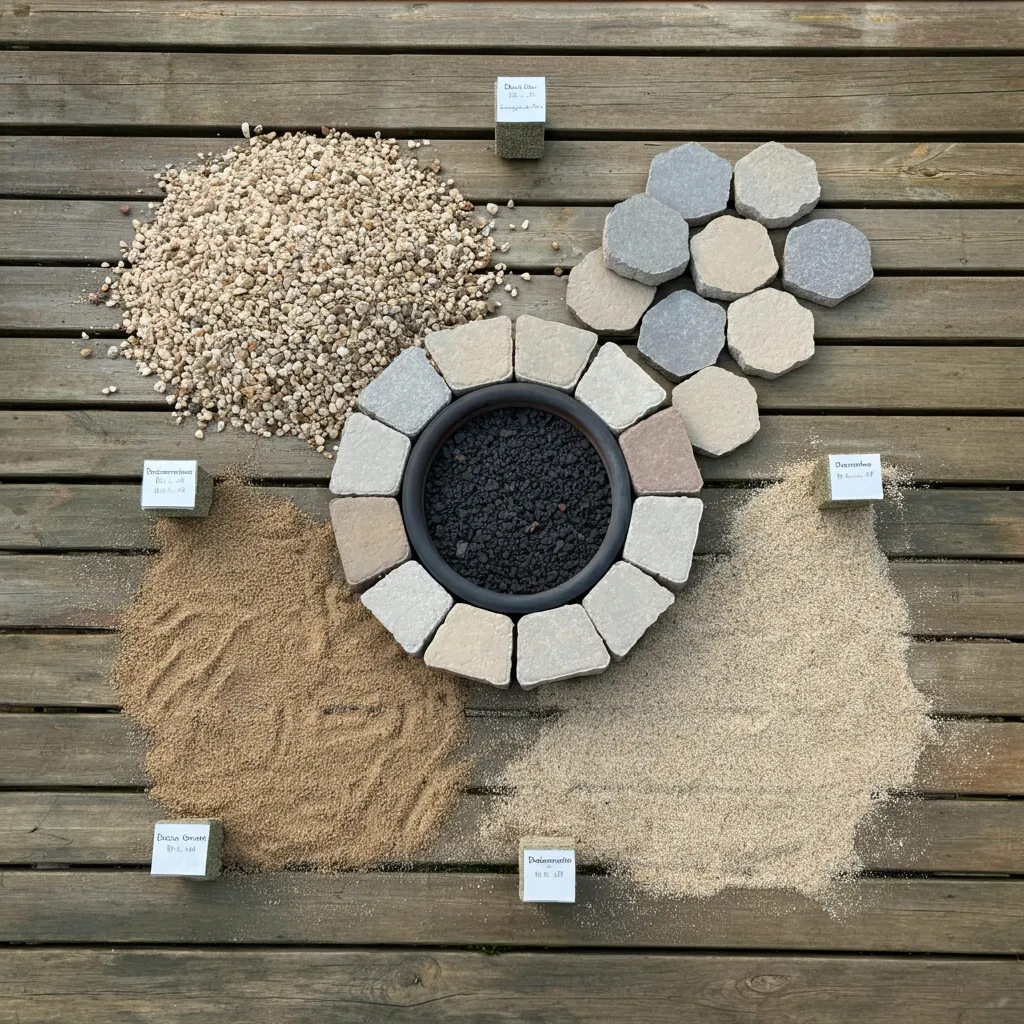
Here are some popular choices for the patio or base area:
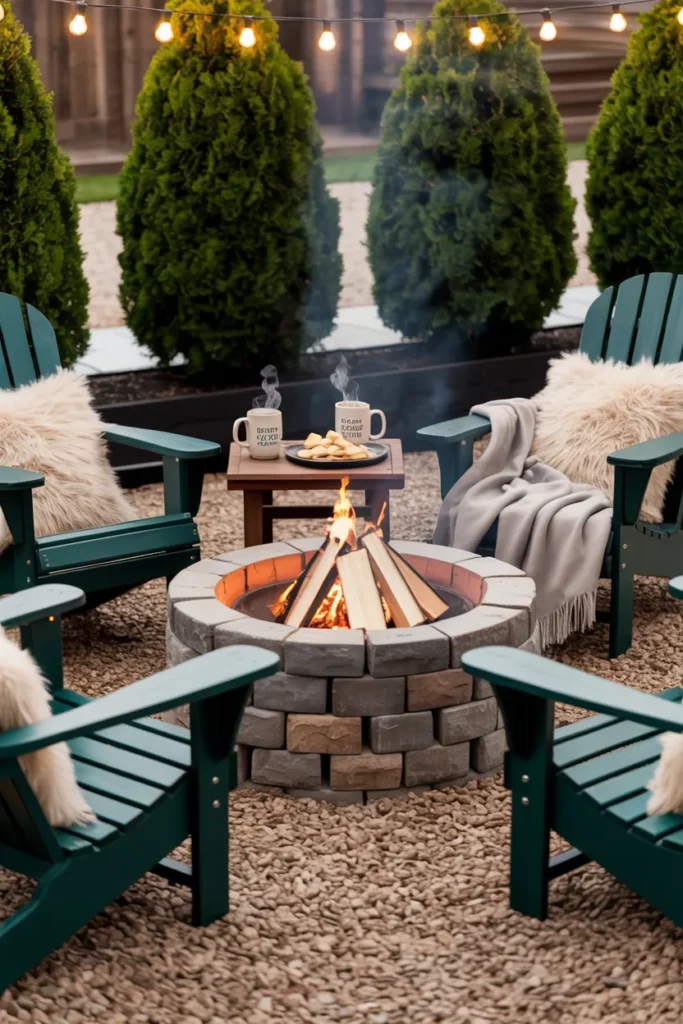
- Pea Gravel: This is probably the easiest and most affordable option. It’s easy to install, provides great drainage, and has a nice, rustic crunch underfoot. You’ll need to install some kind of border to keep the gravel contained.
- Pavers or Flagstone: A paver or stone patio is a classic for a reason. It looks polished, provides a super stable surface for furniture, and is extremely durable. This is more labor intensive and expensive, but the result is a high end, permanent look.
- Decomposed Granite: This material offers a soft, natural look that’s more stable than gravel. It packs down tightly to create a firm surface but still allows for water drainage. It’s a great middle ground option between loose gravel and hard pavers.
No matter what you choose, make sure the area is at least 3-4 feet wider than the fire pit itself on all sides. This gives you plenty of room for chairs and walking around safely.
Step 4: Furnishing for Comfort (Let’s Get Cozy)
The right seating can make or break your fire pit area. Uncomfortable chairs will send people inside faster than a sudden downpour. The goal is to find something so comfy that your guests never want to leave.
Choosing Your Seating
Think about how you’ll use the space. Will it be intimate chats for two or big parties for ten?
Your classic choice is Adirondack chairs. They are practically designed for lounging by a fire. Their slanted back is perfect for leaning back and sky gazing. You can get them in wood for a rustic look or a durable poly resin that withstands the elements without any maintenance.
Another great option is a set of deep seating outdoor sofas or a sectional. This creates a true outdoor living room feel and is incredibly comfortable. Just make sure the cushions are made from weather resistant fabric.
For a more casual or flexible setup, consider built in seating. A curved stone or concrete retaining wall can double as a bench. Just throw some outdoor cushions on top, and you have durable, permanent seating that perfectly matches your fire pit.
A Note on Arrangement
How you arrange the chairs matters. A circular arrangement is the most natural, as it encourages conversation and ensures everyone gets a good view of the fire. Make sure to leave enough space between the chairs and the fire you want to feel the warmth, not singe your eyebrows. About 3 feet is a good starting distance.
Step 5: Adding the Magic (Lighting & Ambiance)
Your fire pit will be the main light source, but it shouldn’t be the only one. Relying solely on the fire for light can make the surrounding area feel like a black hole. The right accent lighting adds safety, defines the space, and creates a truly magical atmosphere.
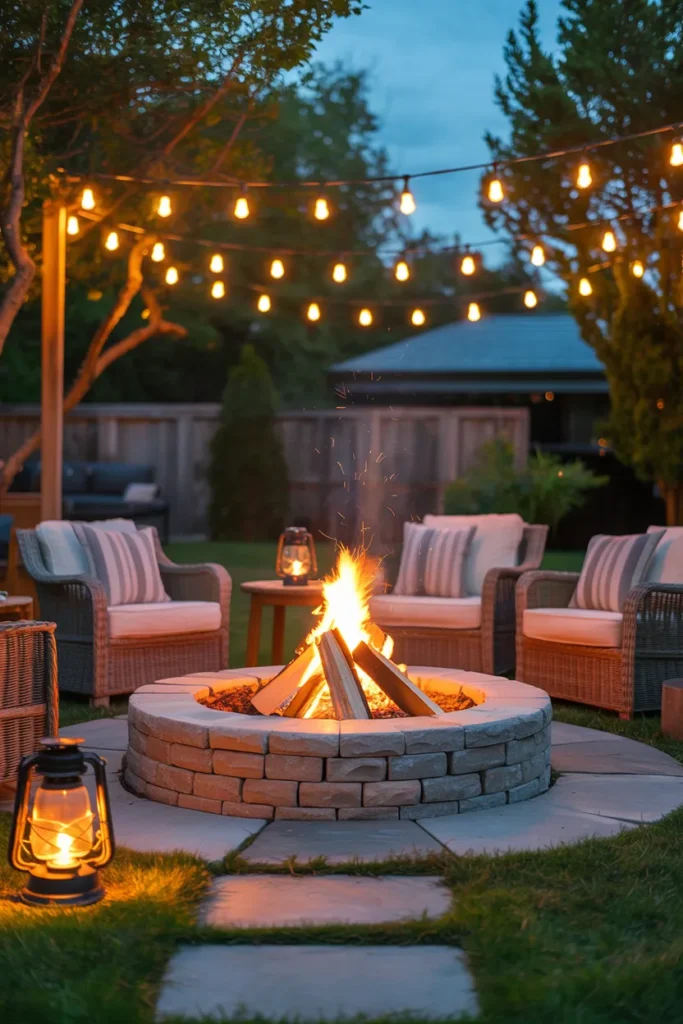
Here are some ideas to level up your ambiance:
- String Lights: Is there anything string lights don’t make better? Draping them overhead from trees, poles, or your house creates a festive, cafe like ceiling of light. Use warm white bulbs for a soft, inviting glow.
- Pathway Lights: Solar powered stake lights are an easy way to illuminate the path to and from your fire pit area. This is a crucial safety feature, preventing trips and falls in the dark.
- Lanterns: Place a few lanterns with battery operated candles around the seating area for an extra touch of warmth without any fire risk.
- Hardscape Lighting: If you have built in seating or stone walls, you can integrate low-voltage lighting directly into the structure. It’s a sleek, professional look that casts a gentle glow downward.
The key is to keep the lighting subtle and warm. You want to complement the fire, not compete with it.
Your Fire Pit Area Is Ready!
And there you have it. You’ve gone from a patch of grass to a custom-designed backyard retreat. You’ve navigated the rules, chosen the perfect spot, picked your pit, laid a foundation, and furnished it for maximum comfort. All that’s left to do is grab the marshmallows, invite some friends over, and light it up.
Building a fire pit area is more than just a weekend project; it’s an investment in your home and your happiness. It’s a place to unplug, connect with people you care about, and create lasting memories. So go on, get started. Your perfect backyard evening is waiting.